Snowcap Hummingbirds and Bat Photography at Rancho Naturalista, Costa Rica
- Flying Sansa from Bocas del Toro to San Jose, Costa Rica
- Hummingbird Photography in San Gerardo de Dota
- Savegre Valley Bird Photography - Hummingbirds and the Resplendant Quetzal
- Hummingbird Flash Photography & Resplendant Quetzal
- Rancho Naturalista - Snowcap Hummingbirds & Bats
- Selva Verde - Bird, Frog & Macaws
- Birding at Laguna Lagarto
- King Vulture Hide
- Snake & Frog Photography (a.k.a. "herping")
- From Costa Rica to the Galapagos
The plan for today was to make our way to Rancho Naturalista, where the main event would be something completely different from the bird photography we’d been doing so far: photographing bats in flight. We were also hoping to photograph snowcap hummingbirds.
But first, some time at the feeders before breakfast.
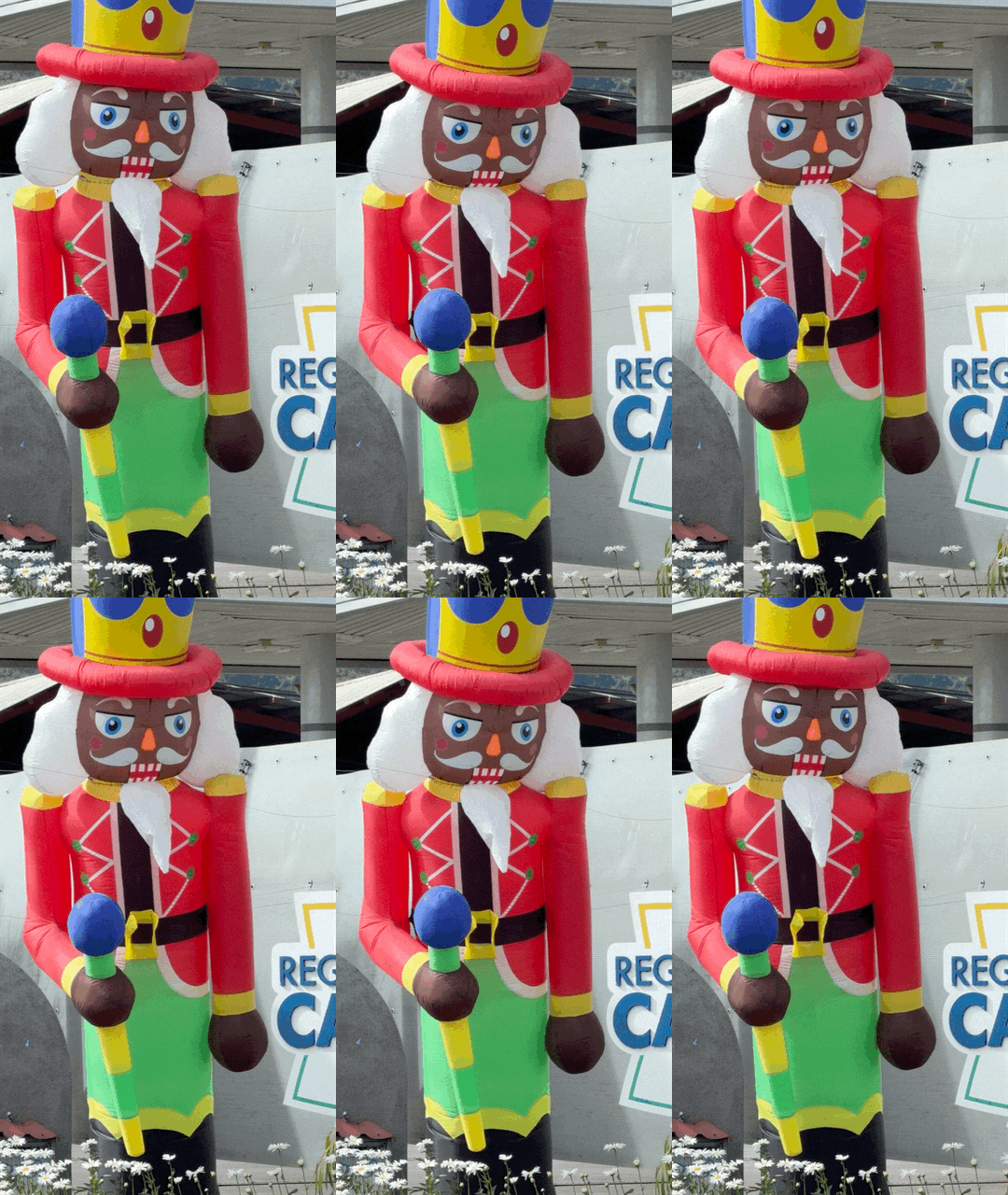
The drive took us back past the now-familiar rest stop. We were so focused on the Hanukkah snowman on our first visit that we missed this giant inflatable nutcracker holding an unfortunately shaped and unfortunately positioned staff.
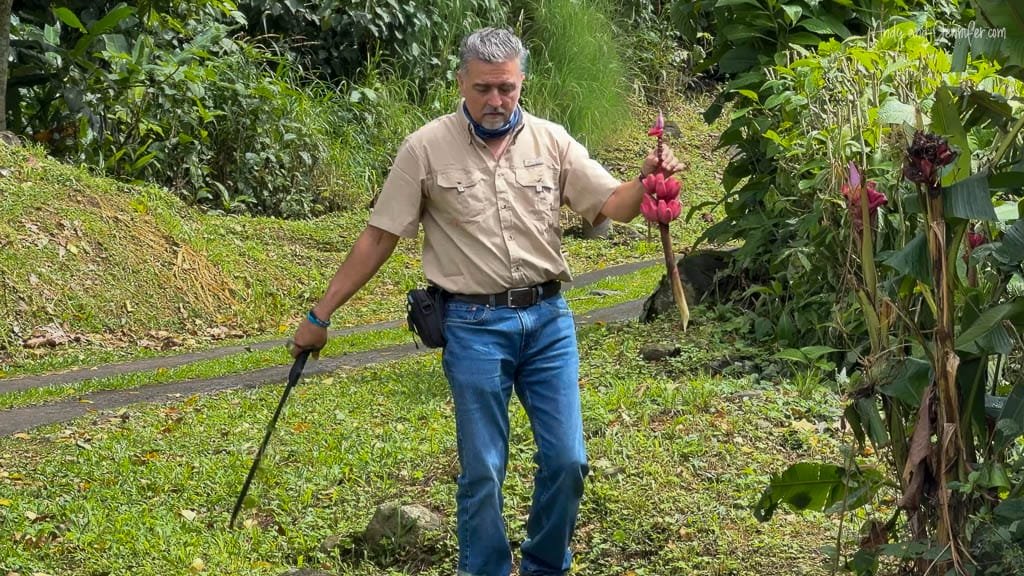
Along the way we also stopped so our guide could collect banana flowers for that evening’s bat photography setup.
As we got closer to Rancho Naturalista, we made a slight detour to a river near the lodge to look for a Sunbittern. We searched for a while without any luck, then continued on to the lodge.
Arriving at Rancho Naturalista
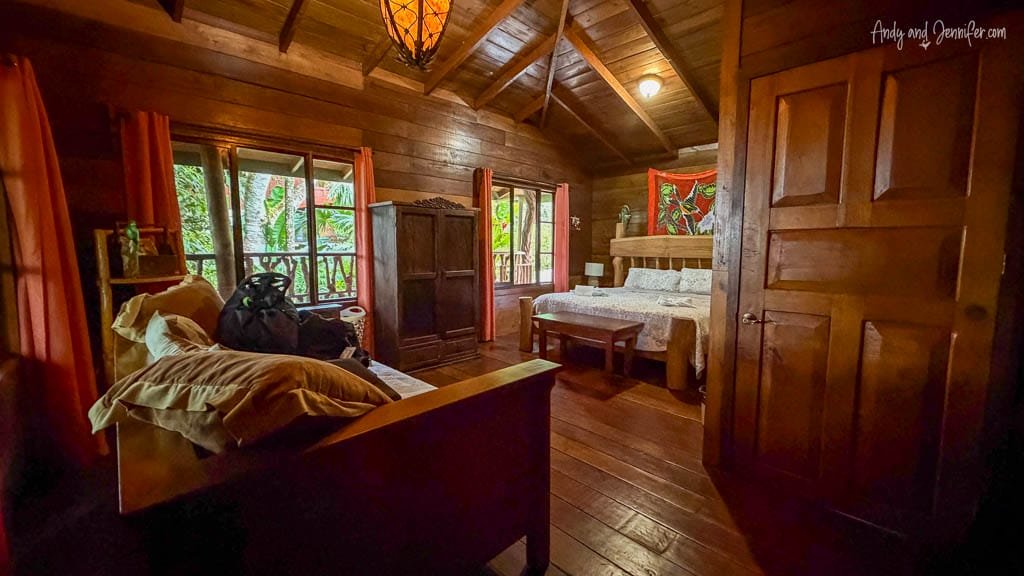
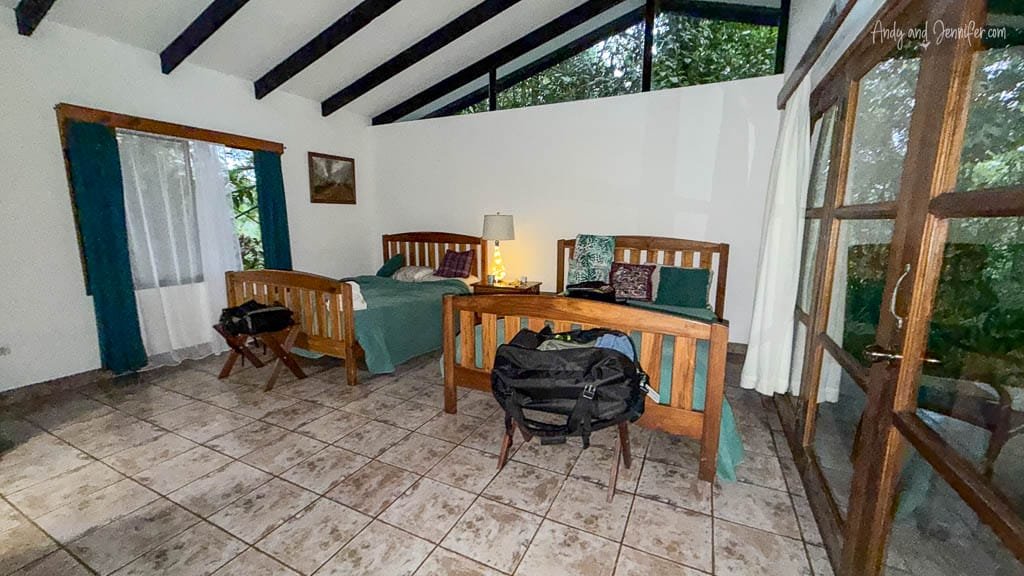
We arrived at Rancho Naturalista just before lunch. The lodge had a bit more charm than the last one. We wuld have been very happy with out room, if we hadn’t accidentally been assigned a much better room at first.
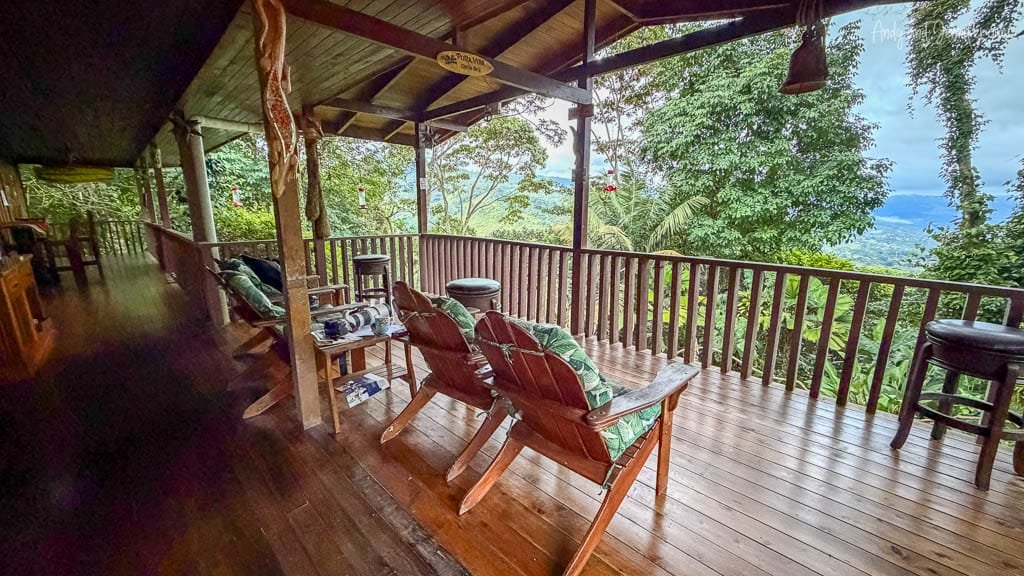
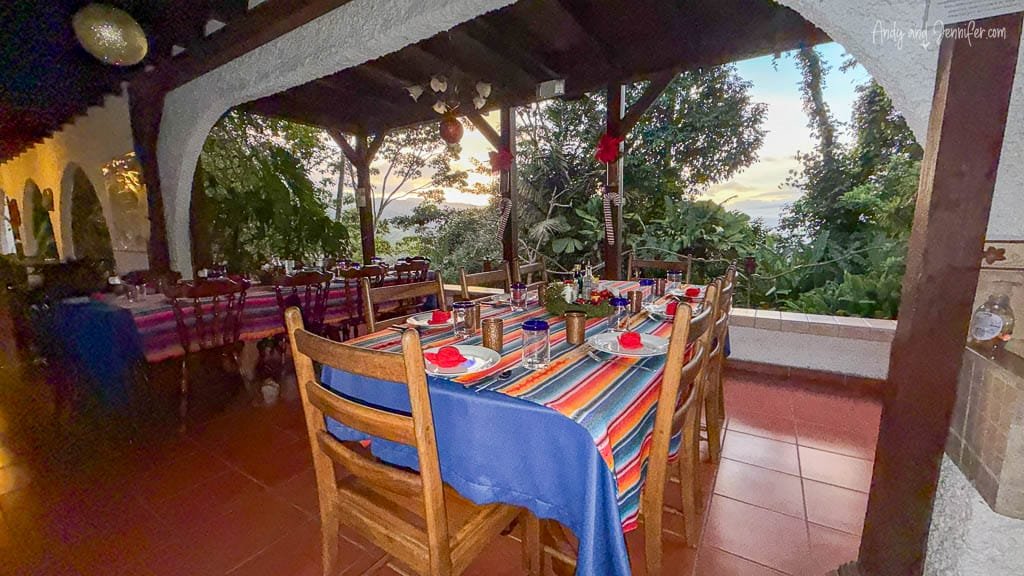
Behind the main building was a feeder that attracted plenty of activity. The main building was also where we ate our meals, which were served family-style and were very good.
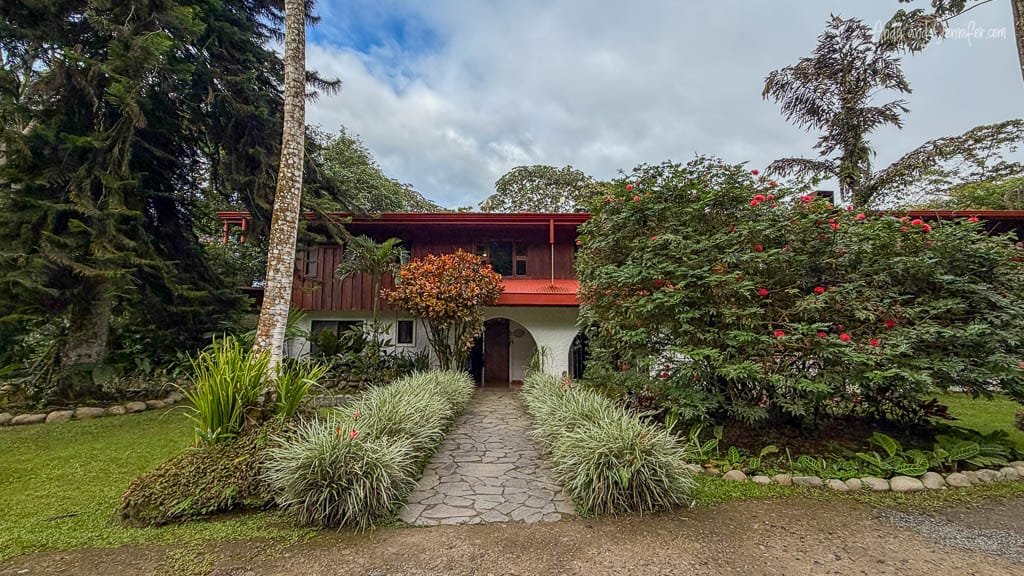
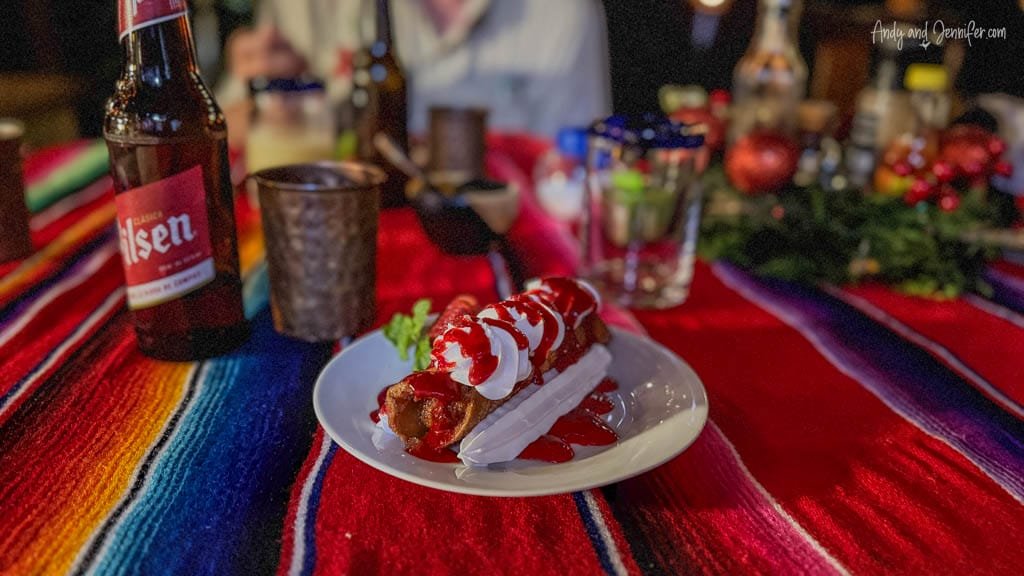
It turns out Rancho Naturalista is particularly well known in the birding community, and it didn’t take long for us to see why.
Birding at Rancho Naturalista
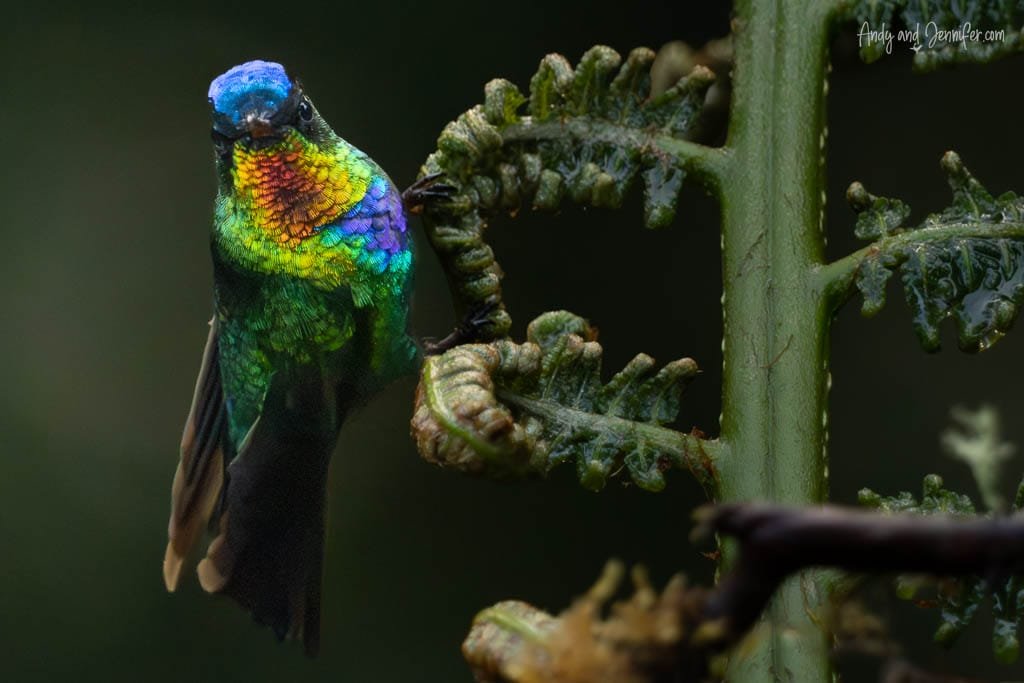
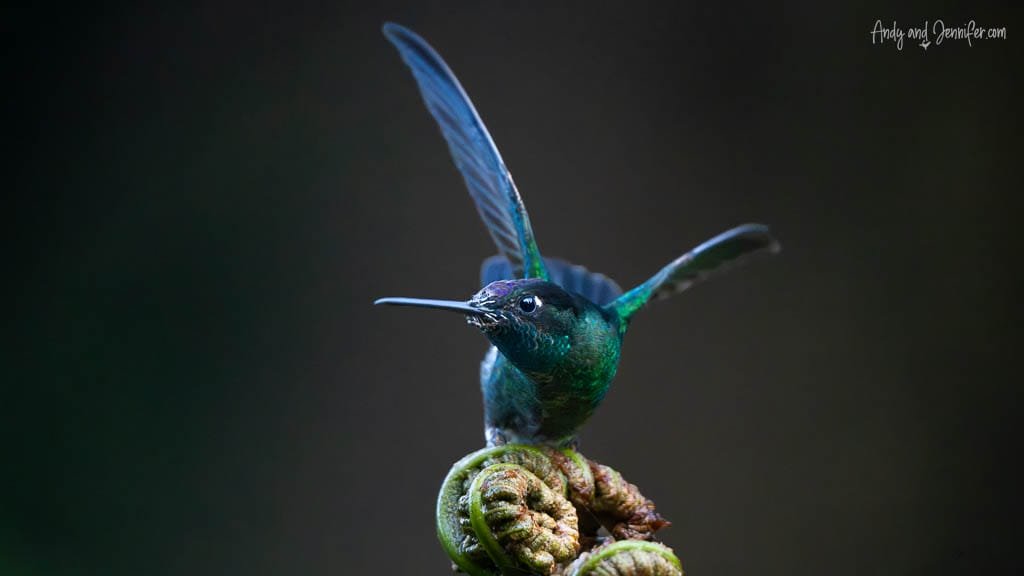
After lunch we climbed back into the van and drove slightly down the hill, near the owners’ house, to photograph Snowcap hummingbirds. They aren’t necessarily rare, but they are quite localized and can be difficult to find.
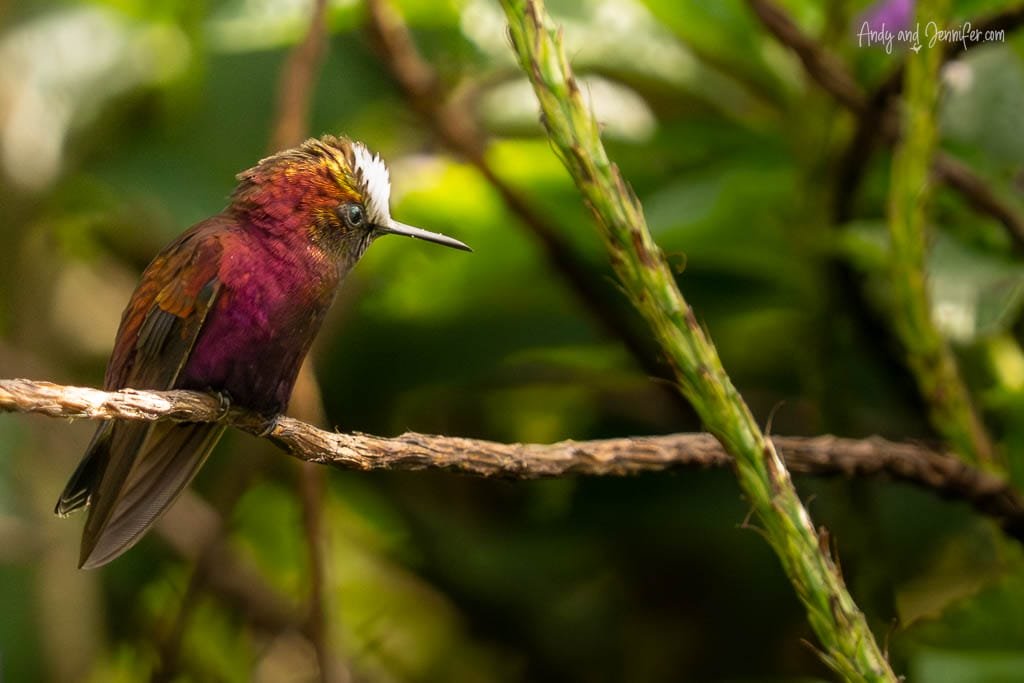
Holy crap, this was frustrating. Snowcaps are tiny (about 6.5 to 7 cm / 2.6 to 2.8 inches long) and weigh roughly 2.5 grams. They are also incredibly fast. They were particularly interested in the verbena, but not the part out in the daylight. Oh no. They preferred being behind dozens of branches which our cameras decided to focus on most of the time. Oh yeah, and they have a dark body and white head which is fun for exposure.
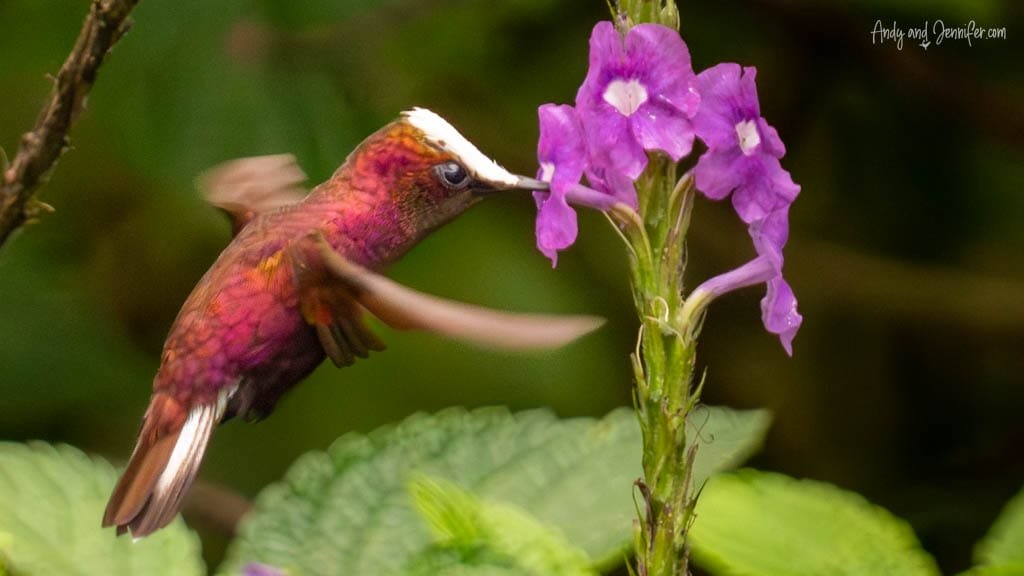
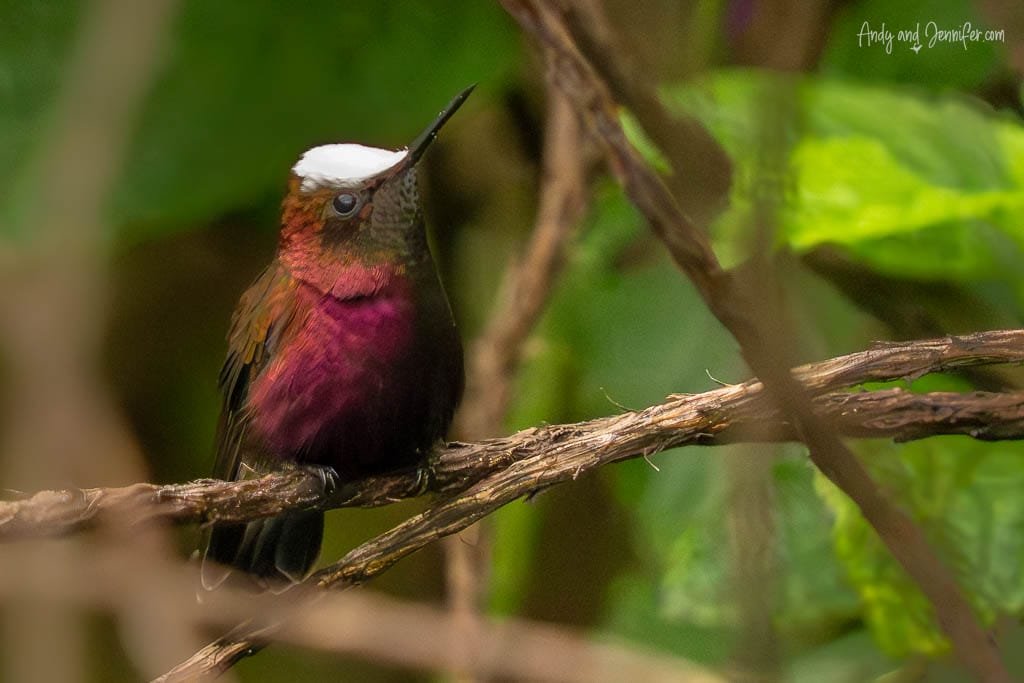
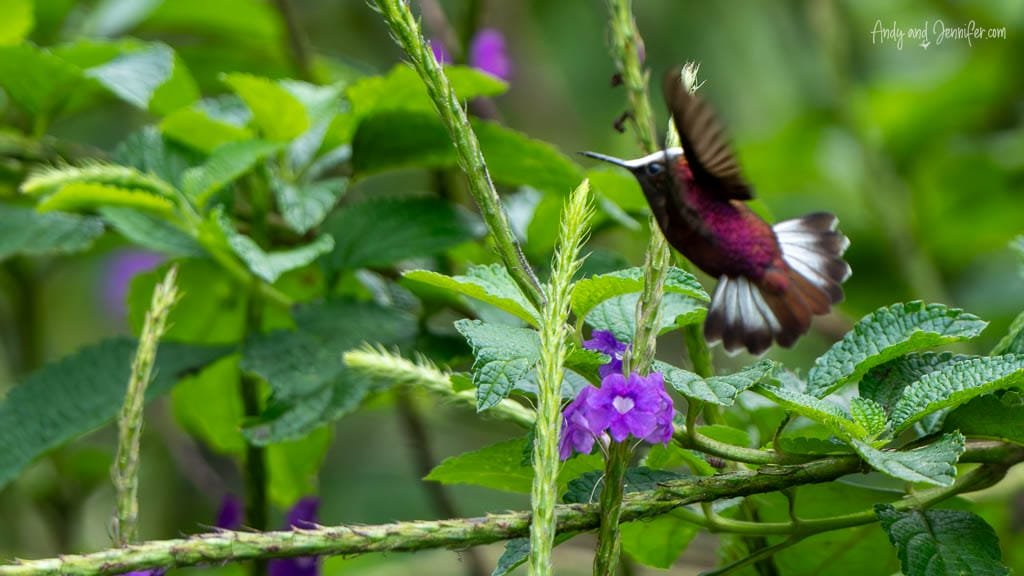
It took a lot of attempts, but eventually we managed to get a few shots before returning to the lodge to prepare for the main event.
How Bat Photography at Rancho Naturalista Works
To make sure the evening went smoothly, we had a briefing while it was still light. This gave everyone time to get their cameras set up correctly and understand how the rather unusual photography system worked.
Instead of trying to react quickly enough to photograph a bat ourselves, we would use a motion trigger connected to the flashes.
We set our exposures to four seconds and used a remote to lock down the shutter. Once activated, the camera essentially kept taking four-second exposures until we stopped the remote.
The flash was the clever part.
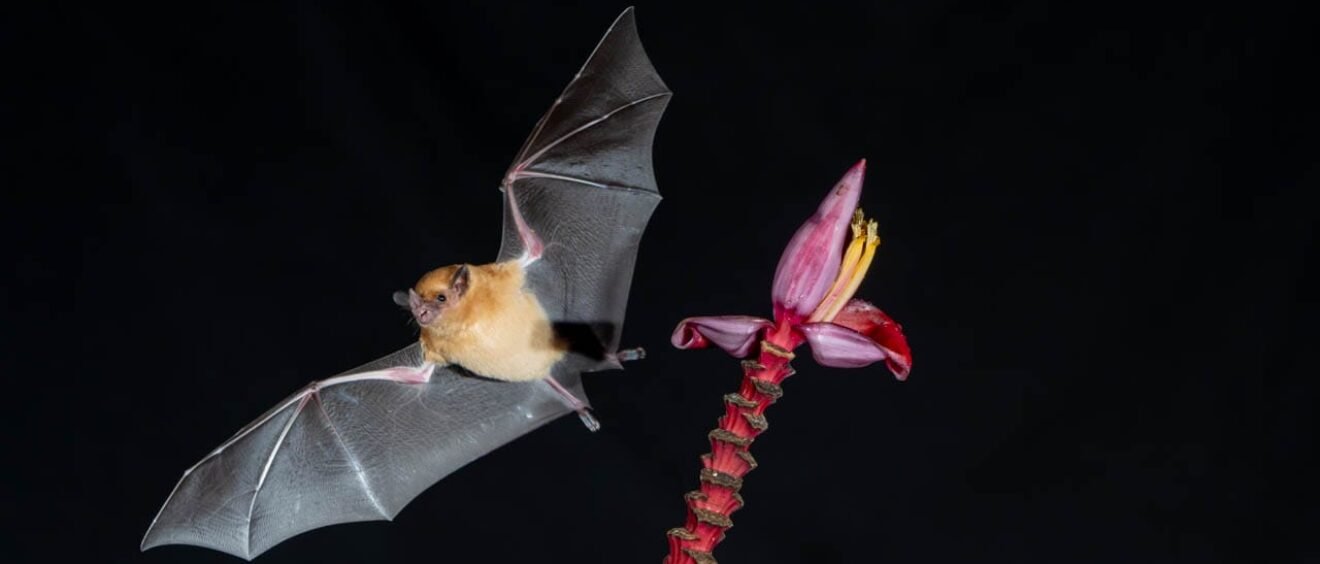
A banana flower was positioned in front of the cameras, with a motion sensor covering the area around it. When a bat flew through the sensor on its way to the flower, the flashes fired and froze the bat in flight.
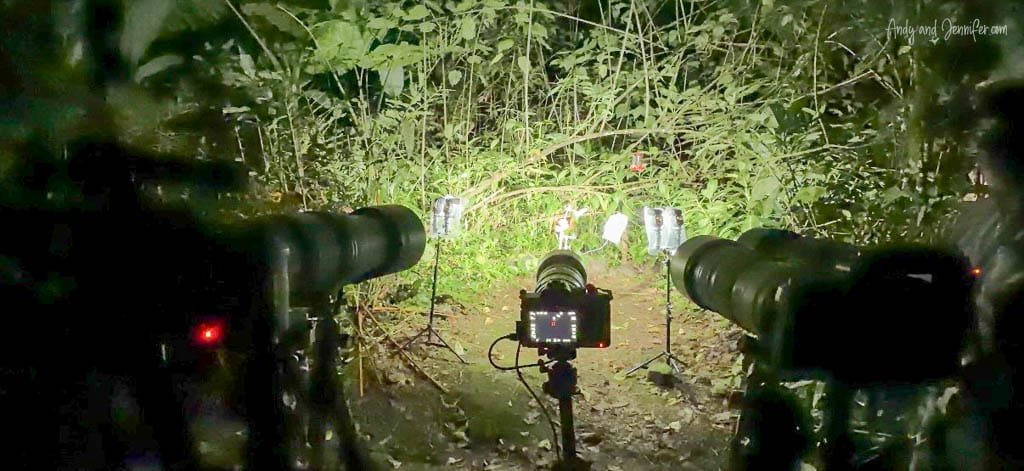
We also did a practice walk to the photography site while there was still daylight. It was only about 200 metres from the lodge along a well-maintained trail, but knowing exactly where we were going would make things considerably easier once we were doing it in the dark.
Bat Photography at Rancho Naturalista
After dinner we headed back out to the bat photography site.
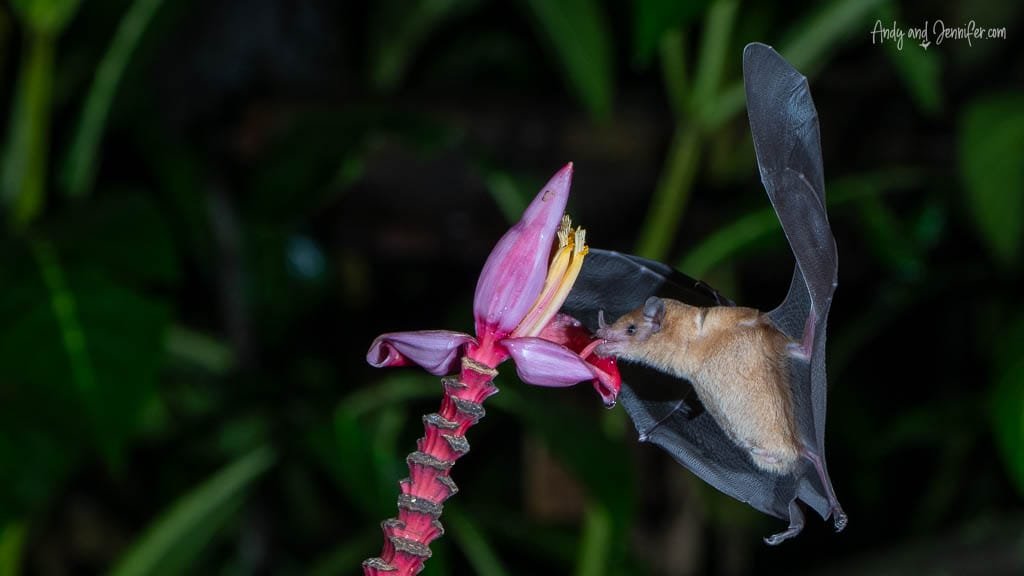
There was a small shelter where we clustered our cameras together, all pointing toward a banana flower. Our guides sprayed nectar onto the flower, whose petals formed little bowls where the nectar could collect. The bats would swoop in to drink, break the motion sensor, and trigger the strobes.
Our cameras were already shooting continuously, so if everything worked as planned, there would be a bat somewhere in the four-second exposure when the flashes fired.
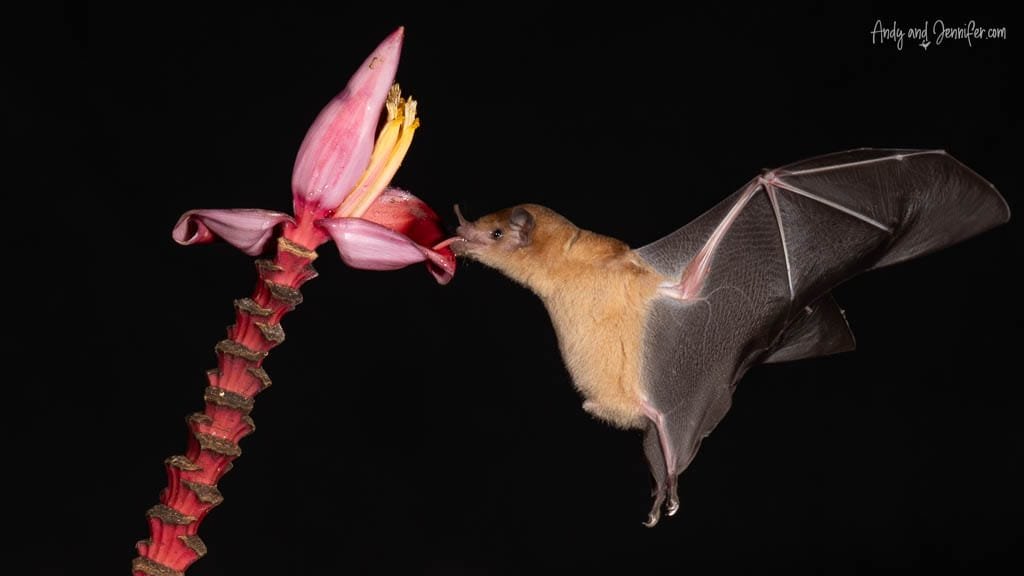
Nectar-feeding bats have very long, extendable tongues adapted for reaching deep into flowers. In this image, the flash has frozen the bat in flight, but because the tongue was moving extremely quickly during the exposure, it appears as a dark, slightly translucent trail between the bat and the banana flower.
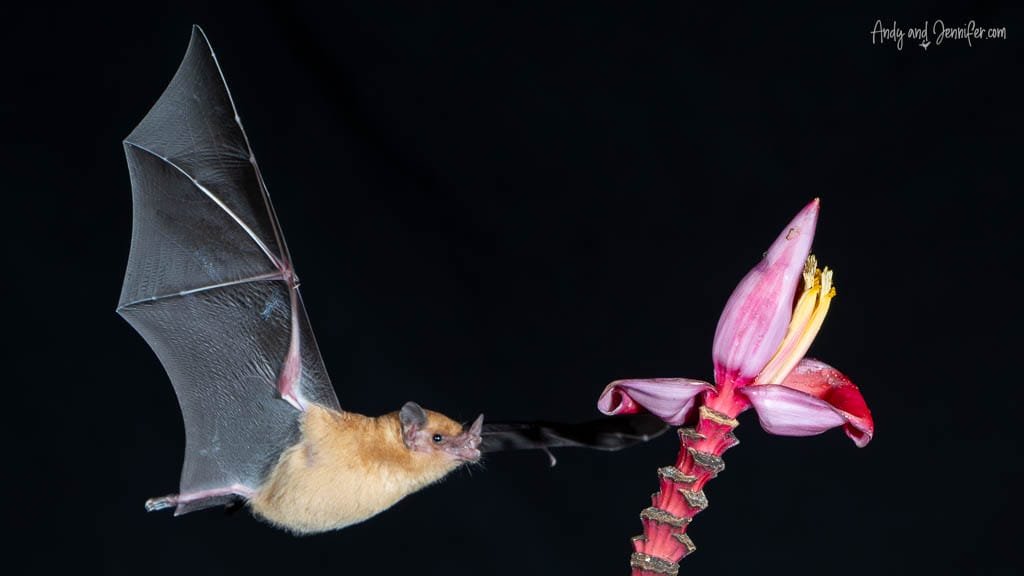
We also tried the setup with a natural backdrop.
And managed a few frames with more than one bat
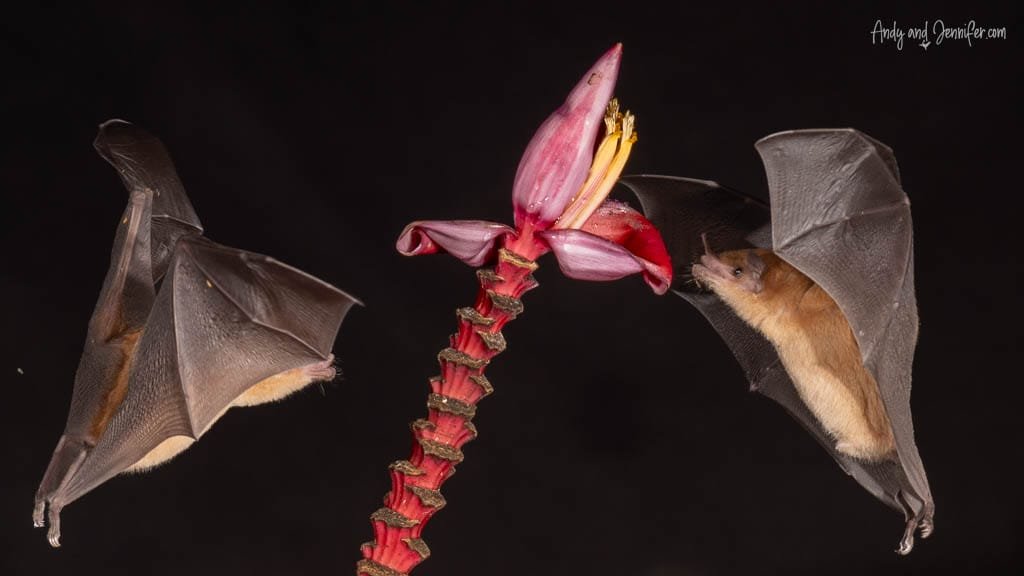
I finished the evening with 1,354 images. Of those, 1,045 were blank. Not because I did anything wrong, but because there was no bat during those 4-second exposures. That left 309 photographs with bats in them. It sounds like a terrible success rate until you look at the 309 bat photos, because those were all epic.
In fact, we had so many images that we called it quits a little after 9 p.m. There wasn’t much point continuing just to produce another thousand blank frames and several hundred versions of photographs we already loved.
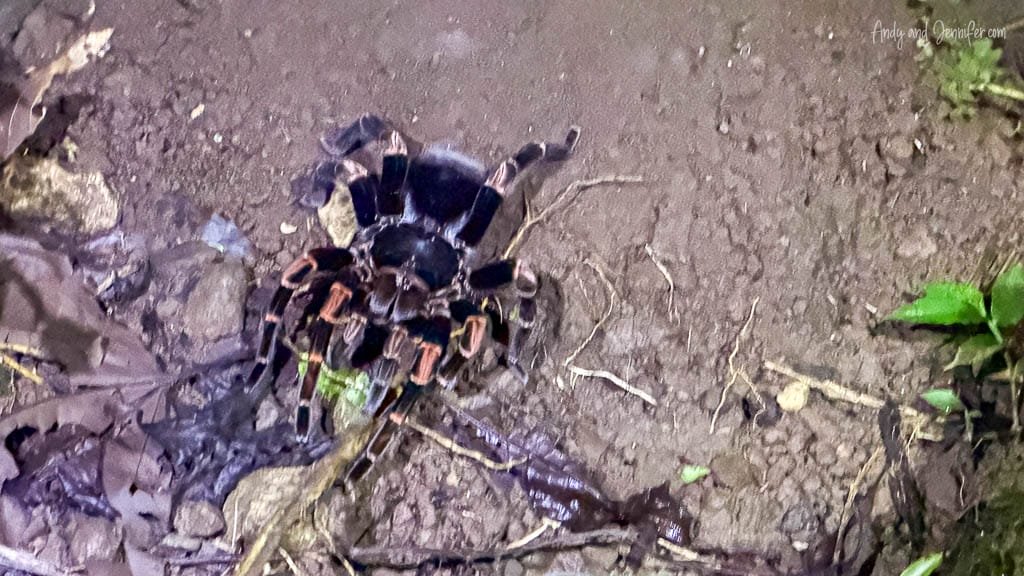
At some point my Apple Watch alerted me that my pulse was unusually high. Maybe it had something to do with sitting in the dark watching bats fly toward us while knowing that this tarantula and its friends were nearby.
A Morning at Rancho Naturalista
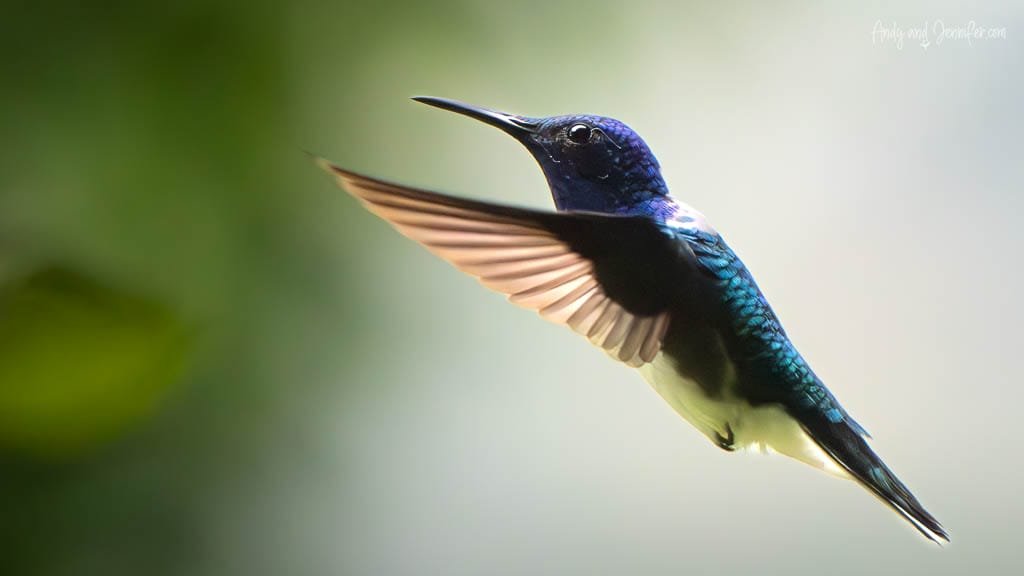
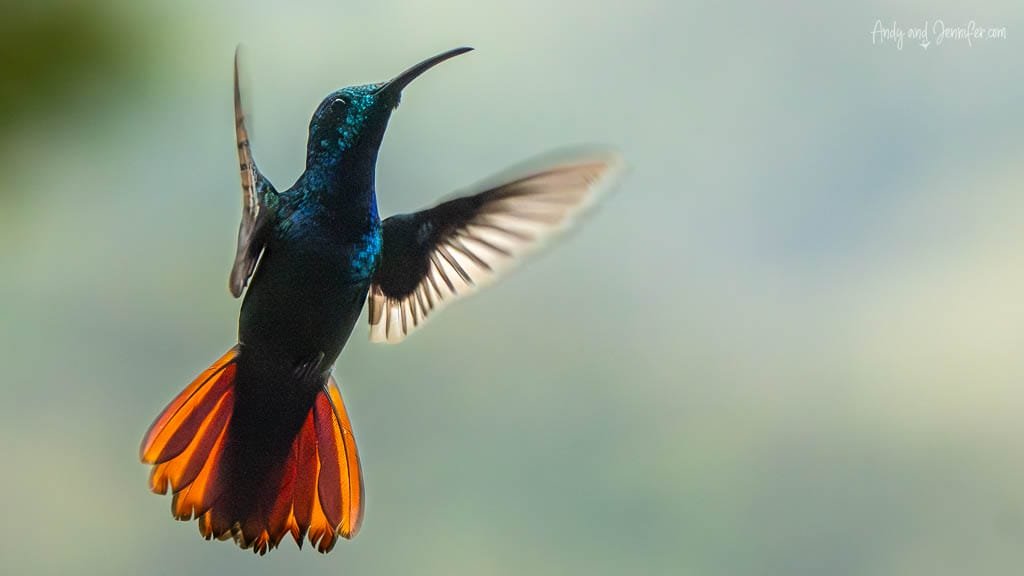
Breakfast at Rancho Naturalista starts with the ringing of a bell at 7 a.m., which feels both charming and slightly urgent. Not that we needed a wake-up call. By that point we’d already logged an hour at the hummingbird feeders on the second level of the main building.
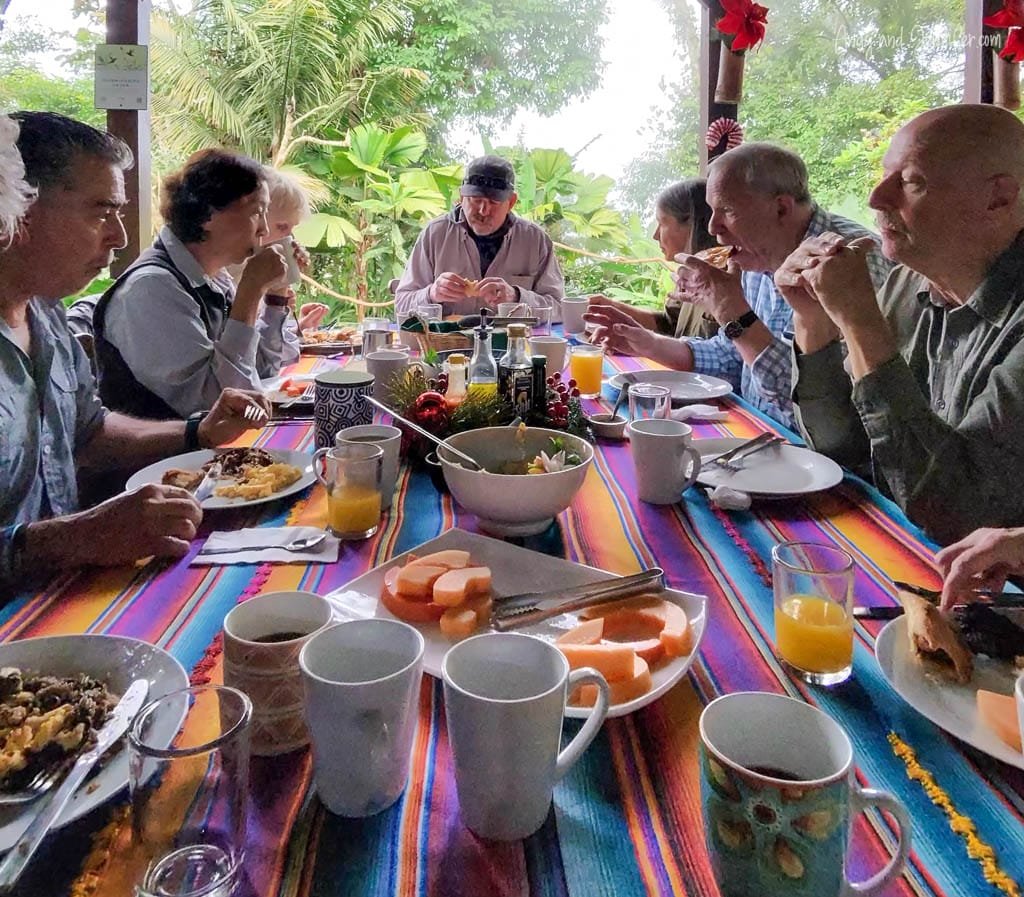
The meal itself was a traditional típico breakfast served family-style, with rice and beans, sausage, eggs, a small cheese-filled empanada, and fresh pineapple.
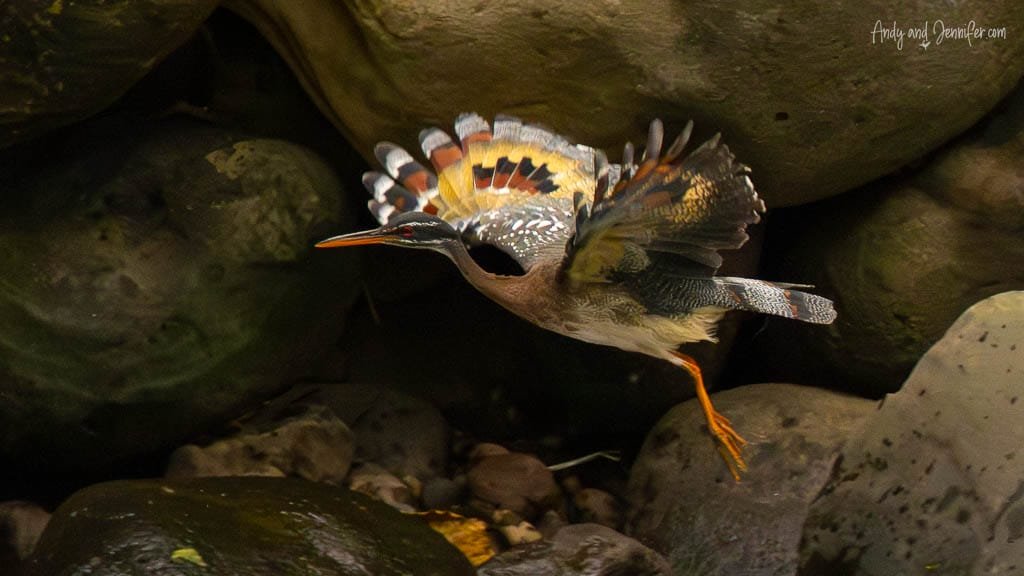
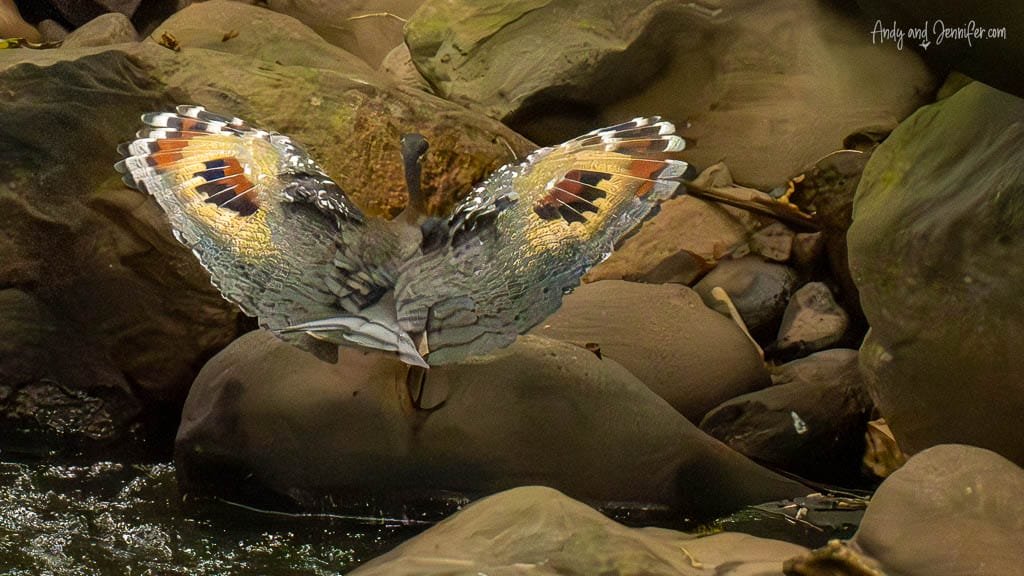
After breakfast we returned to the river to look for the Sunbittern that had eluded us the previous day. This time the search paid off and the bird was spotted along the riverbank. We made our way through the tall grass, exciting clouds of mosquitoes as we went. I caught a glimpse of the Sunbittern, but the swarming mosquitoes gave me the heebie-jeebies, so I made my way to a nearby bridge.
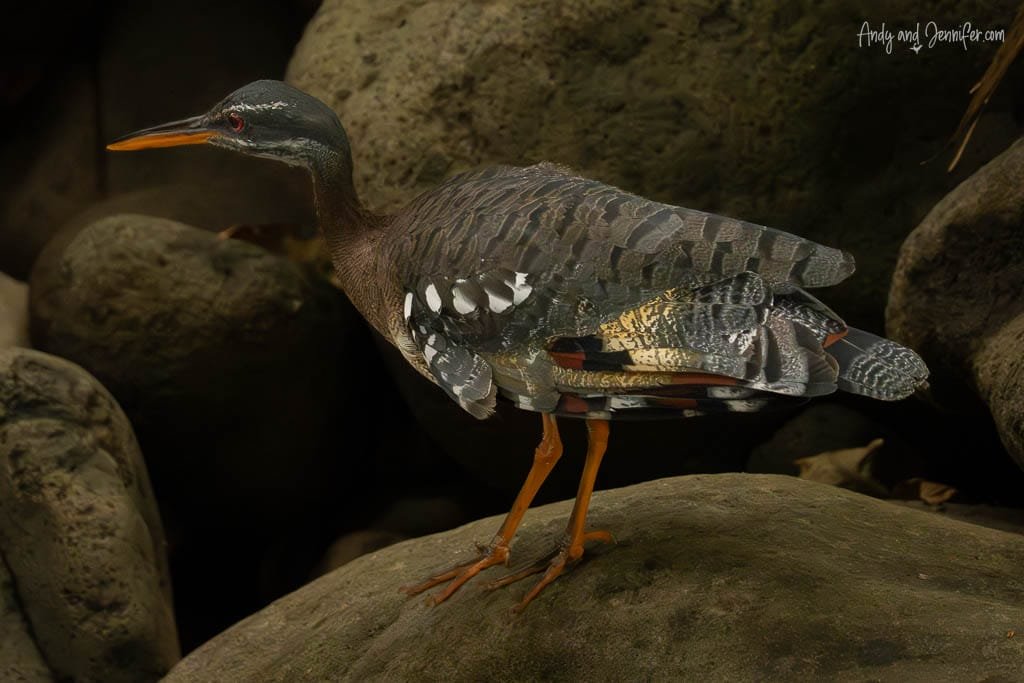
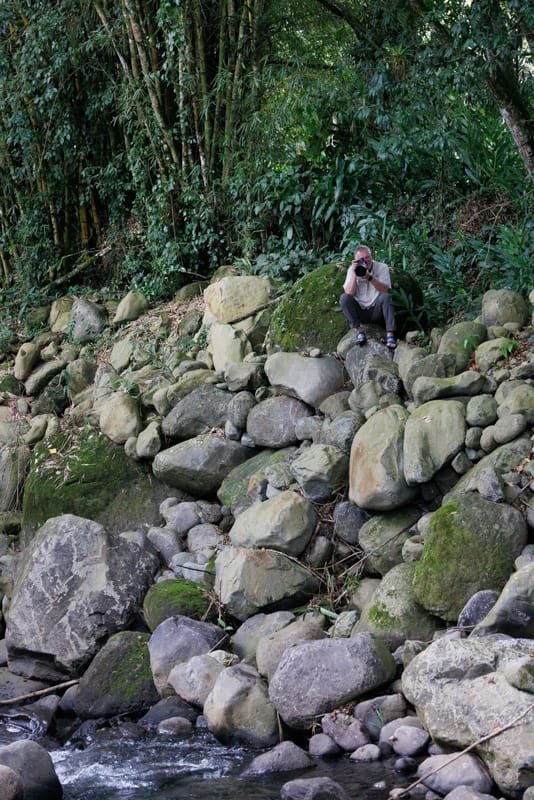
Most of the time they look fairly understated, but when they spread their wings, they reveal dramatic orange, black and white markings that look almost like enormous eyes. Andy managed to catch one with its wings fully spread, which made his precarious position on the rocky riverbank worthwhile.
A Quick Stop at the Botanical Gardens
From there we drove to a nearby botanical garden.
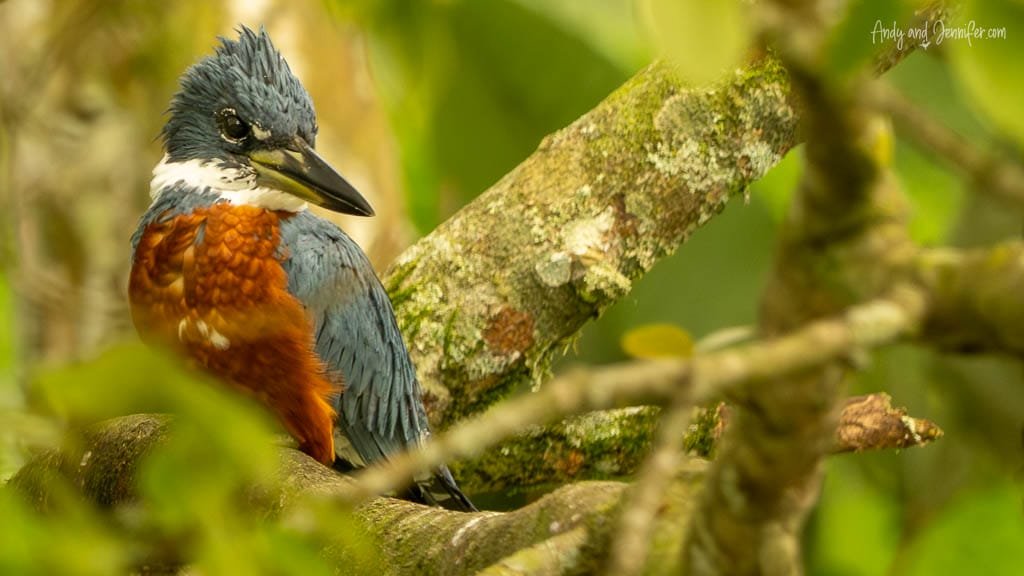
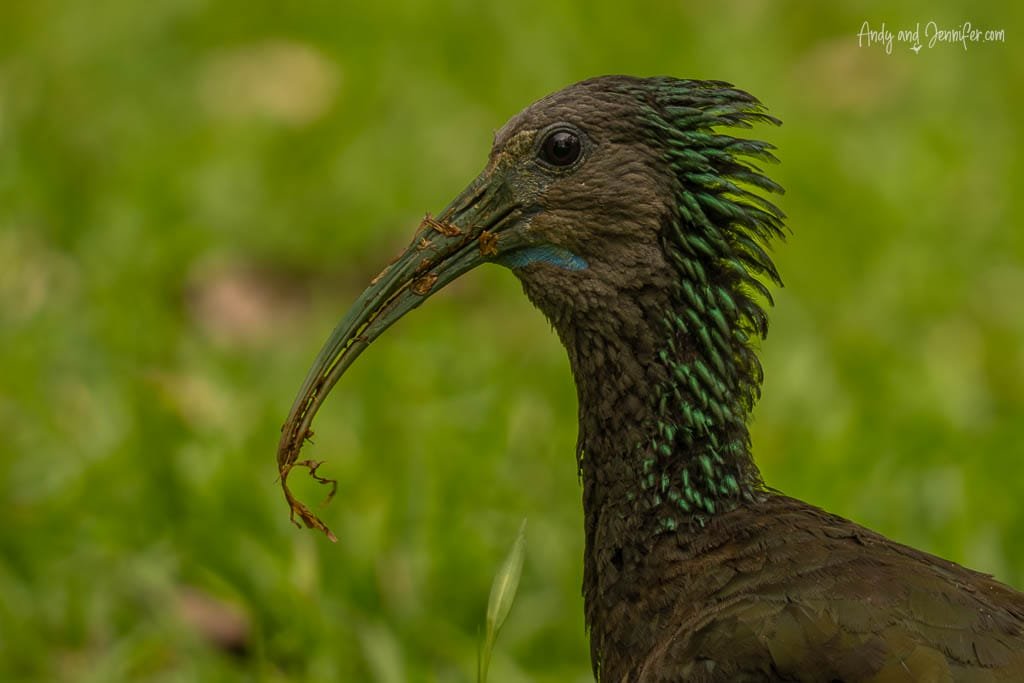
It reminded me a little of the one we’d visited in Panama, in the sense that it looked promising but didn’t quite deliver at the level we’d hoped. There were still a few interesting bird sightings – ringed kingfisher, green ibis, and gray-cowled wood-rail – but it didn’t hold our attention for long.
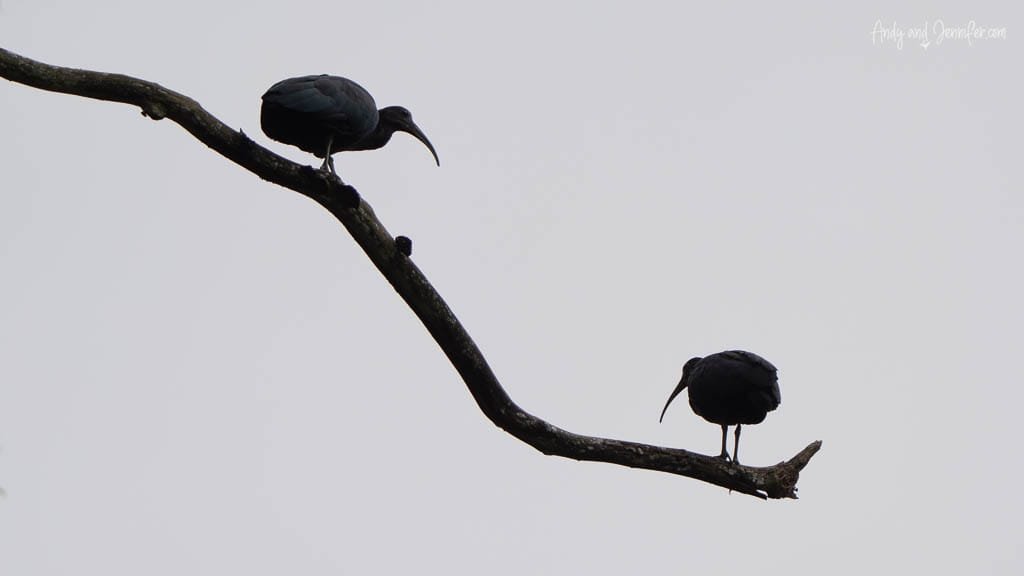
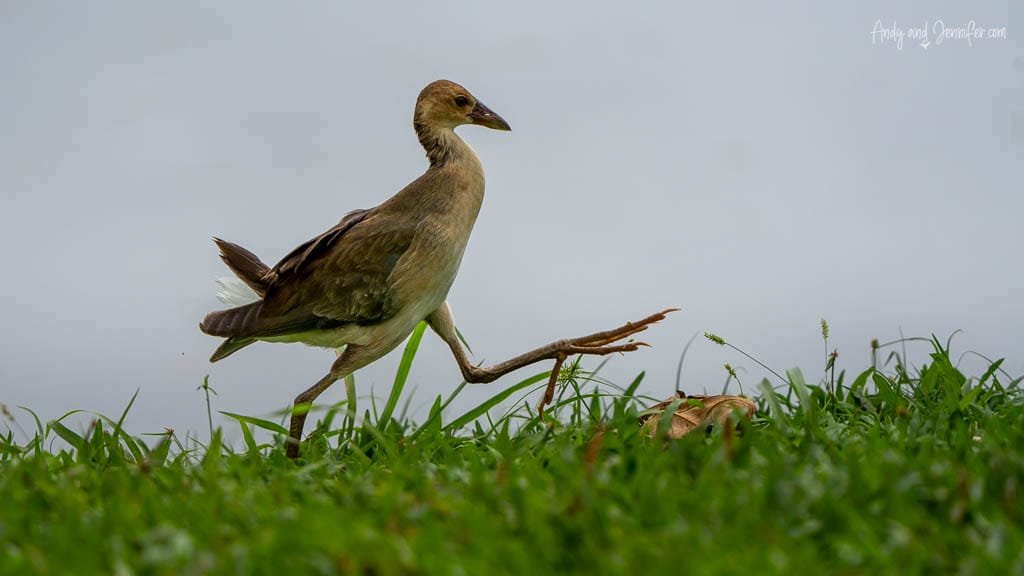
By that point we were happy to take the afternoon at a slower pace. Some of the group went out to photograph leafcutter ants, while others returned to the bat photography setup after dinner.
We decided to sit both of those out. Between the two of us, we had over 500 bat photographs from the previous night, so we felt like we had what we needed.
Leaving Rancho Naturalista
The next morning we were up early again for a last visit to the feeders.
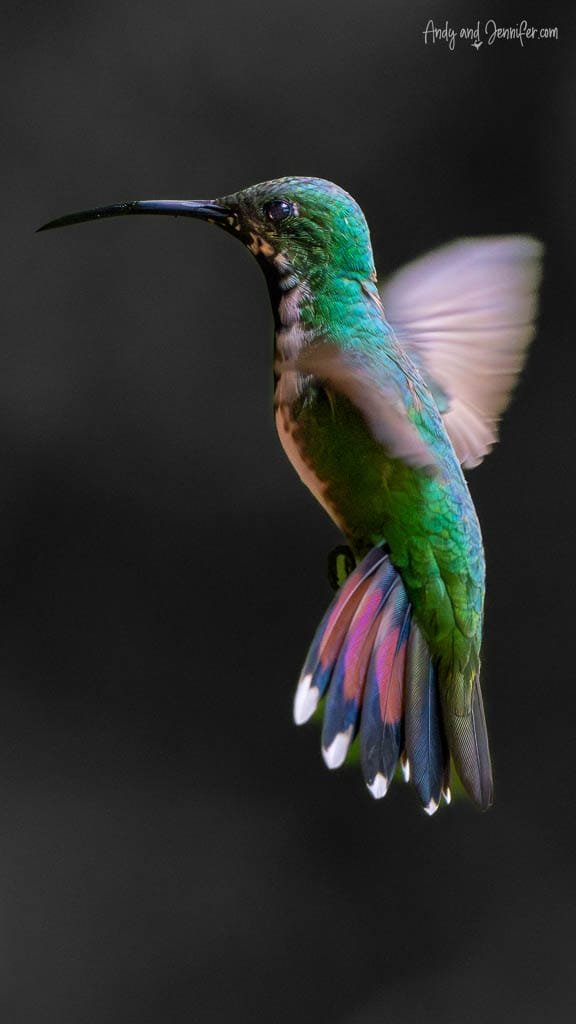
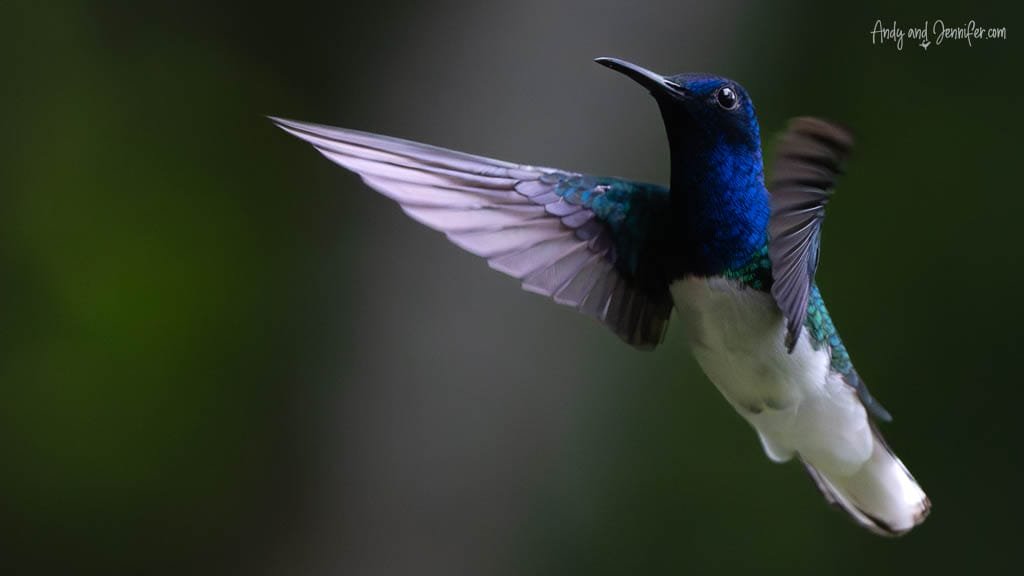
After breakfast we packed up, loaded everything into the van, and set off for our next destination: Selva Verde Lodge.
Next up –> Bird, Frog, and Macaw Photography

We’re Andy and Jennifer—two former corporate executives who chose long ago to prioritise experiences over stuff while pursuing our passions for travel and photography. From the Arctic to Antarctica, and most places in between, we’ve captured the world through our lenses and love sharing those stories. Our careers gave us the means, but our purpose is inspiring others to explore and helping people create images they’re proud of.