
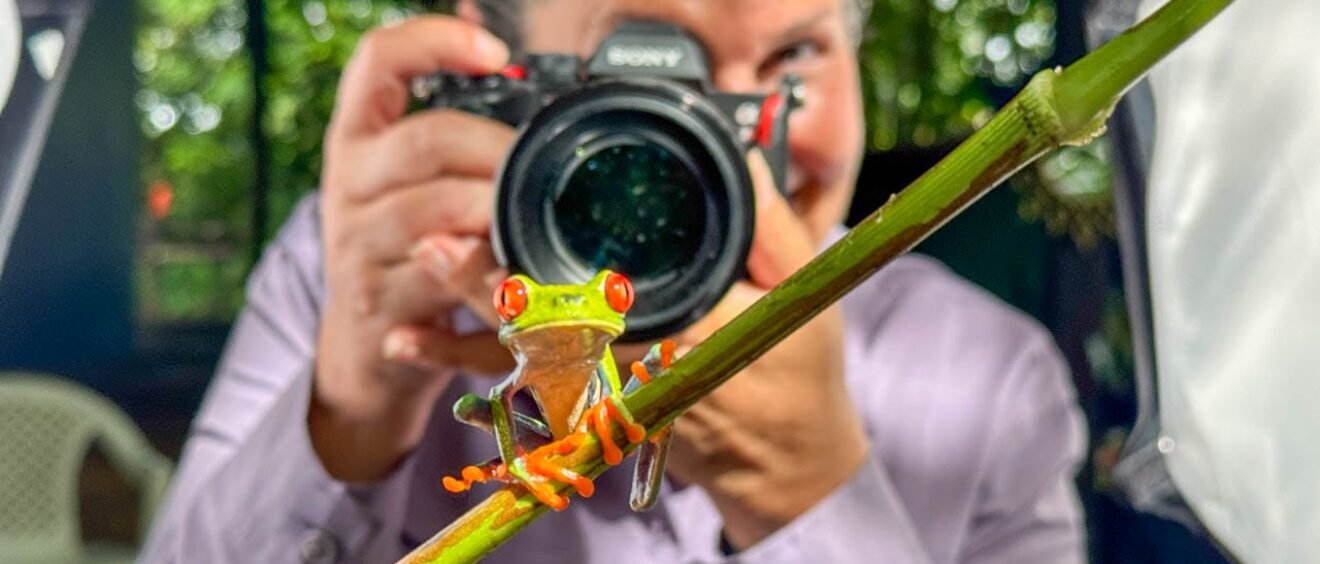
Snake and Frog Photography at Laguna Lagarto, Costa Rica
- Flying Sansa from Bocas del Toro to San Jose, Costa Rica
- Hummingbird Photography in San Gerardo de Dota
- Savegre Valley Bird Photography - Hummingbirds and the Resplendant Quetzal
- Hummingbird Flash Photography & Resplendant Quetzal
- Rancho Naturalista - Snowcap Hummingbirds & Bats
- Selva Verde - Bird, Frog & Macaws
- Birding at Laguna Lagarto
- King Vulture Hide
- Snake & Frog Photography (a.k.a. "herping")
- From Costa Rica to the Galapagos
The plan for today included snake and frog photography, or “herping” at Laguna Lagarto. But we’d had another sleepless night. Andy’s legs were covered in more bites than I could count, and mine had turned into bullet-shaped three-dimensional protuberances.
The bites had also gone from a personal problem to a group-wide issue. Several others were now dealing with the same thing, and with a few medical professionals in the group, the consensus was that we might be dealing with avian mites rather than standard mosquito bites.
Whatever they were, they weren’t pleasant.
Fortunately, the morning’s activity provided a very effective distraction: herping.
Herping at Laguna Lagarto
Herping is essentially the reptile and amphibian equivalent of birding, although in our case we weren’t heading into the rainforest looking for them. We were photographing snakes and frogs that had been temporarily collected for the photography session.
Hummingbird Photography at Laguna Lagarto
As with the hummingbird strobe workshops earlier in the trip, we split into two groups. While one group photographed snakes and frogs, the other photographed hummingbirds.
We had the hummingbirds first.
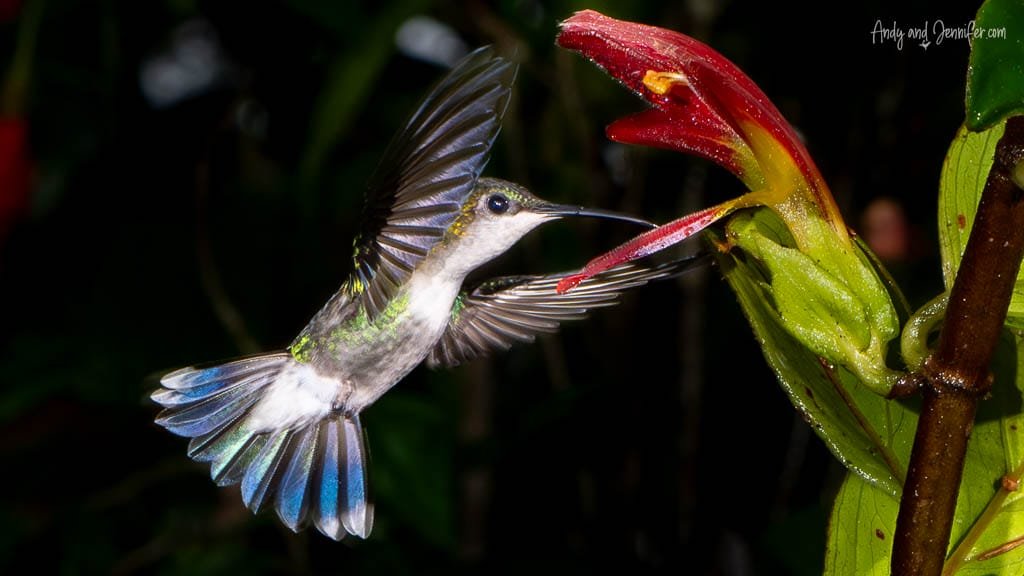
The setup was similar to the others we’d used in Costa Rica. A variety of flowers were positioned for photography and then sprayed with nectar to attract the birds. I won’t bore you with another 100 hummingbird images. The one that was different here was a hermit hummingbird.
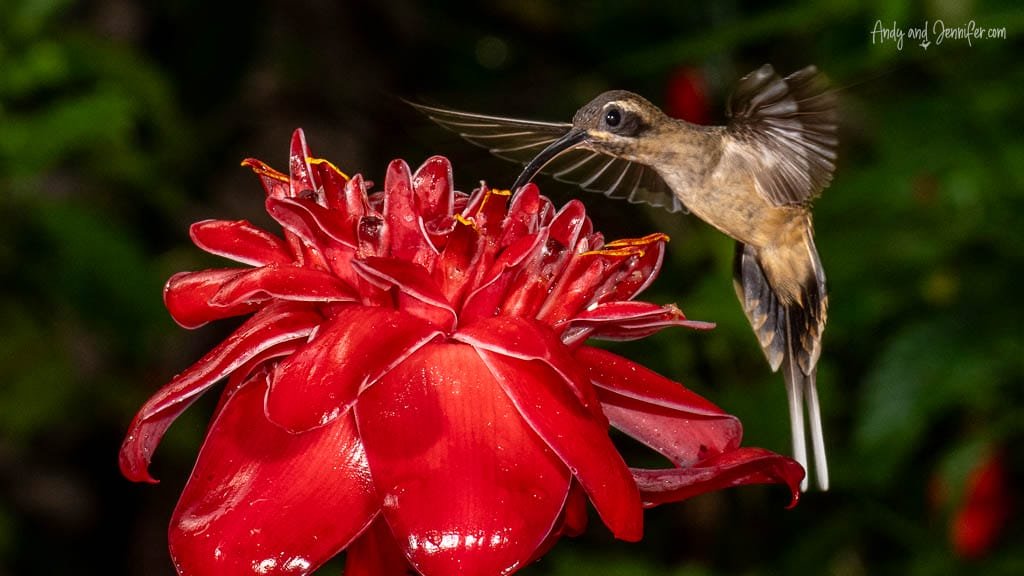
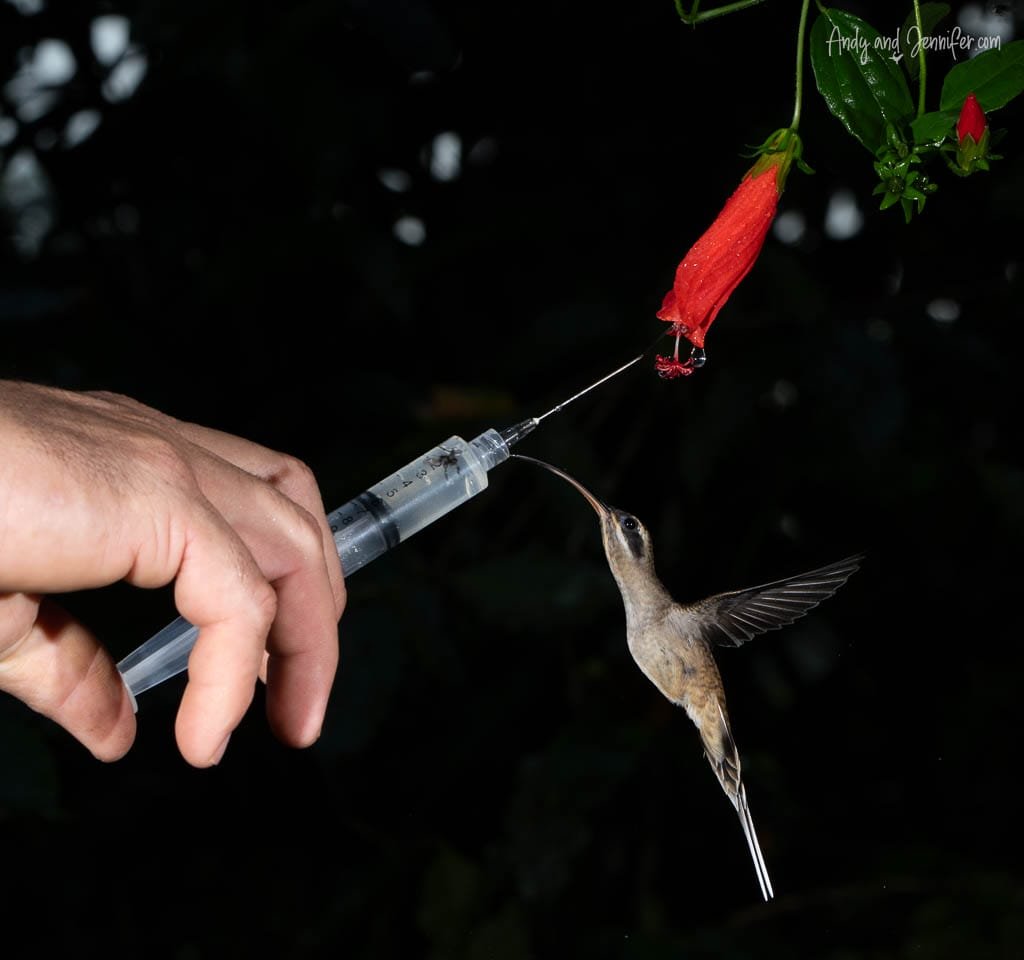
It apparently figured out where the sugar water was coming from and decided there was no reason to bother with the flowers. It went straight to the source.
After about an hour, the other group finished and it was our turn for the snakes.
Snake Photography at Laguna Lagarto
The snake handler, or “wrangler,” approached the process with a level of precision that made it clear this was not his first time doing this. He carefully positioned each snake on a perch, adjusted the angles for better compositions and removed distracting leaves and branches from the frame.
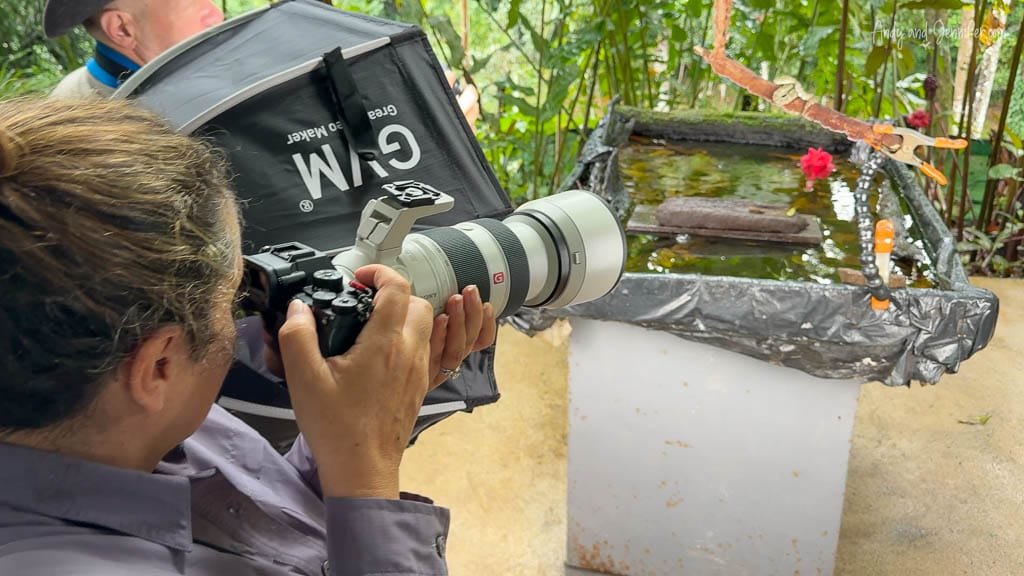
The lighting setup relied on continuous video lights rather than strobes. Given that startling a venomous snake with a flash didn’t seem like a particularly good idea, I was fine with that.
The snakes themselves came through a local arrangement. Farmers in the area call the lodge when they encounter one, and the owner collects it. The snakes are kept briefly and, if calm enough, used for photography before being released back into the wild within a day or two.
We photographed four snakes, including a fer-de-lance, a rainforest hognose pitviper and two different eyelash vipers.
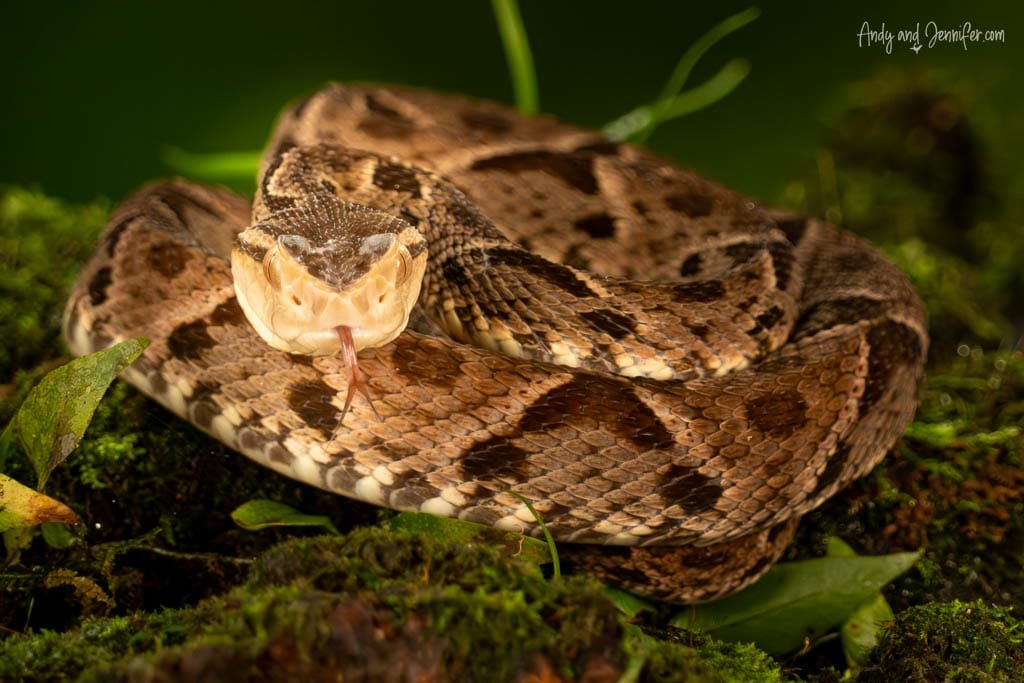
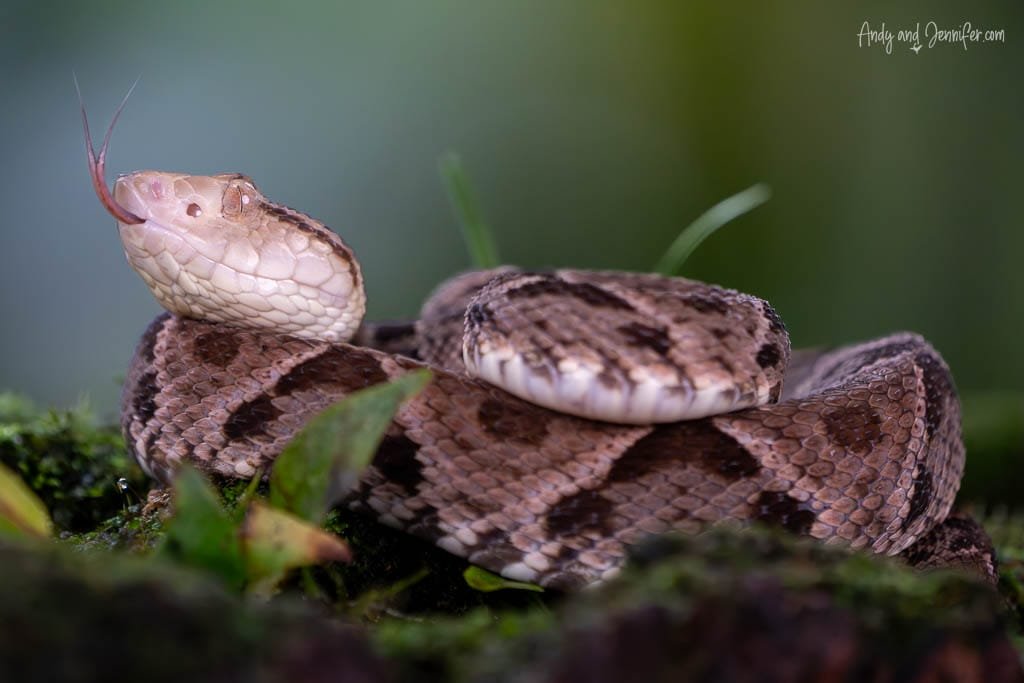
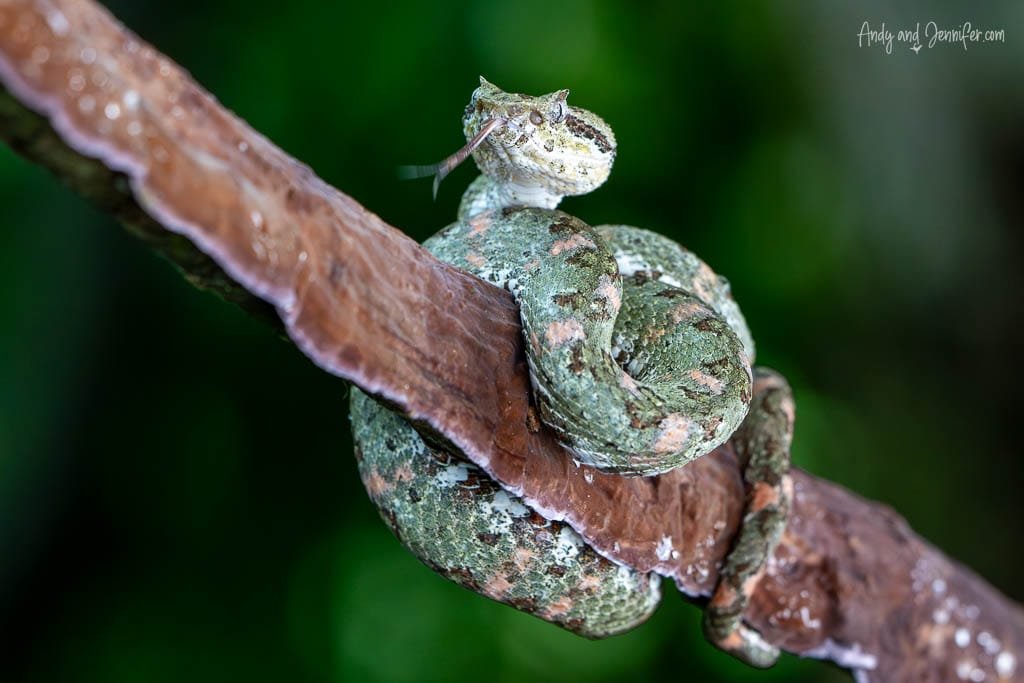
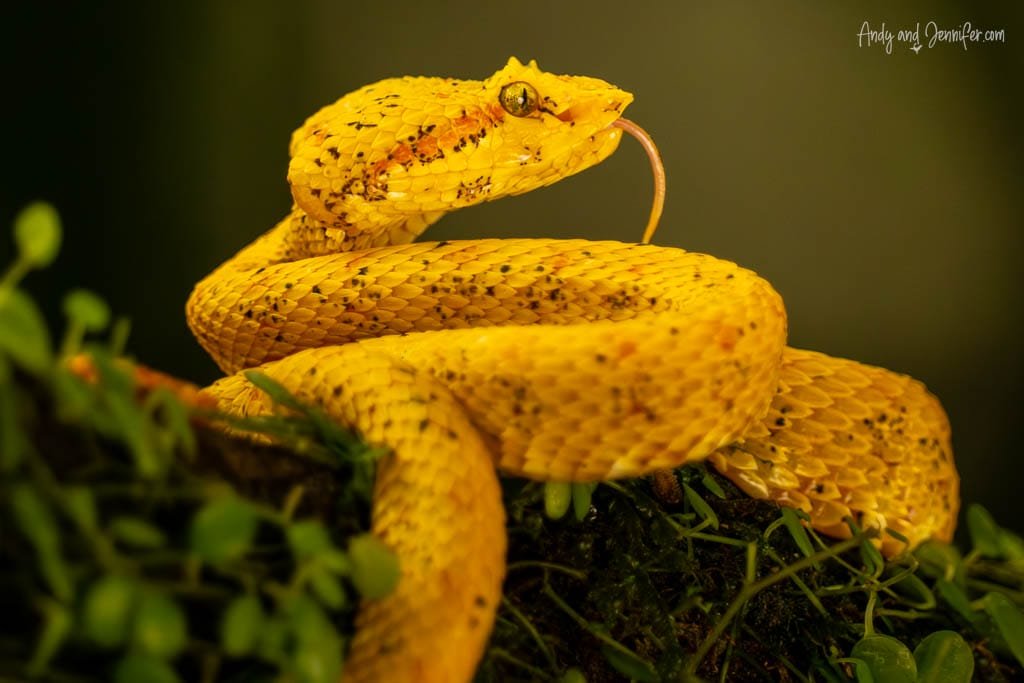
And, just as it had during our bat photography session, my Apple Watch alerted me that my heart rate had increased.
I was thankful the snakes weren’t particularly active, but I have to admit I didn’t love photographing them. I generally prefer wildlife photography where I can capture behaviour and personality, and snakes weren’t exactly giving me much of either.
Frog Photography at Laguna Lagarto
I enjoyed the frogs more.
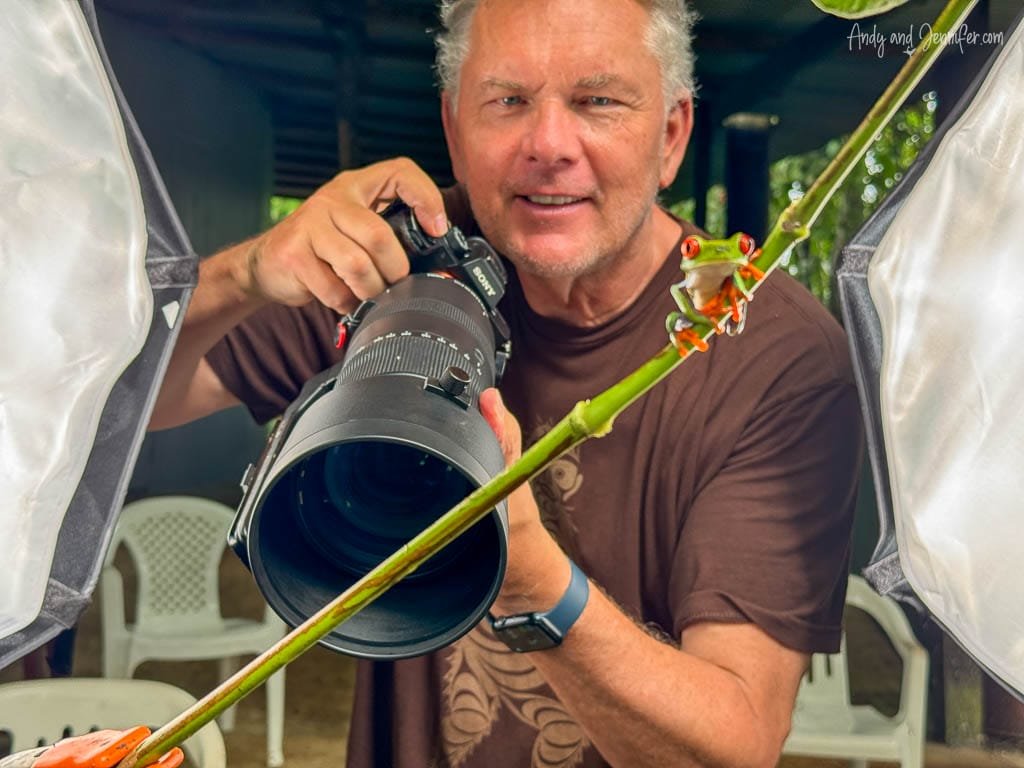
Unlike the snakes, the frogs were collected from right around Laguna Lagarto shortly before our photography session and released immediately afterward. They were also slightly less cooperative. Every so often one would simply hop off its carefully arranged perch mid-session, which at least gave them a bit more personality. We photographed three different types of frogs: strawberry poison dart frog, green and black poison dart frog, and red eyed tree frog.
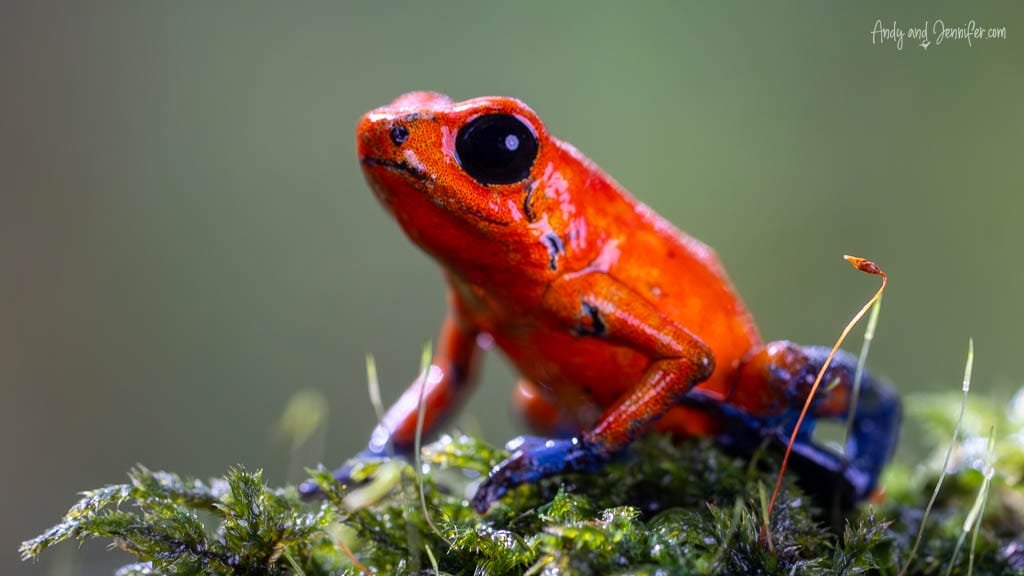
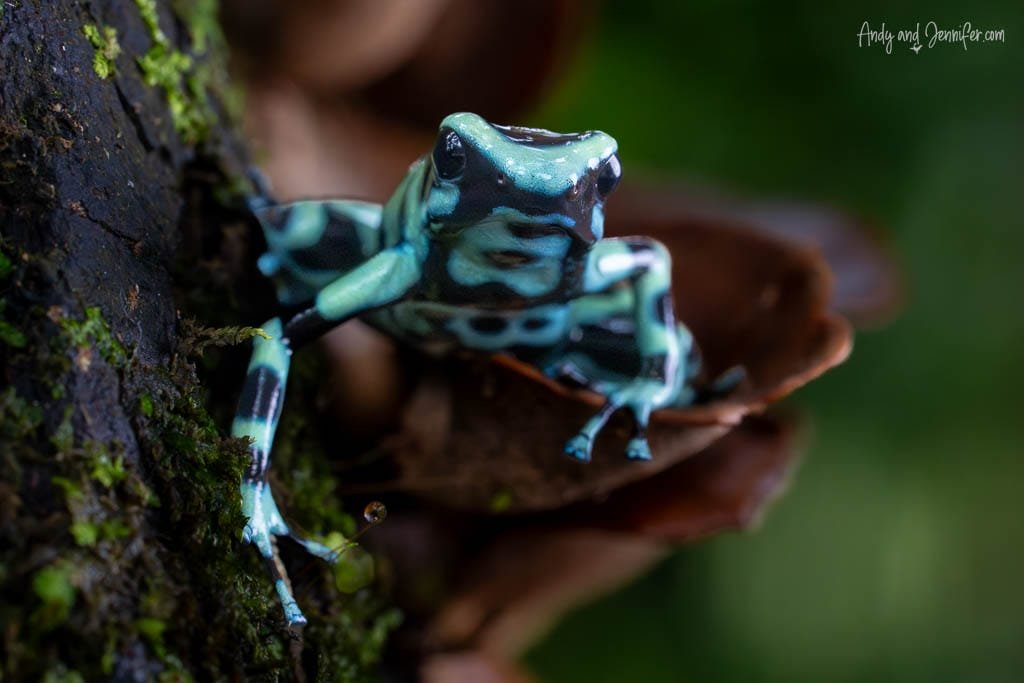
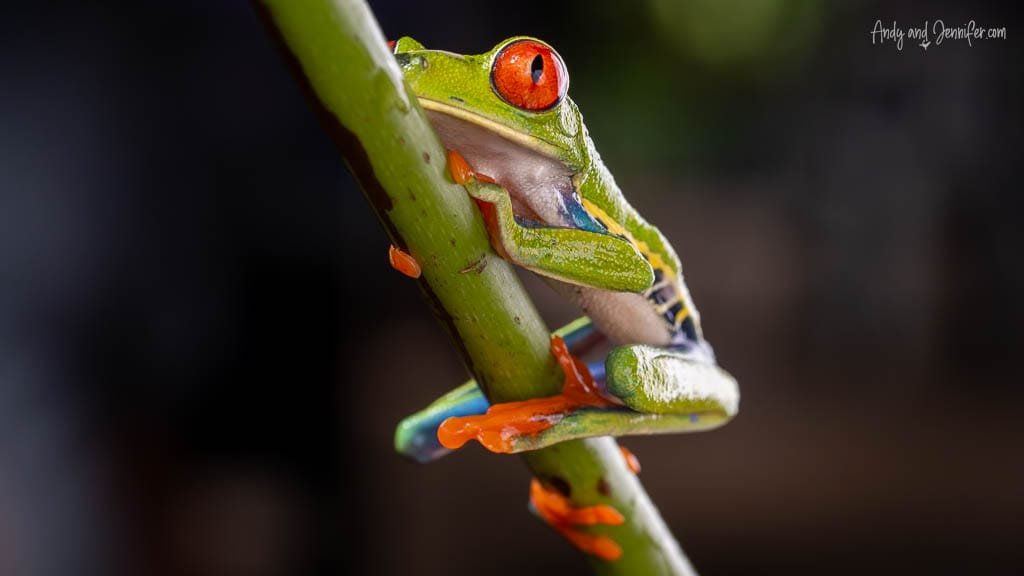
With their oversized eyes and expressive faces, I found the frogs much more appealing to photograph. The snakes never quite won me over in the same way.
Next up –> From Costa Rica to the Galapagos

We’re Andy and Jennifer—two former corporate executives who chose long ago to prioritise experiences over stuff while pursuing our passions for travel and photography. From the Arctic to Antarctica, and most places in between, we’ve captured the world through our lenses and love sharing those stories. Our careers gave us the means, but our purpose is inspiring others to explore and helping people create images they’re proud of.
Related Posts
 Birding at Laguna Lagarto in Boca Tapada, Costa Rica
 Bird, Frog and Macaw Photography in Sarapiquí, Costa Rica
 King Vulture Photography at Laguna Lagarto, Costa Rica
 Snowcap Hummingbirds and Bat Photography at Rancho Naturalista, Costa Rica
 A Bucket List Trip to See the Brown Bears at Brooks Lodge
 From Costa Rica to the Galápagos Islands via Quito