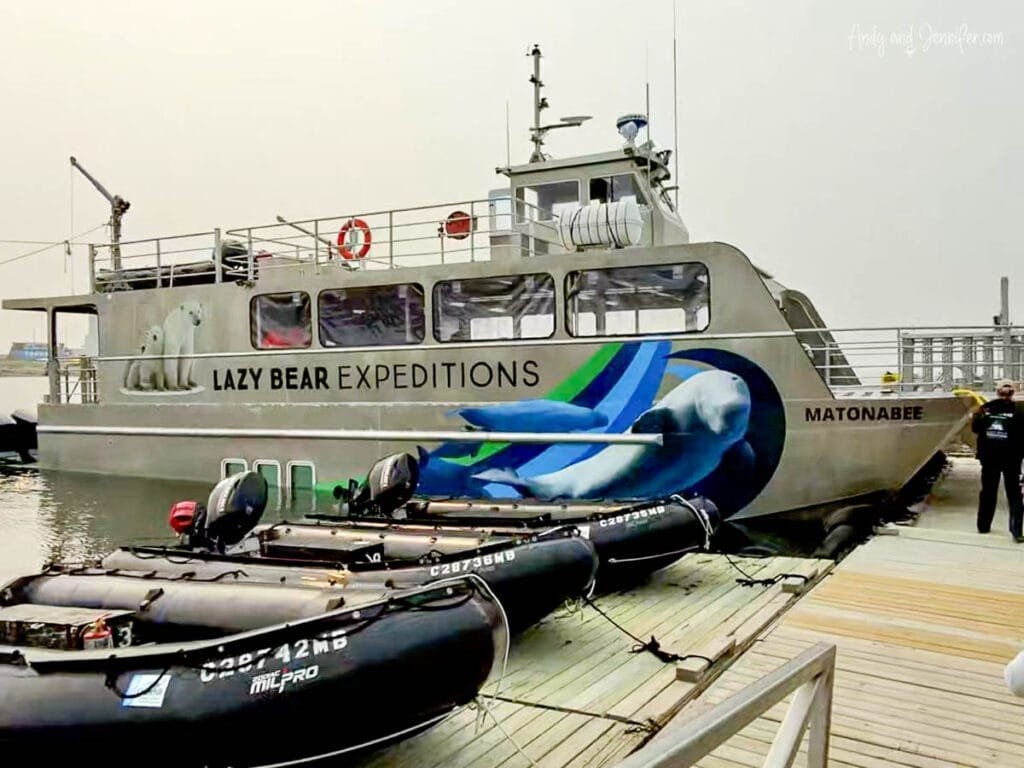
After a hearty breakfast, we loaded into the van for a short drive to the marina on the Churchill River. The weather was slightly overcast, and I have to admit, I was a little anxious. Would we see bears? And if we did, would they be close enough that they appeared as more than a pixel or two in photos?
The boat was excellent, with plenty of room inside for our group of 20 to spread out. It had bathrooms, tea and coffee, and snacks throughout the day. Outside, there was a large deck at the front, a huge deck up top, and a smaller deck at the back, so you could be outside and looking in any direction. This would prove useful later.
The vessel carried a few zodiacs and even had two underwater viewing chambers built into the pontoons, with windows below the waterline. It was also incredibly stable. With no wind or swell, I knew I would not be seasick today.
Journey to Fireweed Island
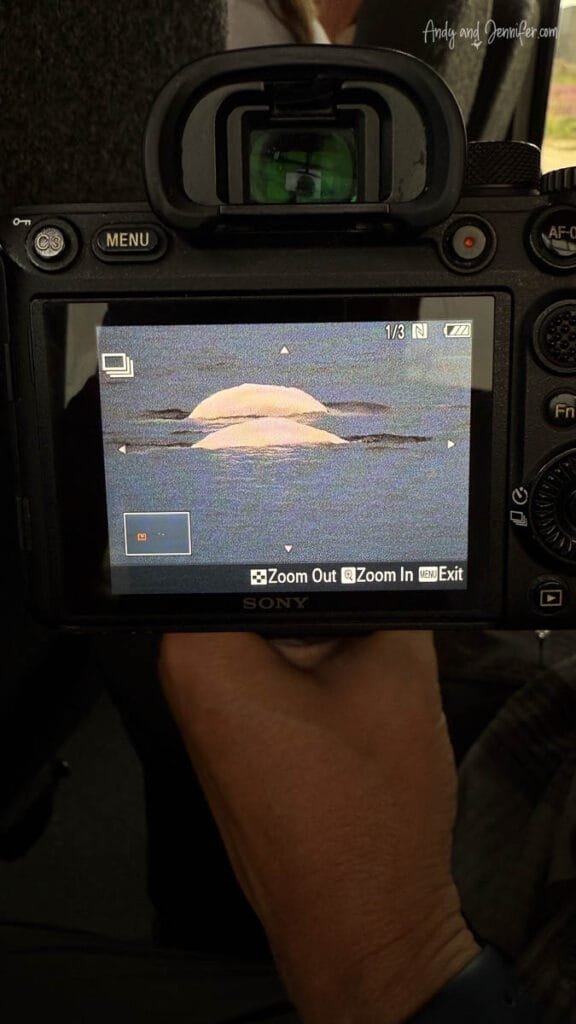
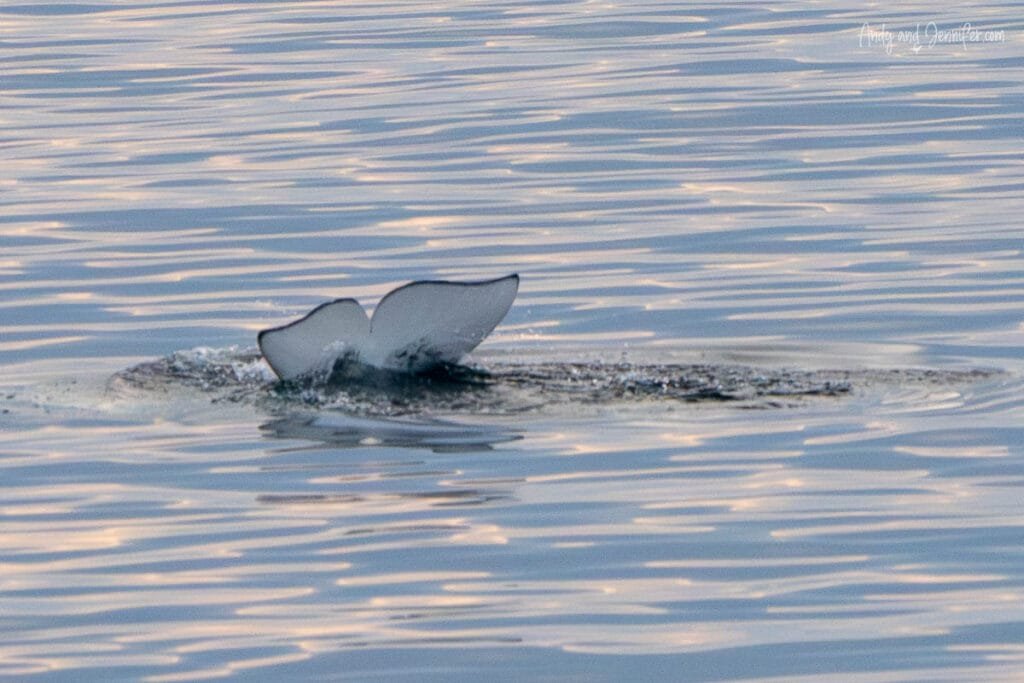
Belugas were still in the river, but the guides explained that this day was all about polar bears. The belugas would still be there tomorrow during our scheduled activities. I was a little disappointed, but trusted their expertise (and clicked a few photos anyway).
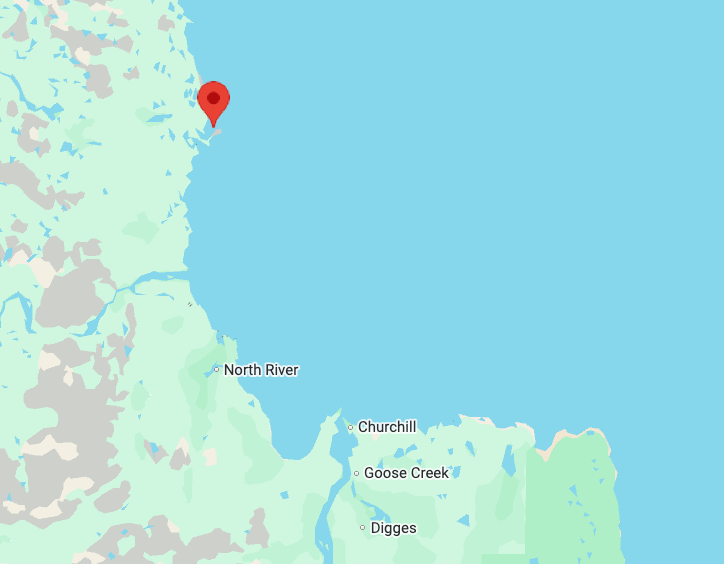
Fireweed Island is about two hours north of Churchill by boat, on the edge of the Kivalliq Region of Nunavut, Canada’s largest and northernmost territory. To say that this is remote is a massive understatement.
We spotted a few polar bears before even leaving the river, but our guides reassured us the best was still ahead, so we did not stop. We could not have asked for better conditions: calm water, clear skies, and then brilliant sunshine.
Polar Bears Among the Fireweed
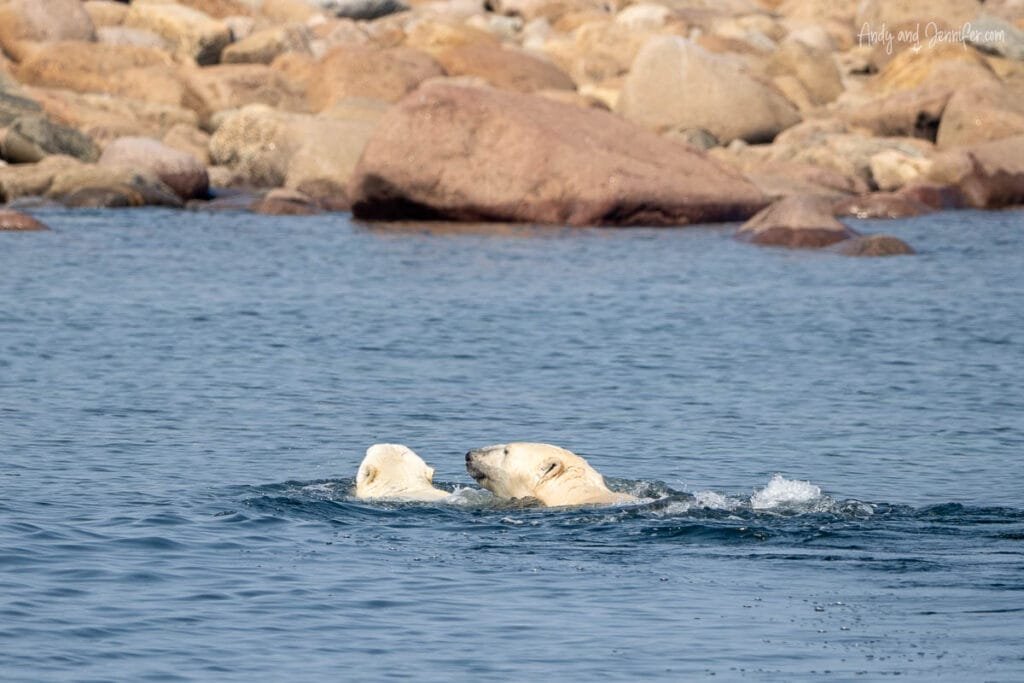
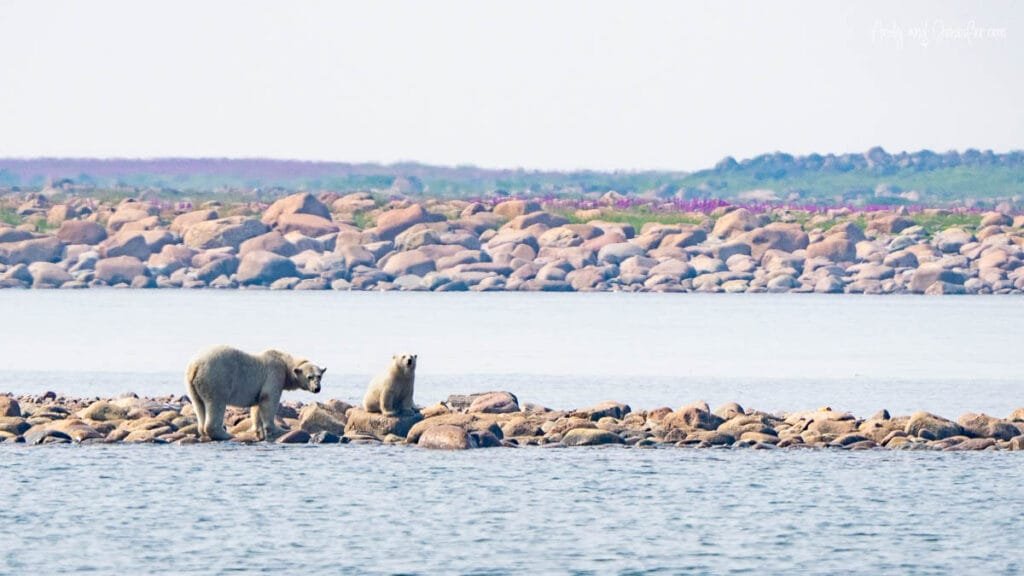
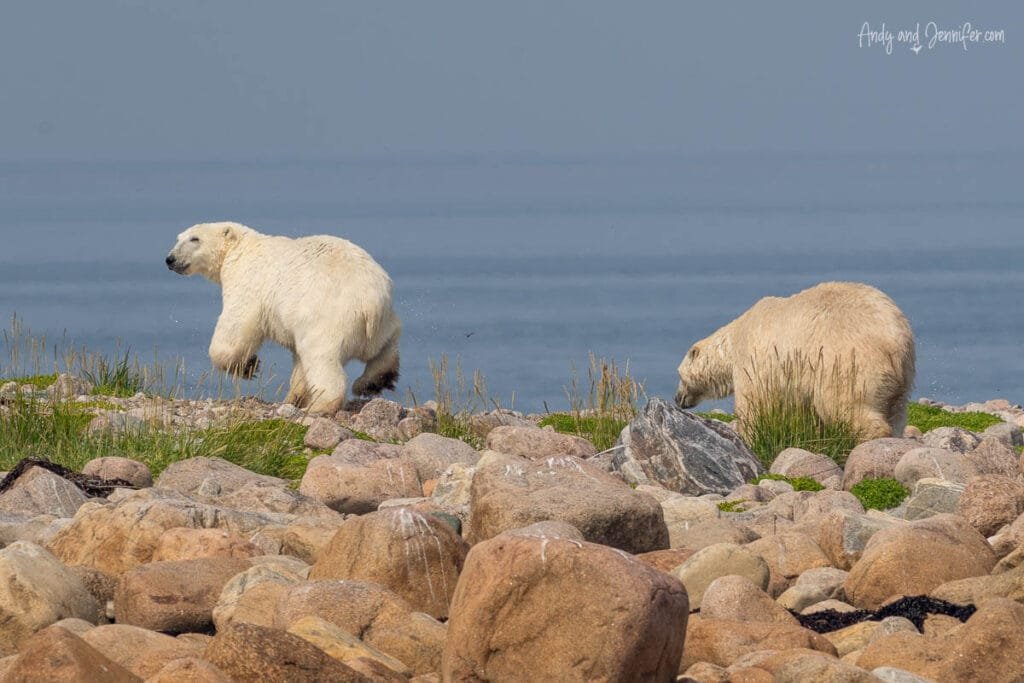
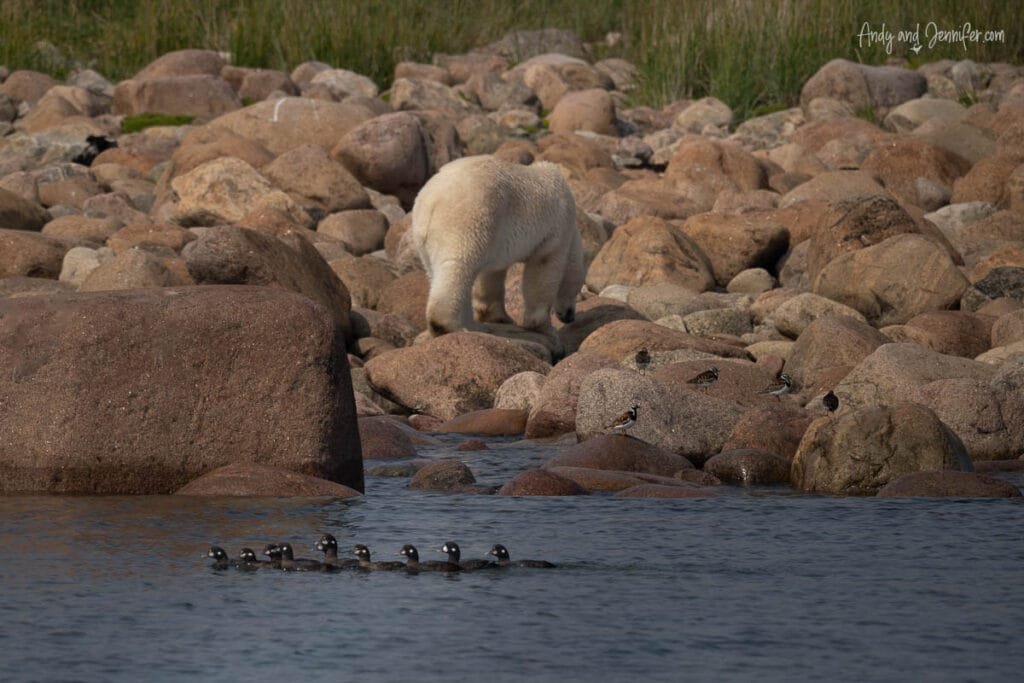
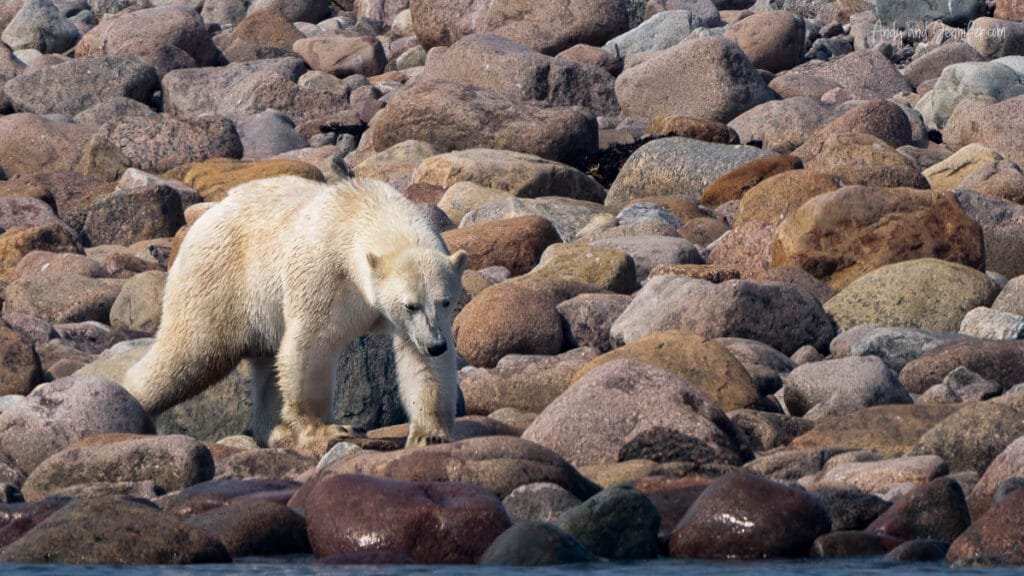
I felt the boat slowing and rushed out on deck, just in case there was a sighting. That was something I learned the hard way on the ferry in Canada. We had reached Fireweed Island, and the rocky shoreline was lined with bears. Two were swimming right in front of the boat, a mother and cub lounged at the far end of the bay, and several others ambled along the beach while harlequin ducks swam nearby.
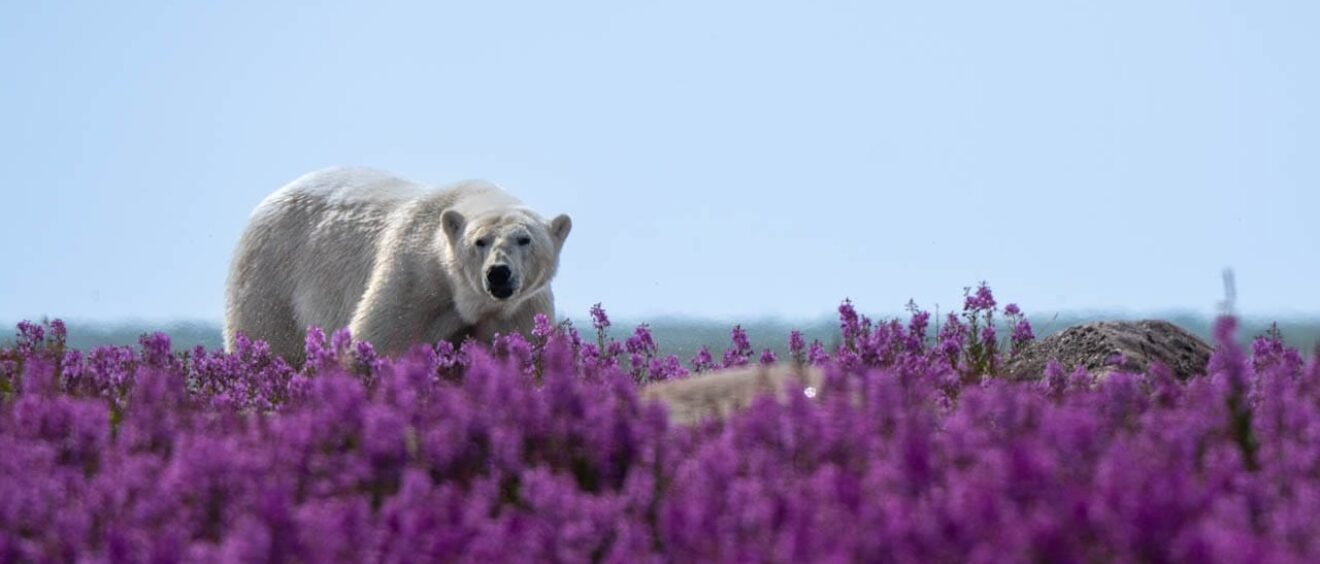
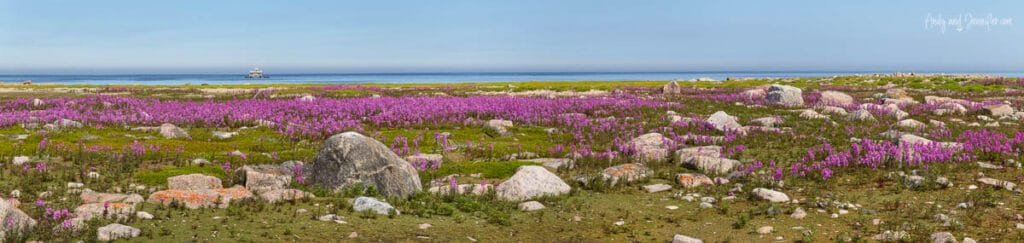
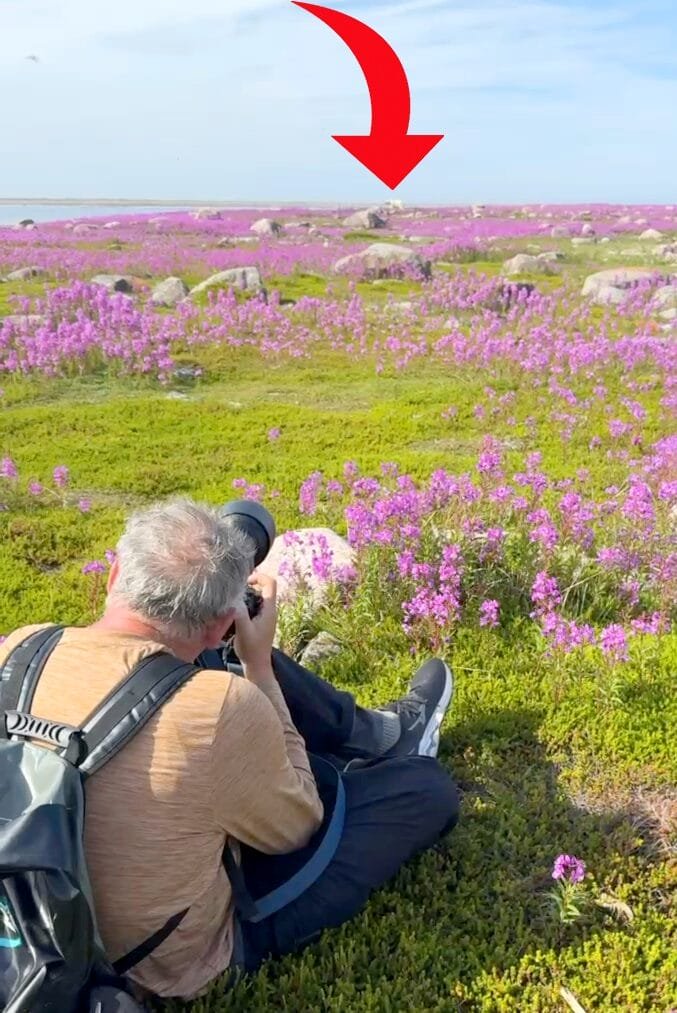
I was the first one out there, which meant a prime position. The only problem was that I had my phone, not my camera. I sat down and started filming while Andy shot stills from the back. We counted at least eight bears before we even landed. In the first five minutes, we had seen more bears than we did in eight days in Svalbard, and at a much closer range. The fireweed itself was in bloom, its vibrant purple standing out against the tundra. For a moment we thought it was lupine, which we had seen elsewhere, but this wildflower, Chamerion angustifolium, is quite different. Everything was coming together. I didn’t have my hero shot yet, but my anxiety had eased.
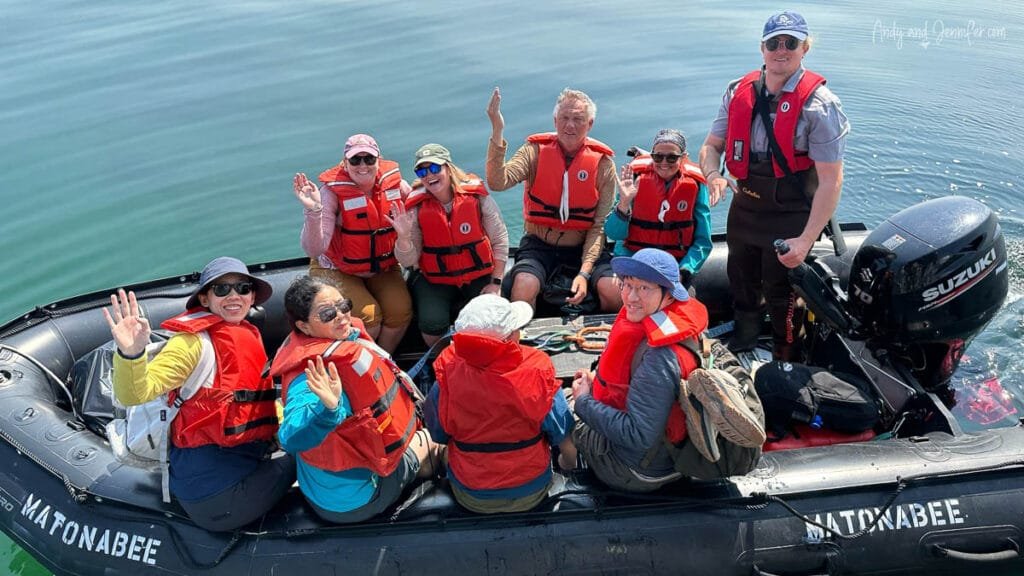
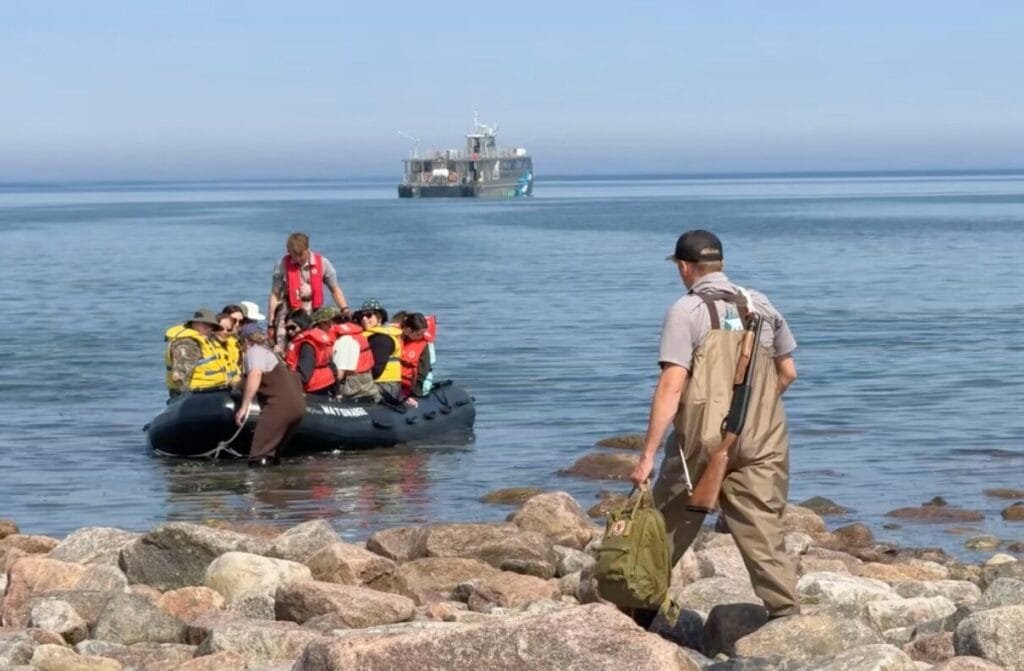
We transferred into zodiacs for a short hop to shore. With the tide high, it was a wet landing onto the rocky beach, so we were given reef shoes and our dry shoes were carried separately in waterproof bags. Hiking sticks were available for those who wanted them.
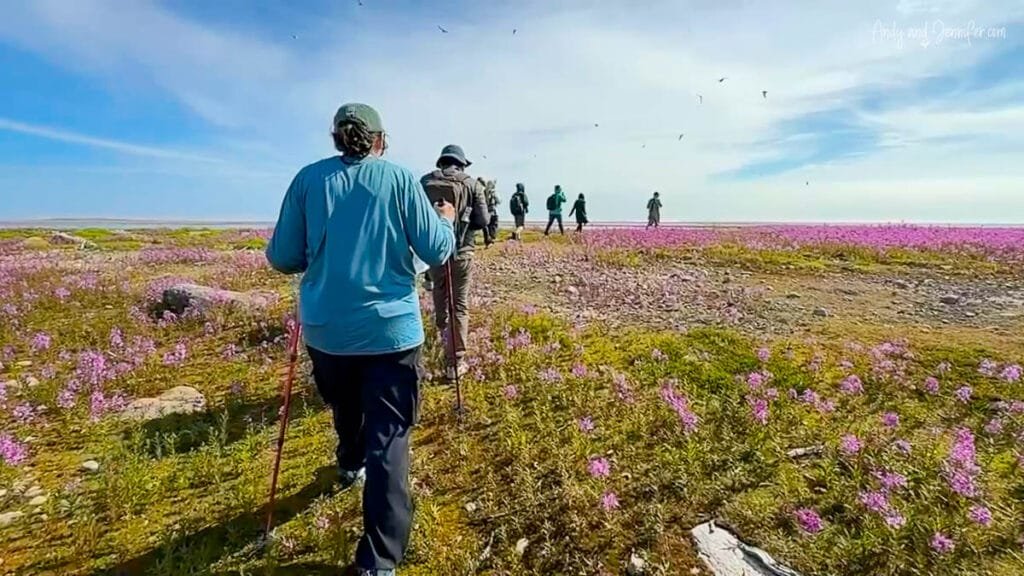
From the landing area we could already see bears in the distance. We set off in single file, with a rifle-toting guide at each end.
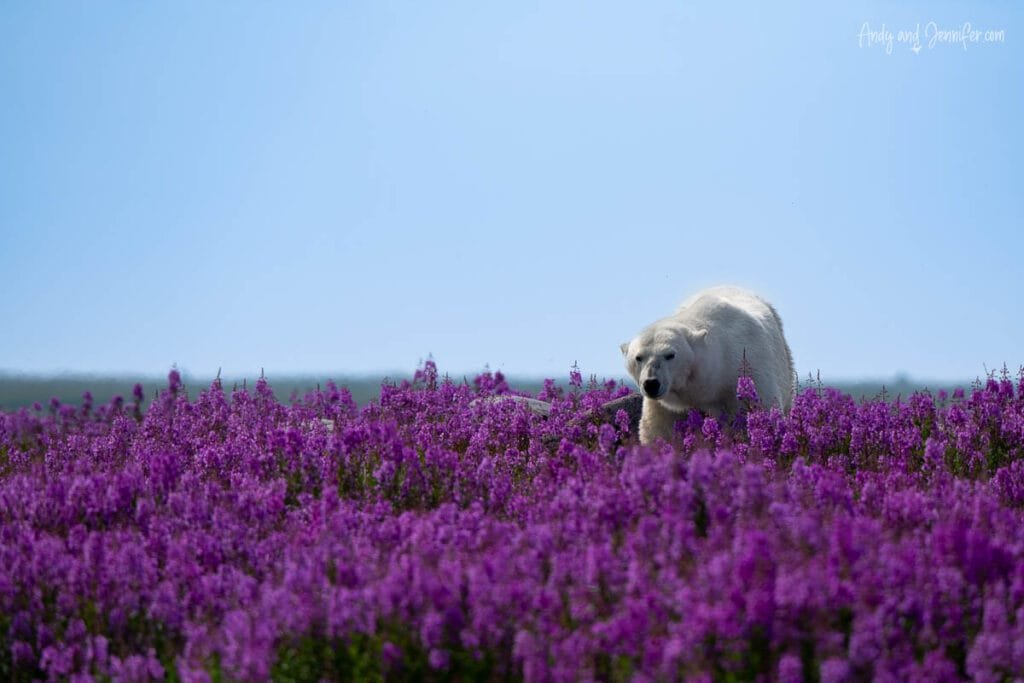
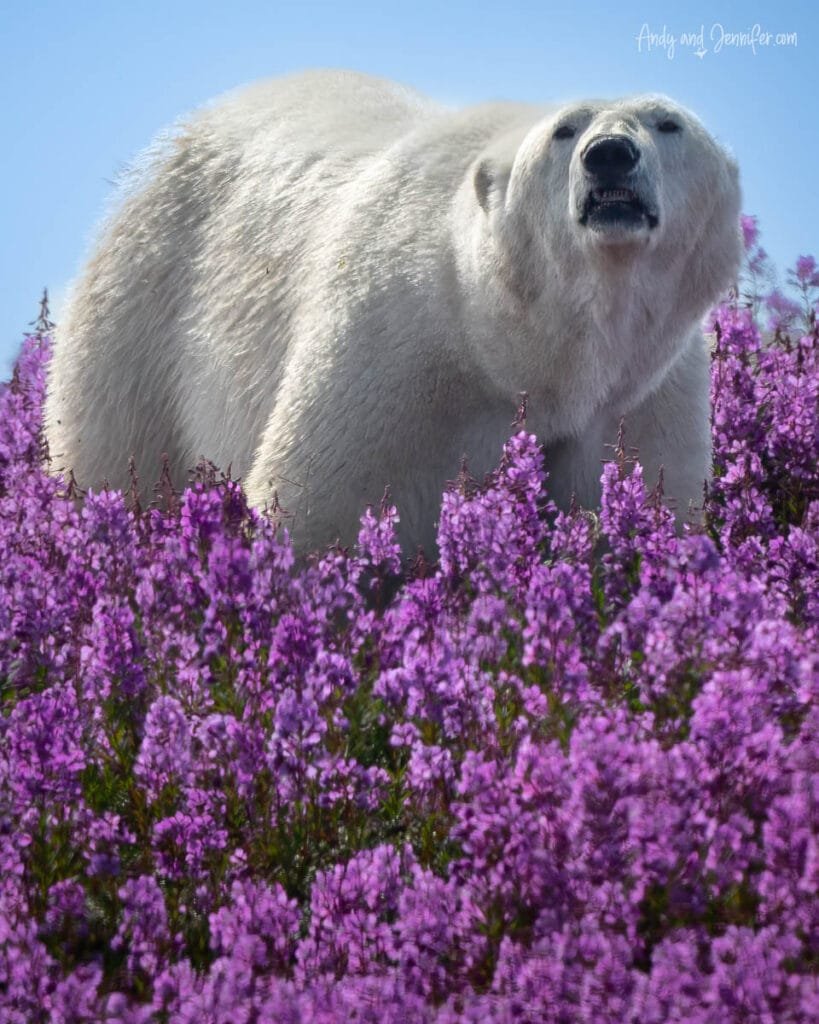
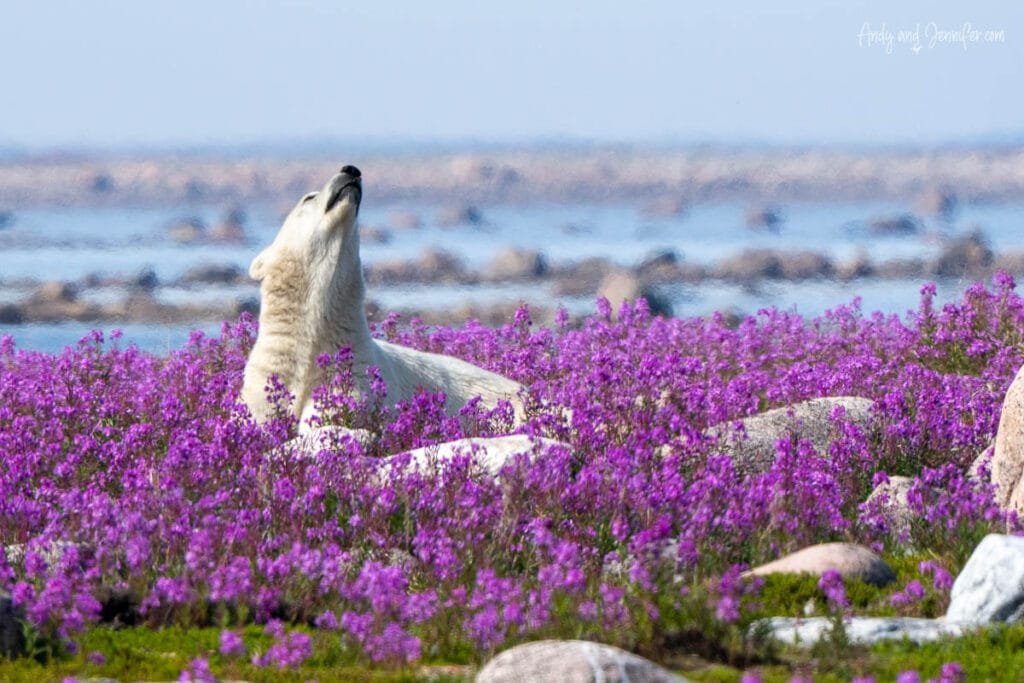
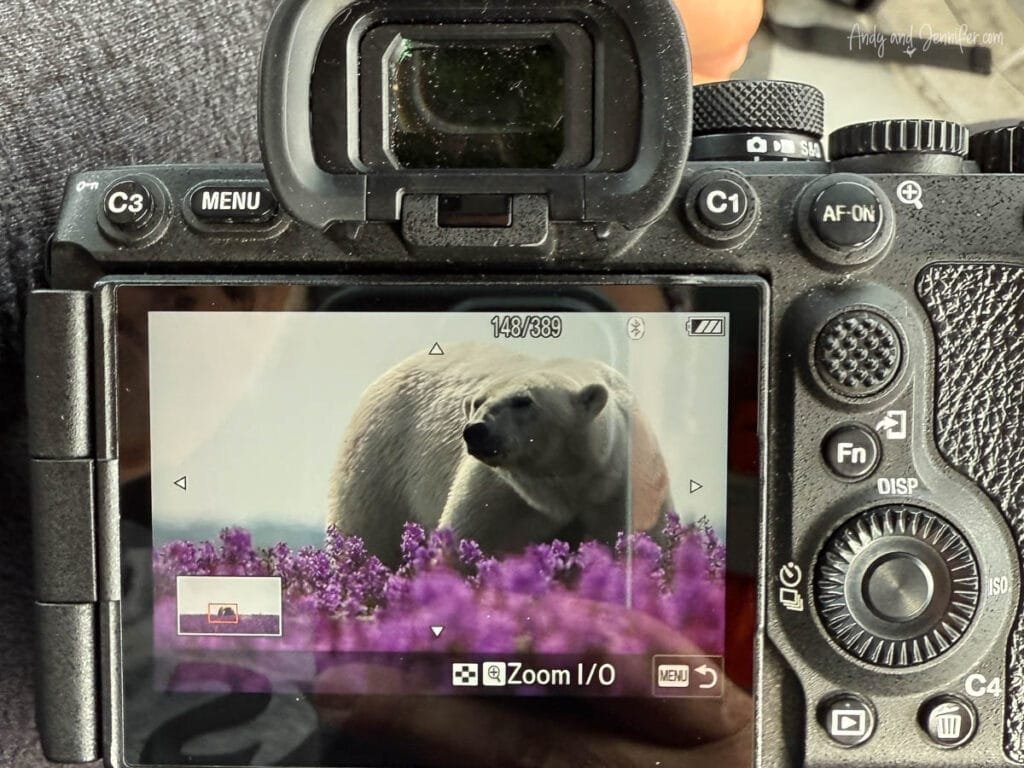
Within ten minutes we had found what we had come for: a polar bear framed perfectly in the fireweed.
Fireweed Island itself almost looked AI-generated. The scene was so vivid that, had I not witnessed it with my own eyes, I might have assumed the photographs were digitally altered.
Did I get the portfolio-worthy shot that I hoped for? No. I would have loved to be closer, because the heat haze caused some distortion in the images. That said, this encounter exceeded every expectation. The bears were aware of us, but they showed no sign of concern. The guides ensured we always kept a respectful distance. If a bear shifted its behaviour or moved closer, we would retreat. It was safe, well organised, and deeply respectful of the animals. For context, this is how close we were to the bears (and why you need a very long lens for wildlife photography).
We spent two hours on the island, changing locations and seeing a total of four different bears. The time absolutely flew by. At one point we heard what sounded like gunfire. The captain radioed the guides to let them know that Inuit hunters were in the area hunting beluga. The idea of hunting whales really bothered me, but beluga numbers here are stable, and the Inuit use every part of the animal, taking only what they need. I was left feeling a little conflicted, but also aware that this is an important part of local tradition and survival.
Belugas on the Return Journey
The mood on the boat afterwards was electric, everyone thrilled with their images and the experience.
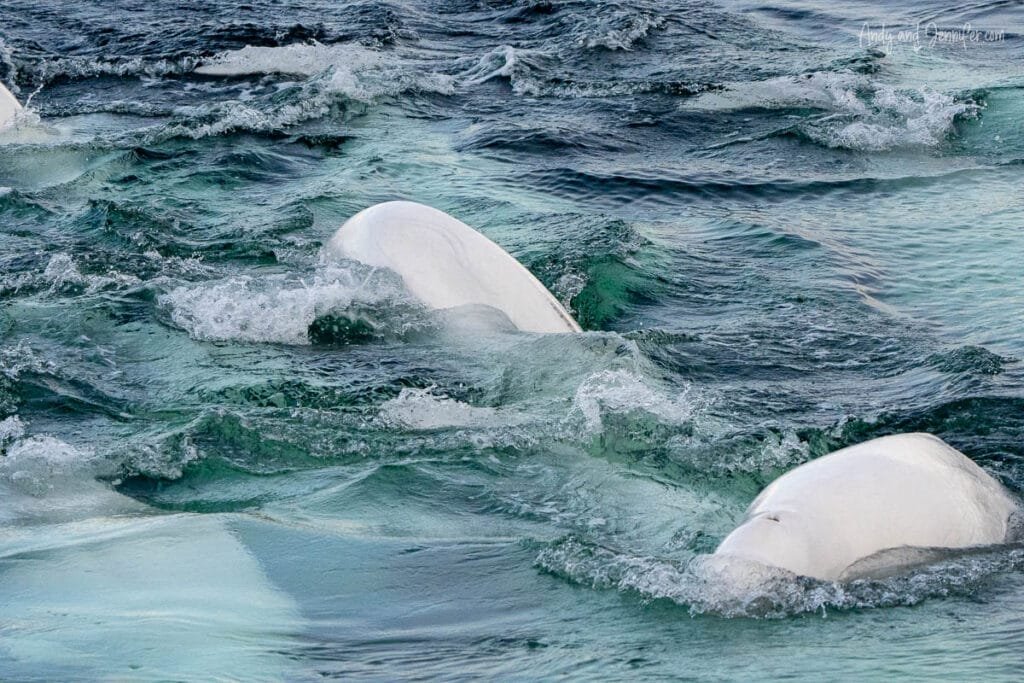
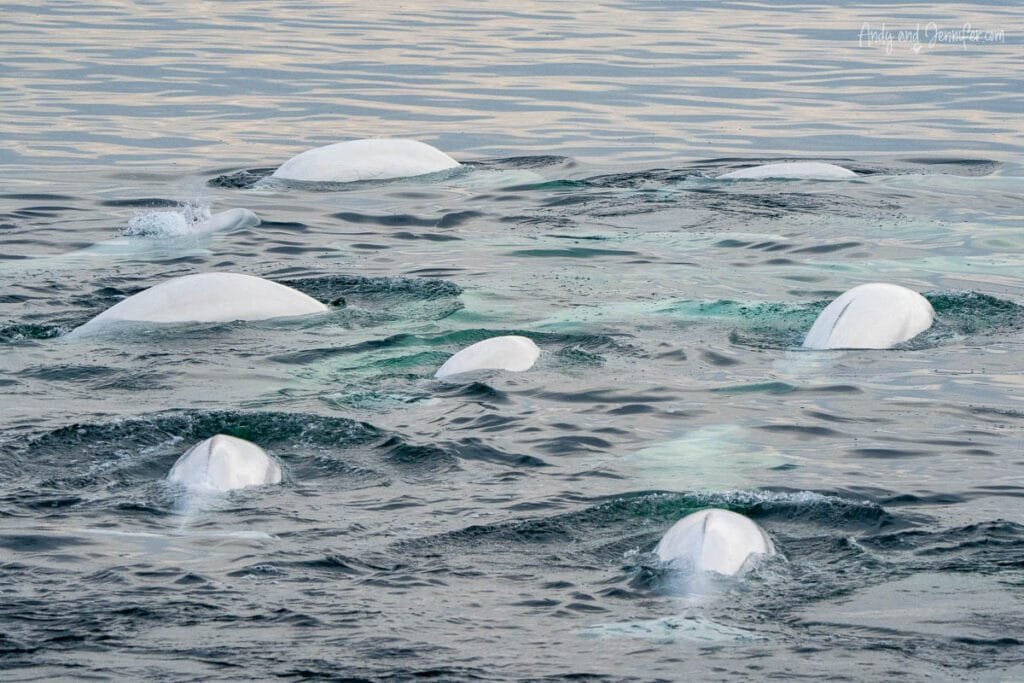
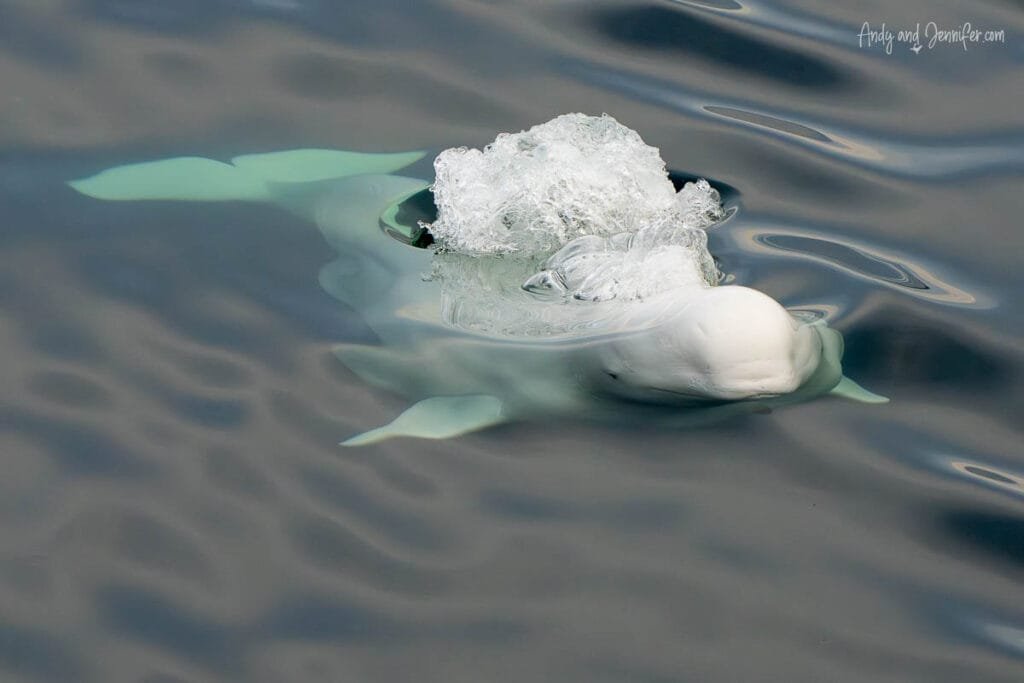
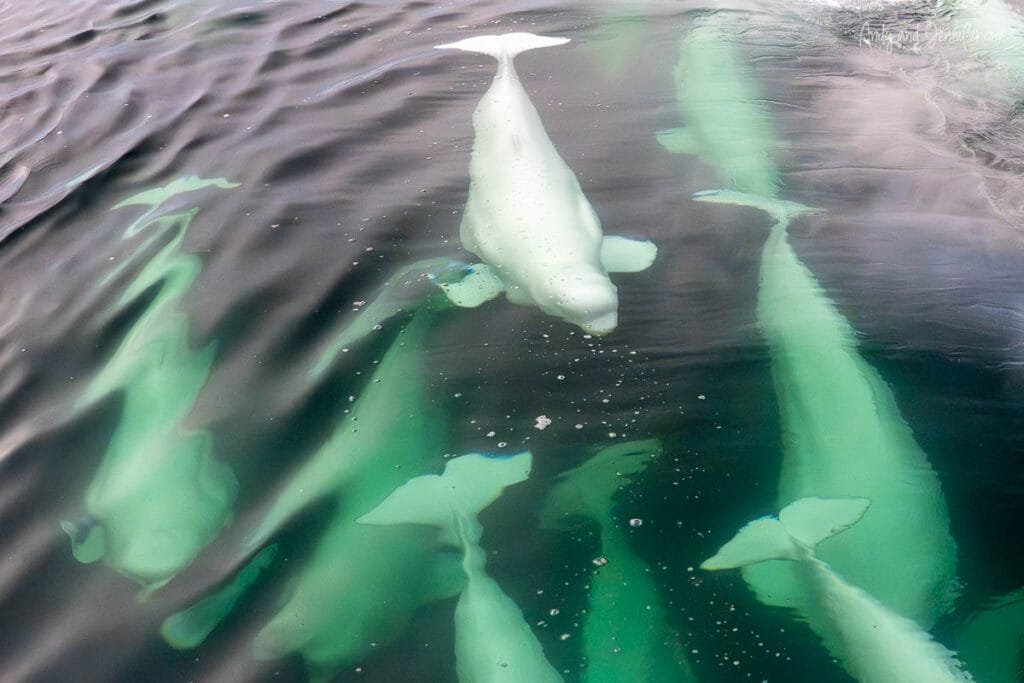
About an hour into the return journey, the captain slowed the boat. As with earlier, we recognised this was a signal of something good. Suddenly we realised we were surrounded by belugas. Hundreds of them.
We drifted in silence, awestruck by the sight. Adults glowed white beneath the surface while calves, softer shades of grey, stayed close to their mothers. They seemed fascinated by the engine bubbles, circling and following us playfully.
We watched for nearly 90 minutes, moving around the boat to capture different angles. The whales were so close that our zoom lenses were useless, and we resorted to iPhones and a wide-angle backup camera. But mostly, we just watched.
And the wildest part? This was not even the best beluga experience of the trip.
We’re Andy and Jennifer—two former corporate executives who chose long ago to prioritise experiences over stuff while pursuing our passions for travel and photography. From the Arctic to Antarctica, and most places in between, we’ve captured the world through our lenses and love sharing those stories. Our careers gave us the means, but our purpose is inspiring others to explore and helping people create images they’re proud of.