
Savegre Valley Bird Photography and Searching for the Resplendent Quetzal
- Flying Sansa from Bocas del Toro to San Jose, Costa Rica
- Hummingbird Photography in San Gerardo de Dota
- Savegre Valley Bird Photography - Hummingbirds and the Resplendant Quetzal
- Hummingbird Flash Photography & Resplendant Quetzal
- Rancho Naturalista - Snowcap Hummingbirds & Bats
- Selva Verde - Bird, Frog & Macaws
- Birding at Laguna Lagarto
- King Vulture Hide
- Snake & Frog Photography (a.k.a. "herping")
- From Costa Rica to the Galapagos
Our day of Savegre Valley bird photography had two main parts. First we would do some hummingbird photography at a nearby garden, and in the afternoon we would stake out a wild avocado tree hoping to see the resplendant quetzal.
The days started beside the Savegre River, where the sound of water rushing over rocks filled the valley long before sunrise.
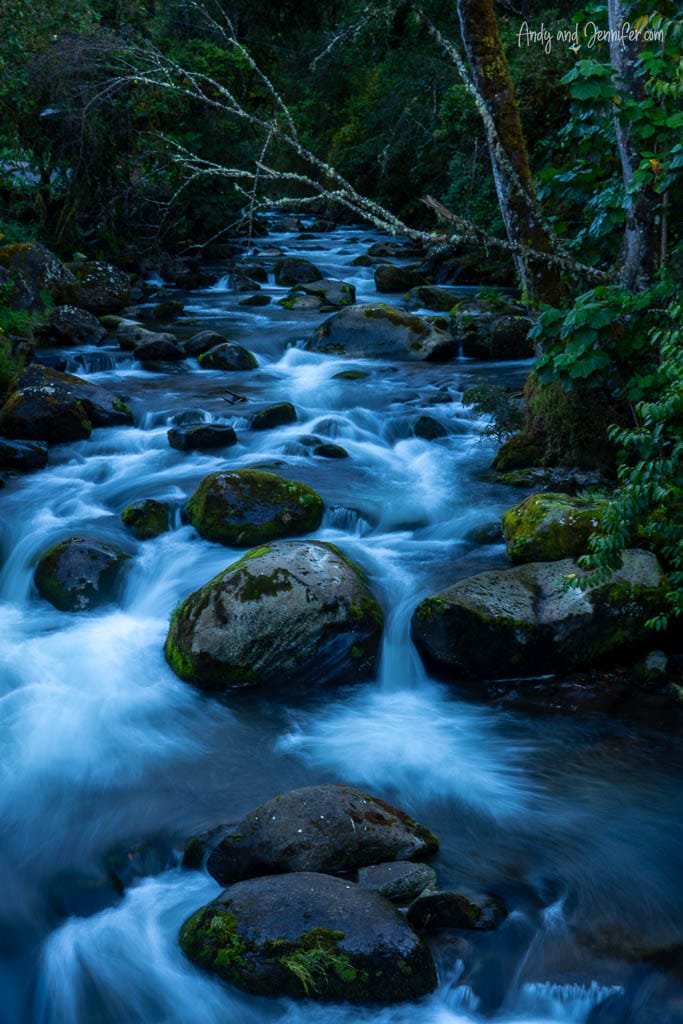
There was an option to meet at 6 a.m. for some long exposure photography along the river. Andy went down to join the group, while I stayed back to back up images from the previous day.
Hummingbird Photography at Savegre Lodge Gardens
We were only here for one night, so after breakfast we packed up the van and headed next door to Savegre Lodge. The gardens are run separately from the hotel and are set up specifically for birdwatching and photography.
Located in the Savegre Valley near San Gerardo de Dota, the gardens are one of Costa Rica’s best-known spots for hummingbird photography. The combination of flowering plants, feeders, and surrounding montane cloud forest attracts photographers and birdwatchers throughout the year.
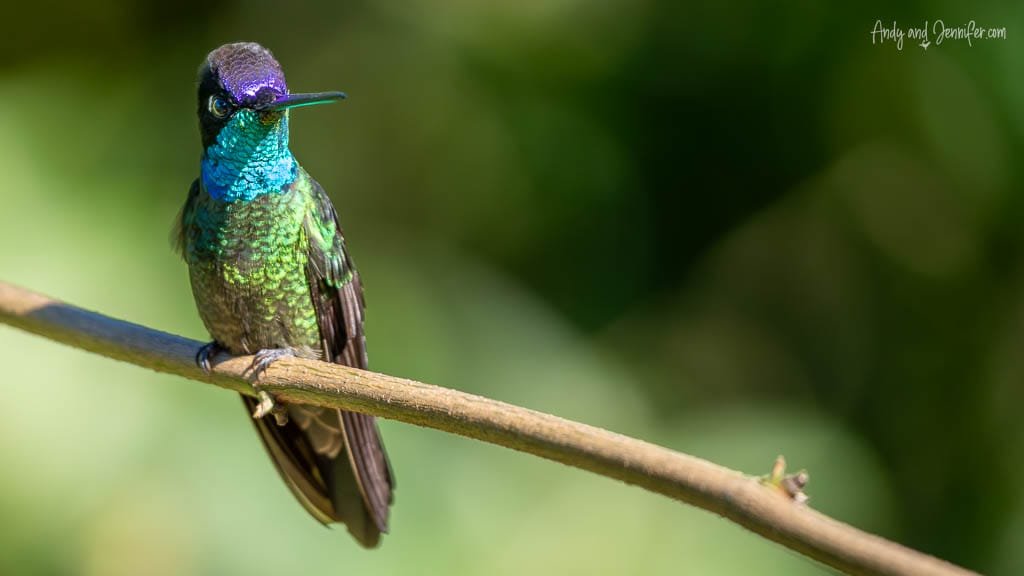
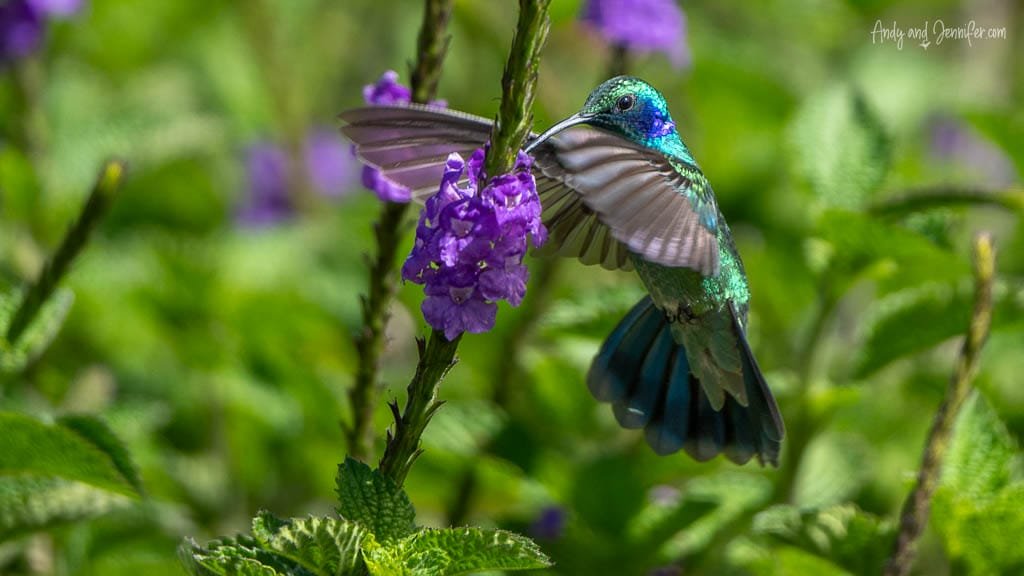
The feeders attract a steady stream of hummingbirds, but what makes the location especially nice is that the birds also spend time feeding naturally on nearby plants. Purple verbena seemed to be a particular favourite, which meant there were plenty of opportunities to photograph hummingbirds in natural surroundings rather than only at feeders.
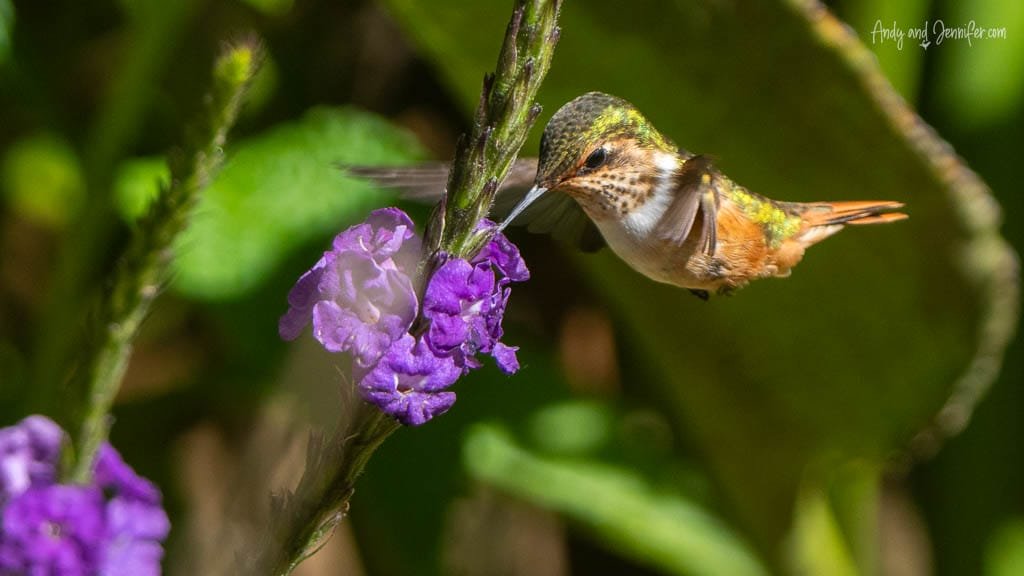
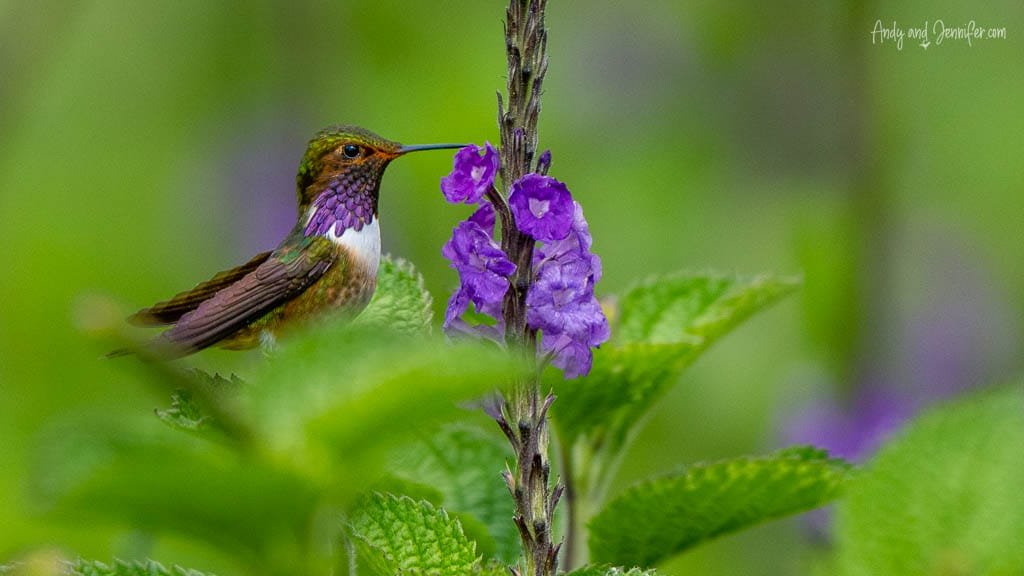
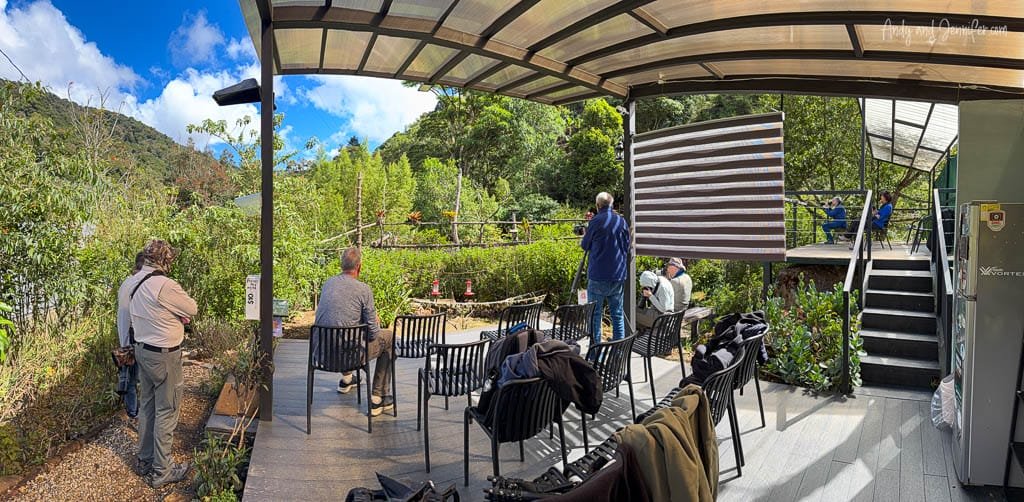
There are two main viewing areas, both covered and equipped with chairs, which made it easy to settle in and wait for activity. Unlike the previous day at Batsu Gardens, we didn’t have the place entirely to ourselves. A few other birding groups came through while we were there, but the space was large enough that it never felt crowded.
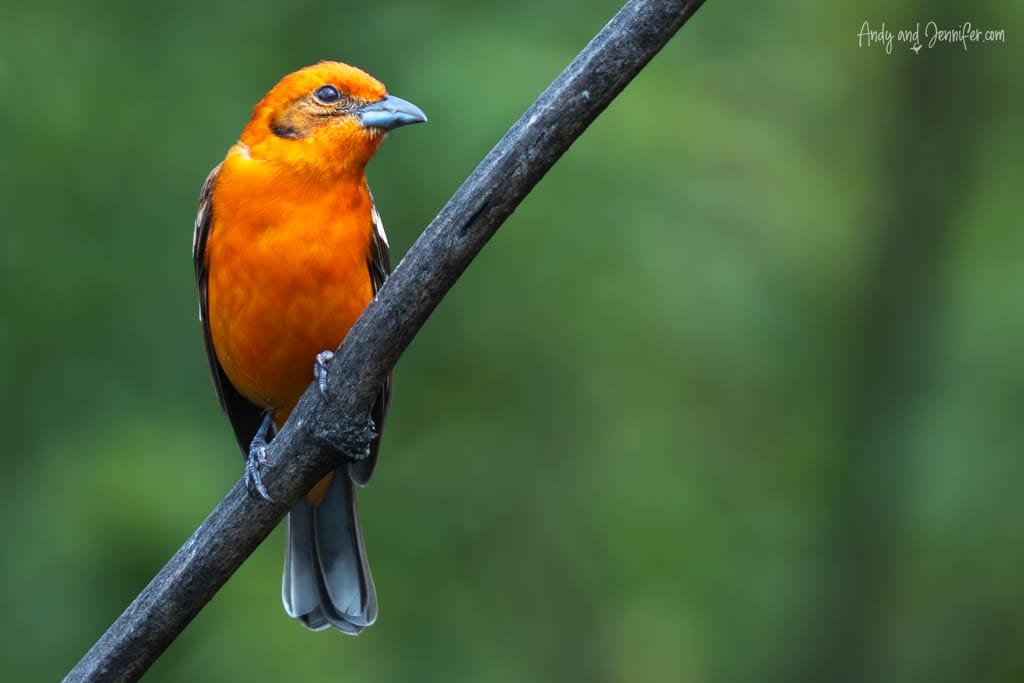
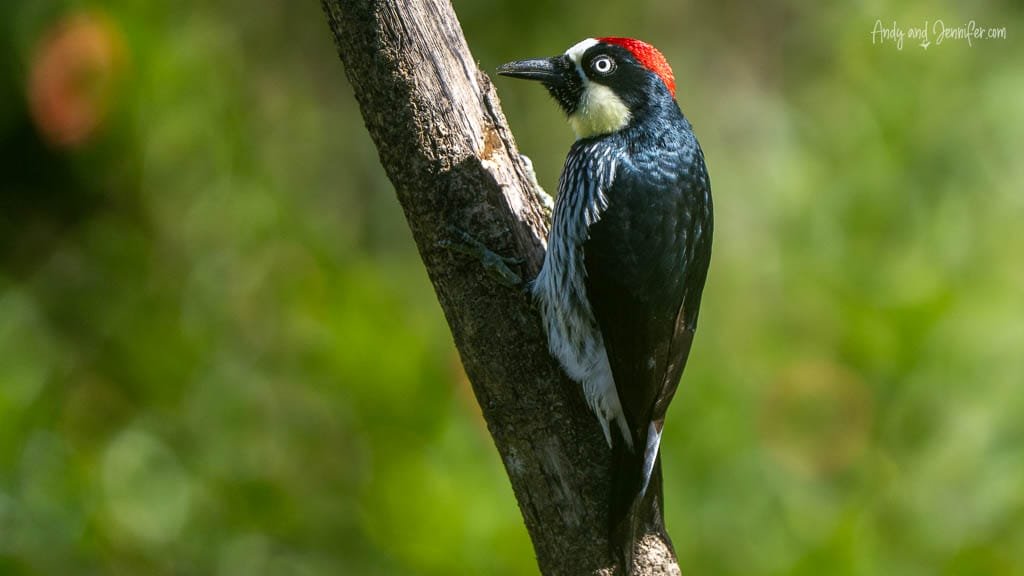
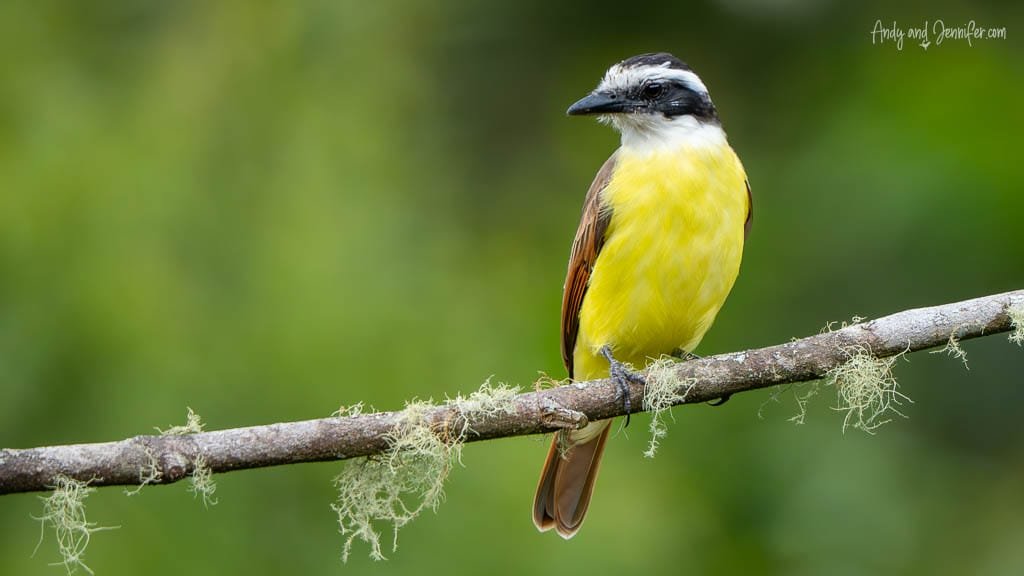
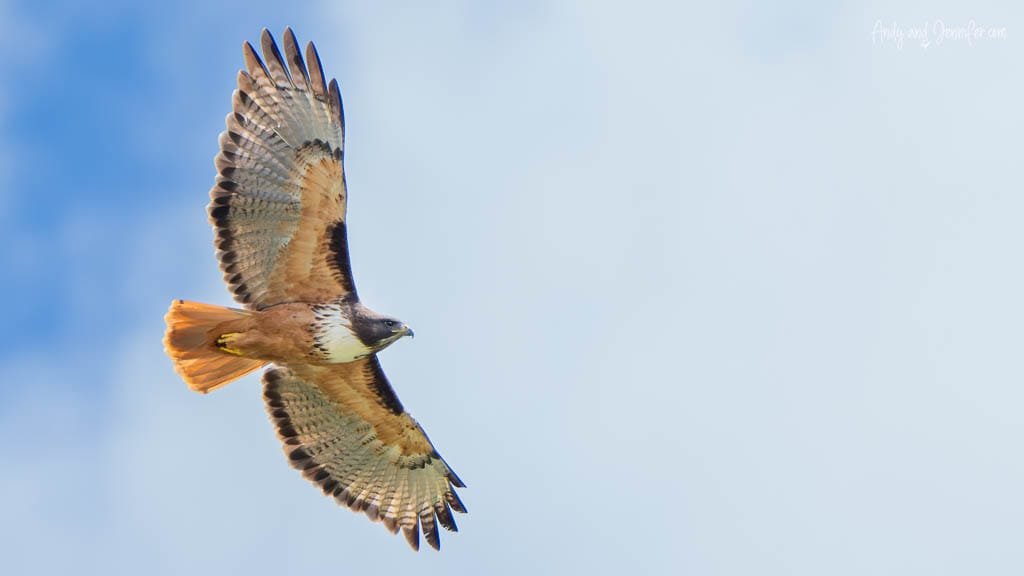
There were plenty of other birds – tanagers, woodpeckers, and kiskadee – but the highlight was definitely a red-tailed hawk.
We spent several hours watching and photographing birds before loading back into the van and heading higher into the mountains.
Mirador de Quetzales on Cerro de la Muerte
Mirador de Quetzales sits high on Cerro de la Muerte along Costa Rica’s Pan-American Highway, about a half-hour drive above the Savegre Valley. At roughly 3,000 metres above sea level, the cool oak cloud forest here is one of the best places in the country to see resplendent quetzals.
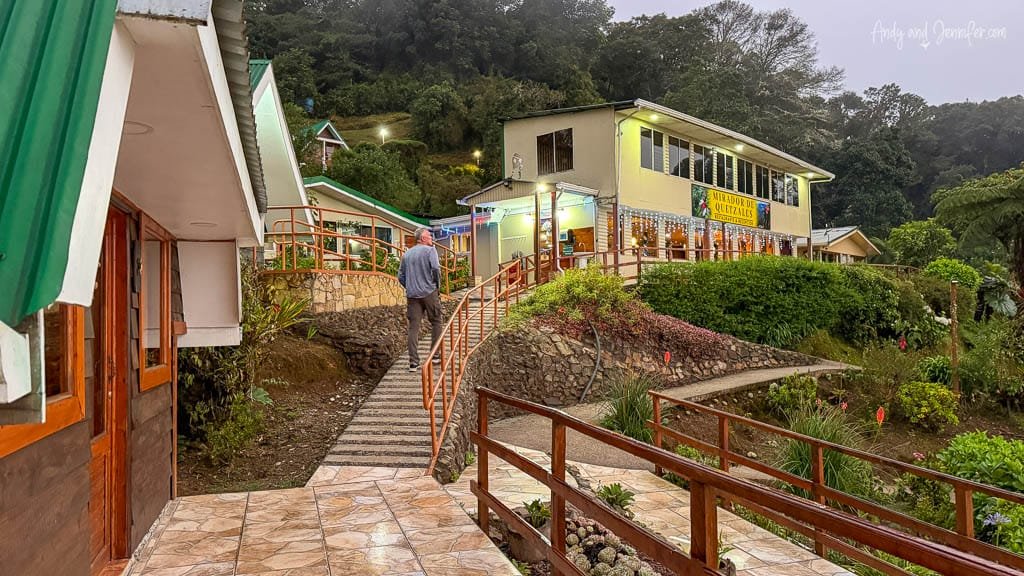
From the parking lot it is a fairly steep uphill walk to the main dining area. Depending on which cabin you are assigned, the walk to your room can involve climbing further up the hill or heading down into the valley.
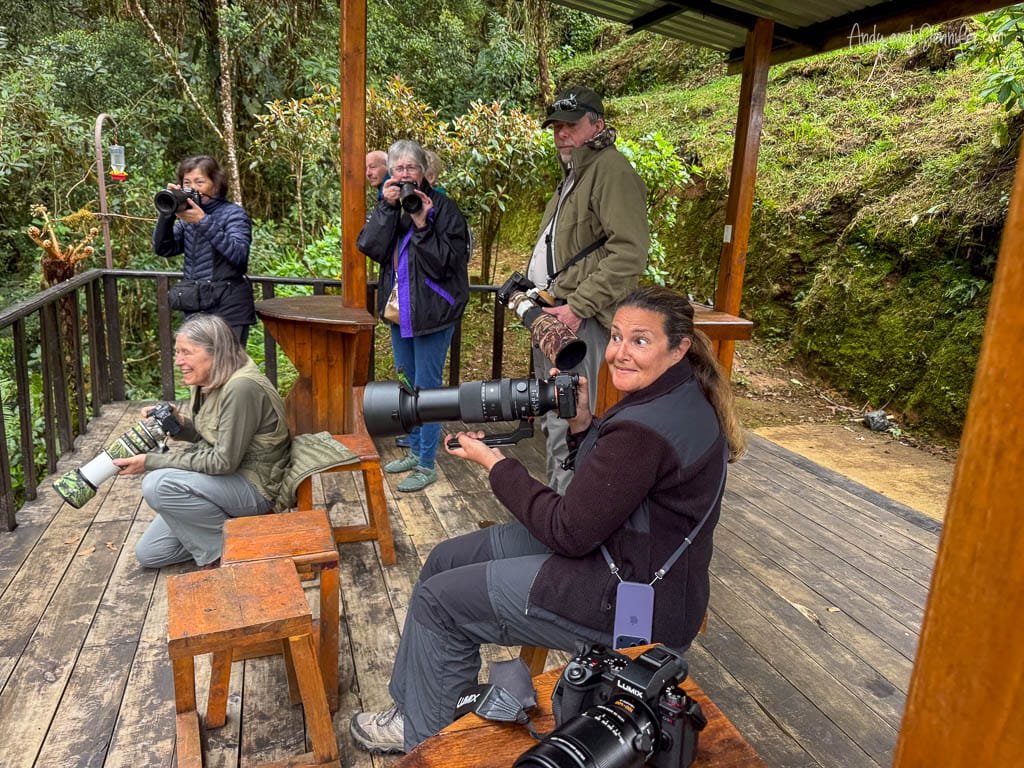
Farther up the slope there is another hummingbird feeding area. We walked up to check it out and found it to be quite productive.
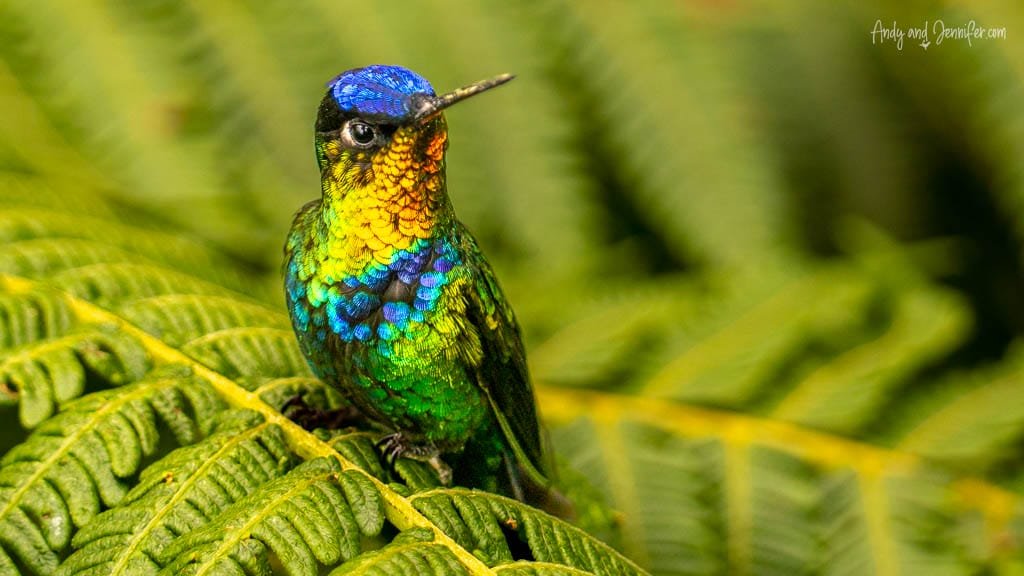
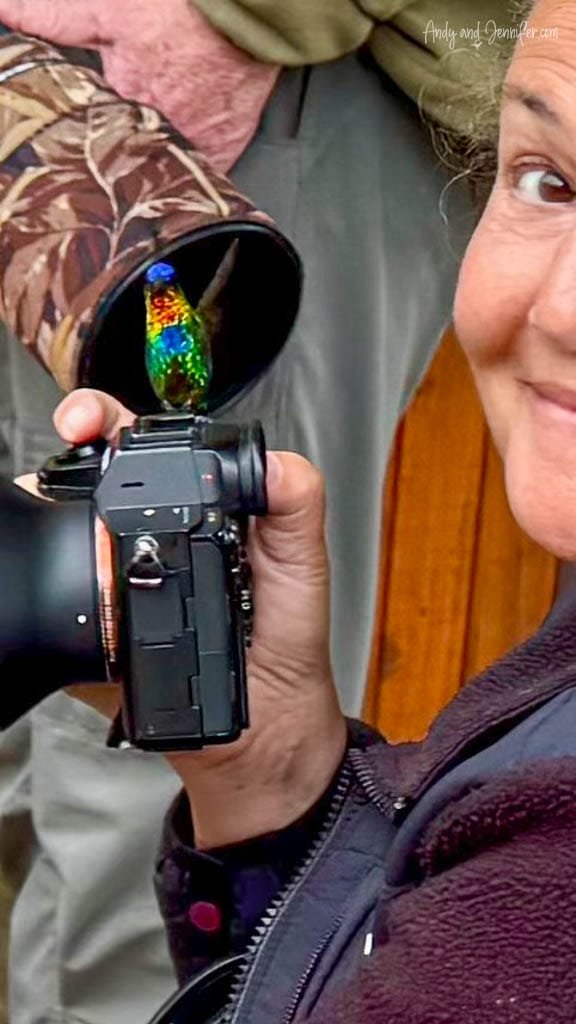
At one point I was photographing a hummingbird perched on a branch when another one landed directly on my lens hood. I felt like the chosen one.
Cabin #2
Our room for the night was Cabin #2, which turned out to be a bit unusual. Downstairs there were bunk beds and a single bed, while upstairs there was a double bed and another single.
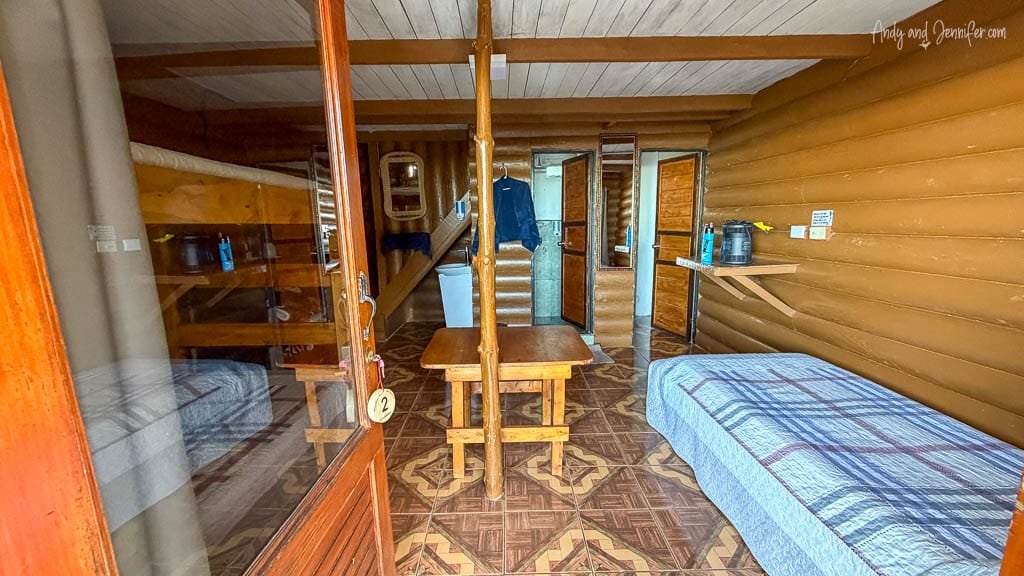
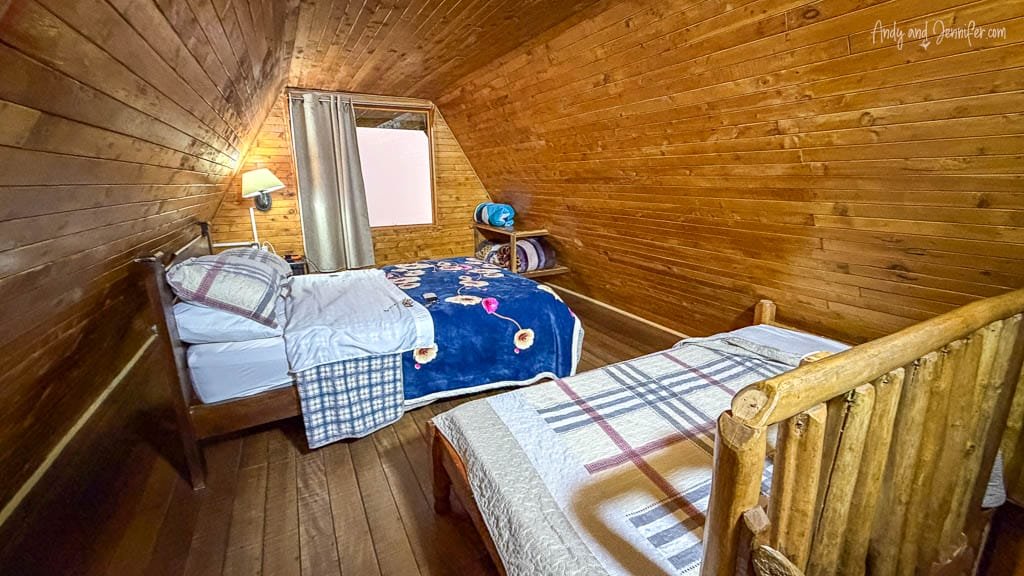
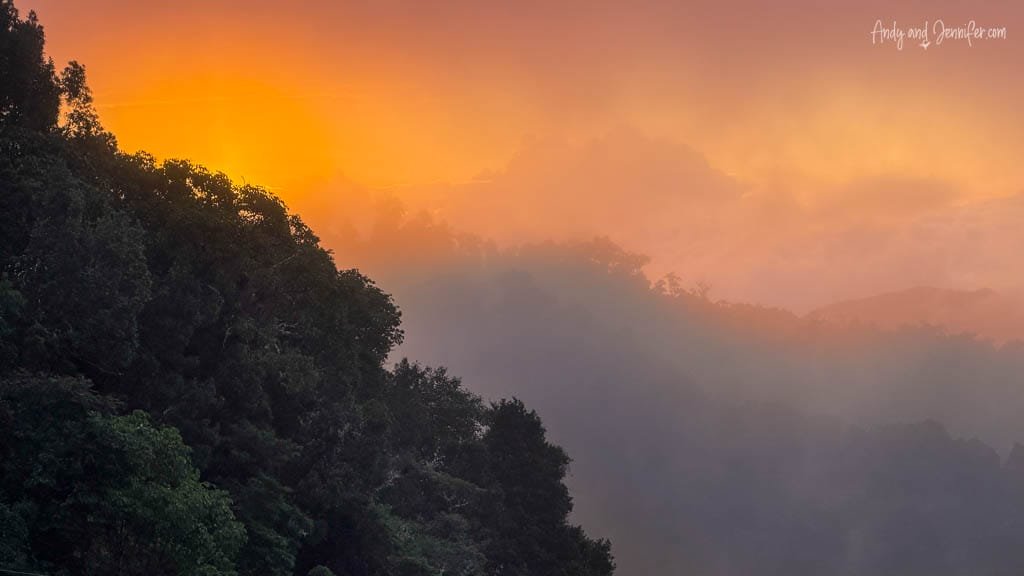
The layout technically sleeps six people, though the design choices were a little puzzling. The toilet room was so small that you had to sit on the toilet just to close the door. The shower room was dark and damp, and the ceiling was too low for Andy to stand upright. The stairs connecting the two levels were steep and uneven, though the shower did at least have good water pressure and warm water. On a positive note, the view was outstanding.
Searching for the Resplendent Quetzal
In the afternoon we drove to El Guarco to hopefully see one of the most sought-after birds in Costa Rica, the resplendent quetzal.
After turning off the main highway, the road became very steep. Actually steeper than the road to San Gerardo de Dota! After parking and picking up a new guide, we walked up a short but steep trail to the viewing area. The setup consisted of a covered platform with several rows of benches facing the forest canopy where the quetzals feed.
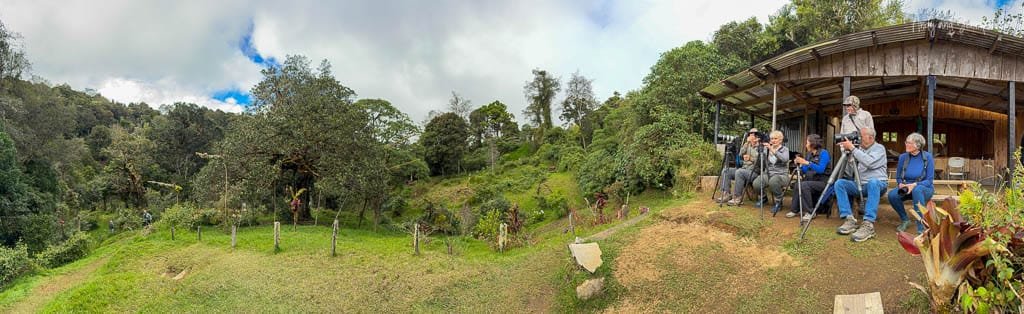
Rain drifted in and out during the afternoon, and it felt a little bit like waiting for the Great Pumpkin. We all sat staring into the forest in different directions, hoping to see the flash of red and green.
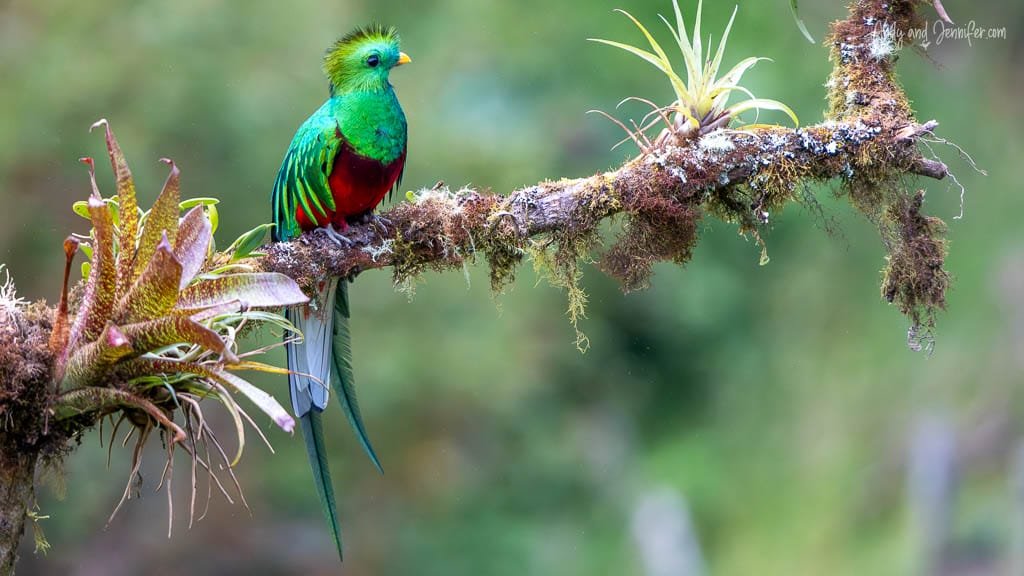
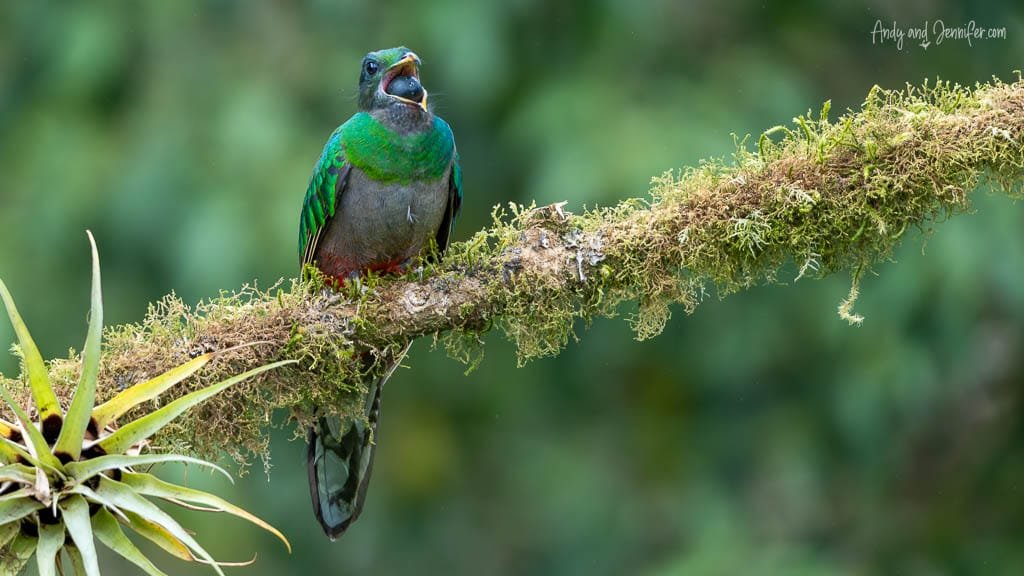
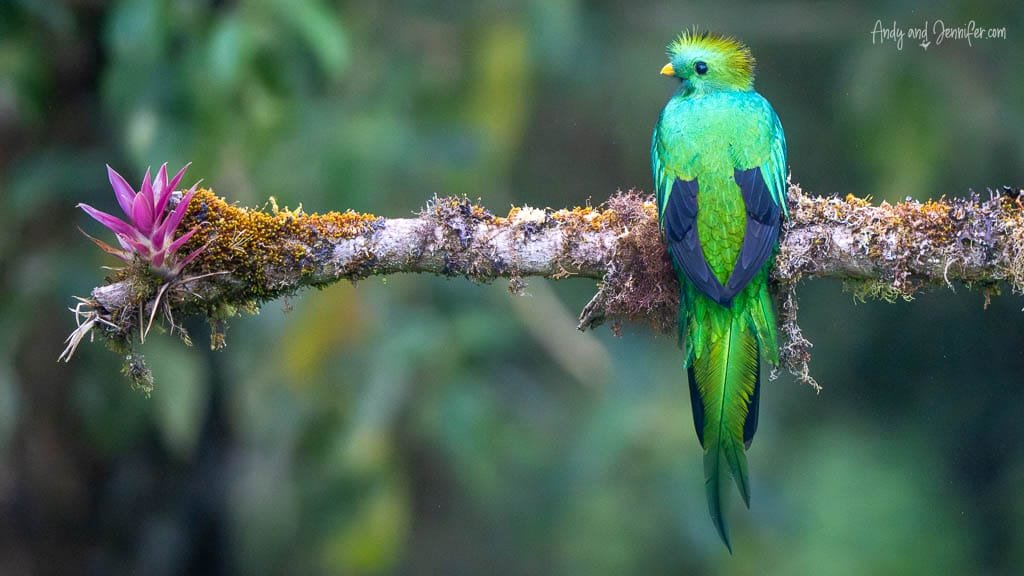
The best moment came much later in the day. By then most of the other groups had left and our group was starting to get a little restless. Our tour leader has a rule that when the group gets antsy, you wait another fifteen minutes.
That rule paid off.
Just as we were about to leave, a quetzal returned and gave us the best viewing of the entire afternoon.
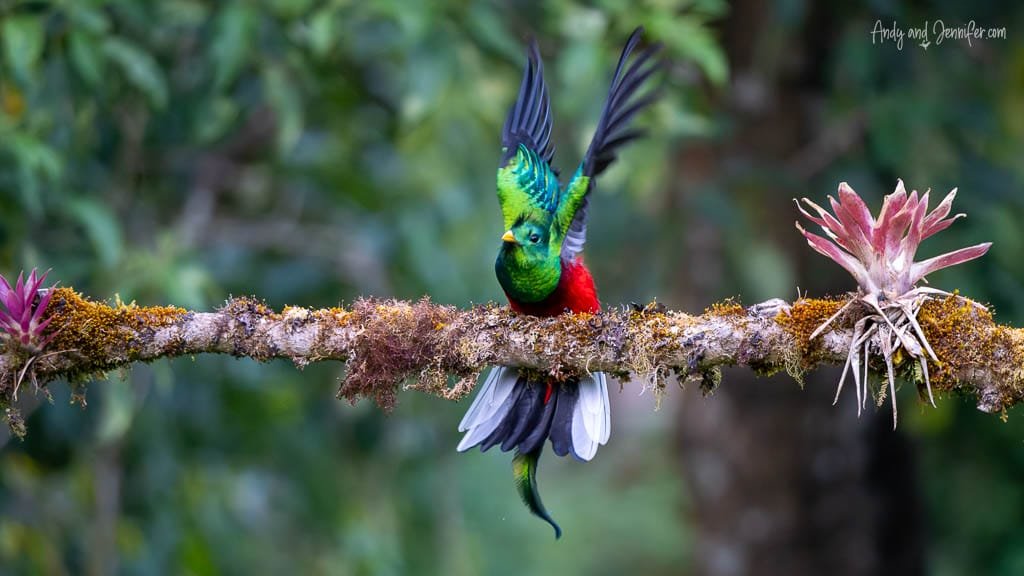
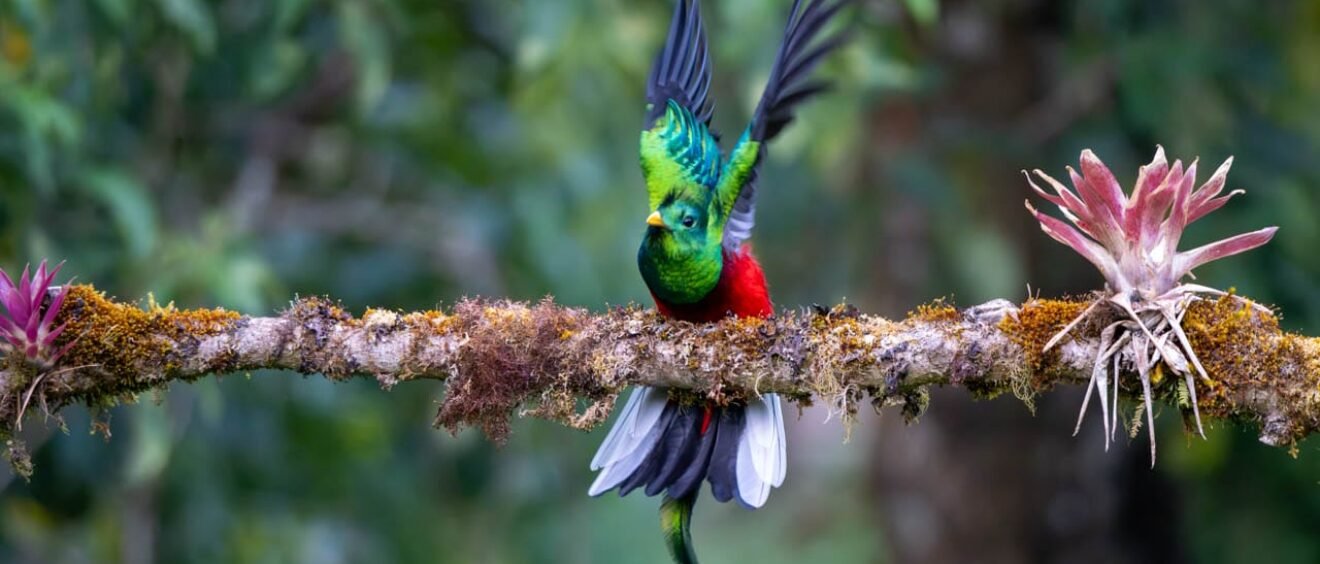
Resplendent quetzals are closely associated with mature cloud forests in Costa Rica and western Panama, particularly areas rich in wild avocado trees, which provide much of their diet. They swallow the fruit whole and later regurgitate the large seed, helping disperse the trees throughout the forest.
If we had left when people first suggested it, we would have missed the entire display.
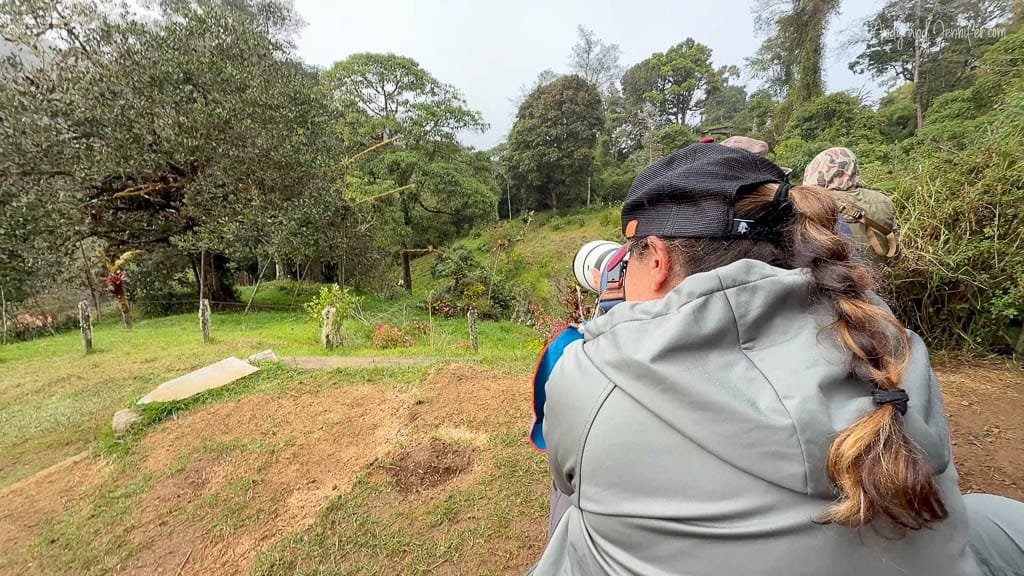
It was another reminder that bird photography often rewards patience more than persistence. Sometimes the hardest part isn’t finding the bird. It’s simply waiting long enough for it to appear.
Next up –> Hummingbird Flash Photography

We’re Andy and Jennifer—two former corporate executives who chose long ago to prioritise experiences over stuff while pursuing our passions for travel and photography. From the Arctic to Antarctica, and most places in between, we’ve captured the world through our lenses and love sharing those stories. Our careers gave us the means, but our purpose is inspiring others to explore and helping people create images they’re proud of.
Related Posts
 Hummingbird Flash Photography at Paraíso Quetzales and Another Look at the Resplendent Quetzal
 Bird Photography at San Gerardo de Dota : Batsu Gardens & Savegre Valley
 Snowcap Hummingbirds and Bat Photography at Rancho Naturalista, Costa Rica
 Bird, Frog and Macaw Photography in Sarapiquí, Costa Rica
 Bird Photography at San Jorge Tandayapa in Ecuador’s Cloud Forest
 Exploring the Canadian Rockies: Canmore, Lake Louise, and Jasper