Emperor Penguins at Snow Hill: The Day It Finally Happened
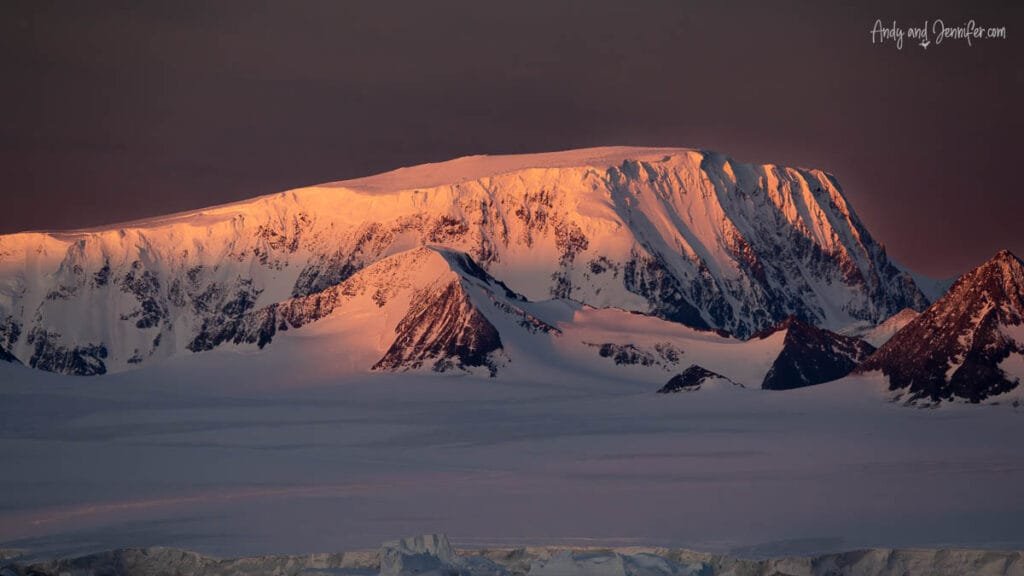
After days of uncertainty, shifting plans, and watching the weather, the opportunity to reach the Snow Hill emperor penguin colony suddenly felt very real. Neither of of could sleep, so we went up on deck to watch the sunrise. At 4:32am.
Helicopter Flights to the Emperor Penguins
Helicopter operations began around 7am so the expedition team could assess the site and mark the path. The first group was called just before 10am. That alone felt like a good sign. It suggested the team believed the plan to reach the Snow Hill emperor penguin colony was workable. They wouldn’t have gone to all this effort if they thought only half the ship would get a chance. Still, a small, ok large part of me wished we were in that first wave. When everything depends on weather, earlier always feels safer.
We tried to stay positive. But underneath the optimism sat a quiet layer of anxiety. Antarctica has a way of reminding you that plans are provisional, especially when your goal is reaching a remote emperor penguin colony in Antarctica.
Focus on What You Can Control
After lunch, we did a full test run of our gear so we would be ready first thing tomorrow morning.
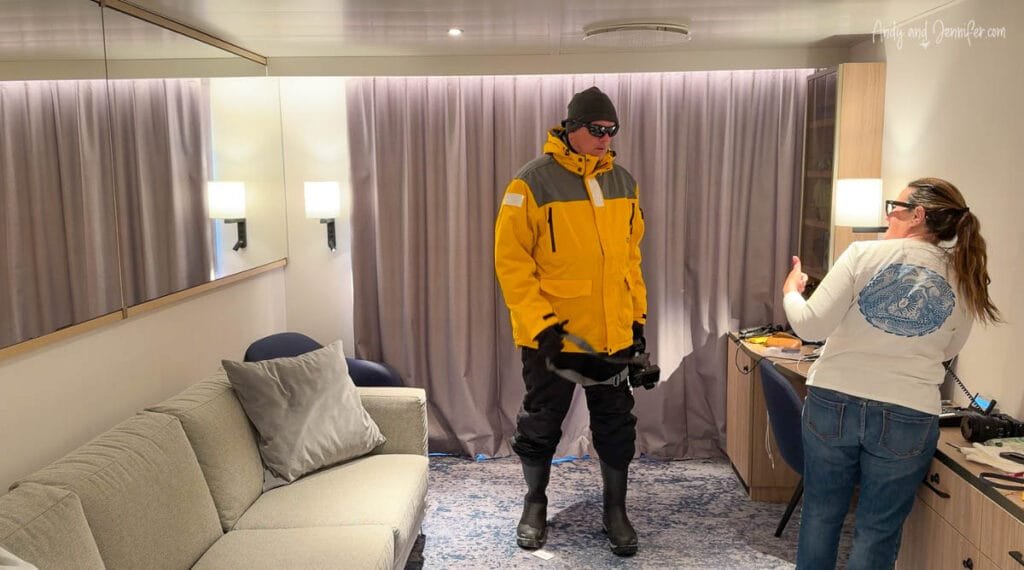
We started with a Smartwool base layer, including wool socks. Over that went the dry suit, which is required for helicopter operations in case of an emergency landing on the ice. Then came insulation: fleece pants followed by dry pants over the suit. On top of that went the expedition parka and Muck boots. Accessories became their own system. Two hats. Two pairs of gloves. I wore liner gloves with small cuts in the thumb and forefinger so I could use my phone, and fingerless mittens layered over the top. Add a balaclava-style neck gaiter, sunglasses with a Croakie strap, and sunscreen.
Then came the gear. Phone with tether. Camera with a spare battery and memory card in my jacket pocket. Lens cloth. The 100–400mm on my camera and the 200–600mm in Andy’s bag. By the time everything was on, it felt like we were wearing half our luggage.
A Surprise Opportunity
I was jokingly filming Andy in all his layers when the cabin phone rang. They were adding one additional flight at the end of the day and asked if we wanted to go.

Outside, the weather had turned almost absurdly perfect. Blue sky, clear visibility, and calm conditions. If the additional flight went ahead, it would happen in the best light of the day. We didn’t hesitate.
Boarding the Helicopter
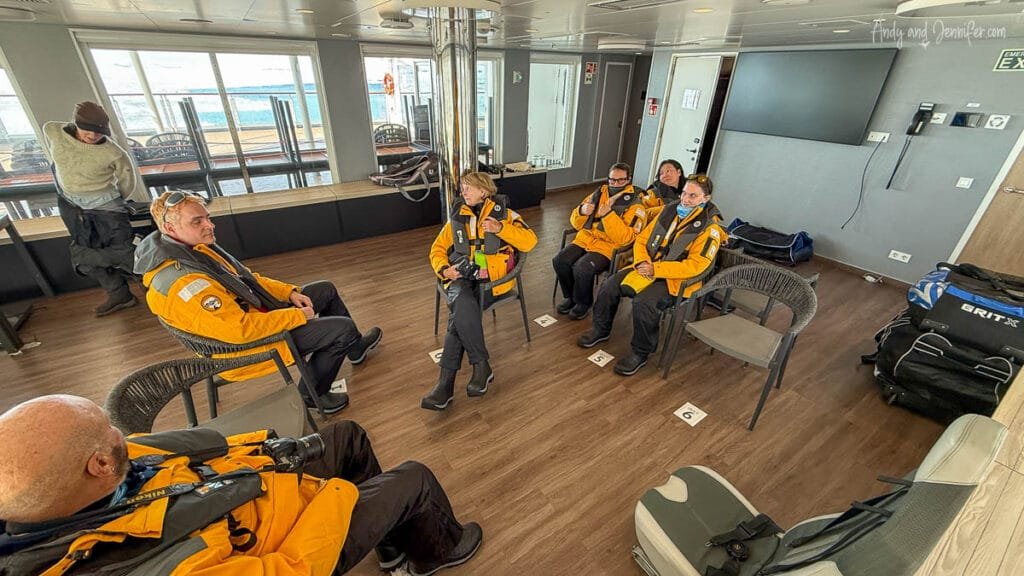
We headed to the Panorama Lounge around 4pm expecting a long wait. Instead, everything moved quickly. First, we were brought into the studio where our bags were weighed, tagged, and consolidated into larger bags for ease of transport. Each passenger received a seat number and a flight life jacket, and then we moved into what looked like a seating mock-up. Chairs were arranged in the same layout as the helicopter so we would be familiar with where to sit. Andy was assigned seat 6 and I was seat 4, both window seats facing backwards.
From there, we moved up to Deck 8 and lined up in the hallway. Signs on the wall displayed seat numbers to ensure we were in the right order when we boarded the helicopter.
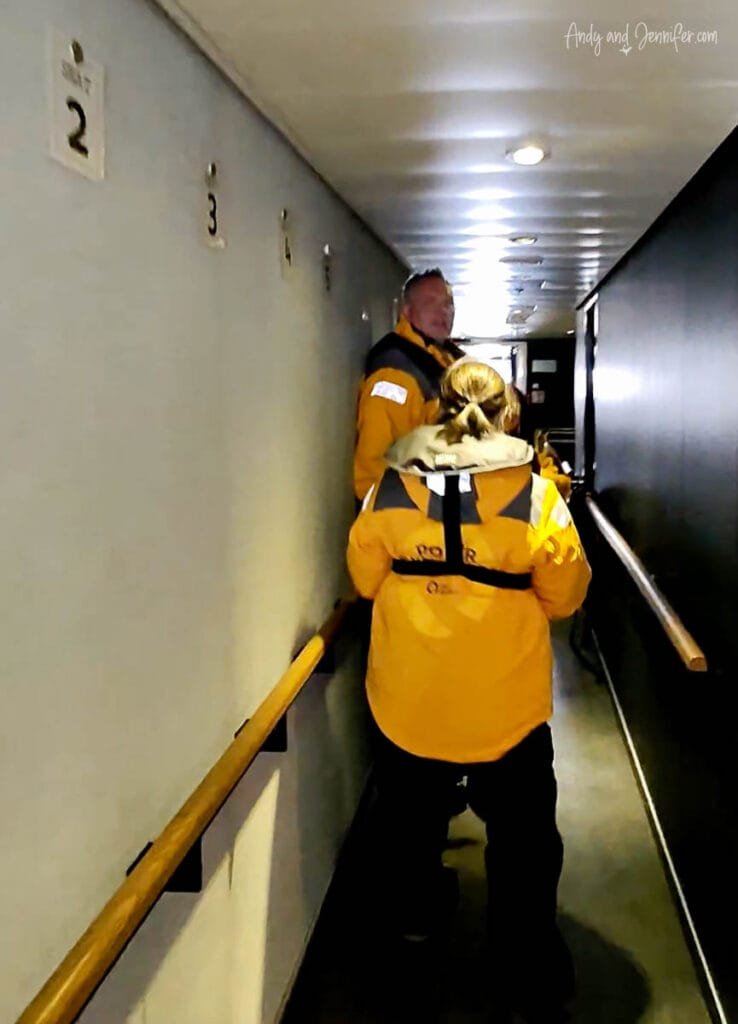
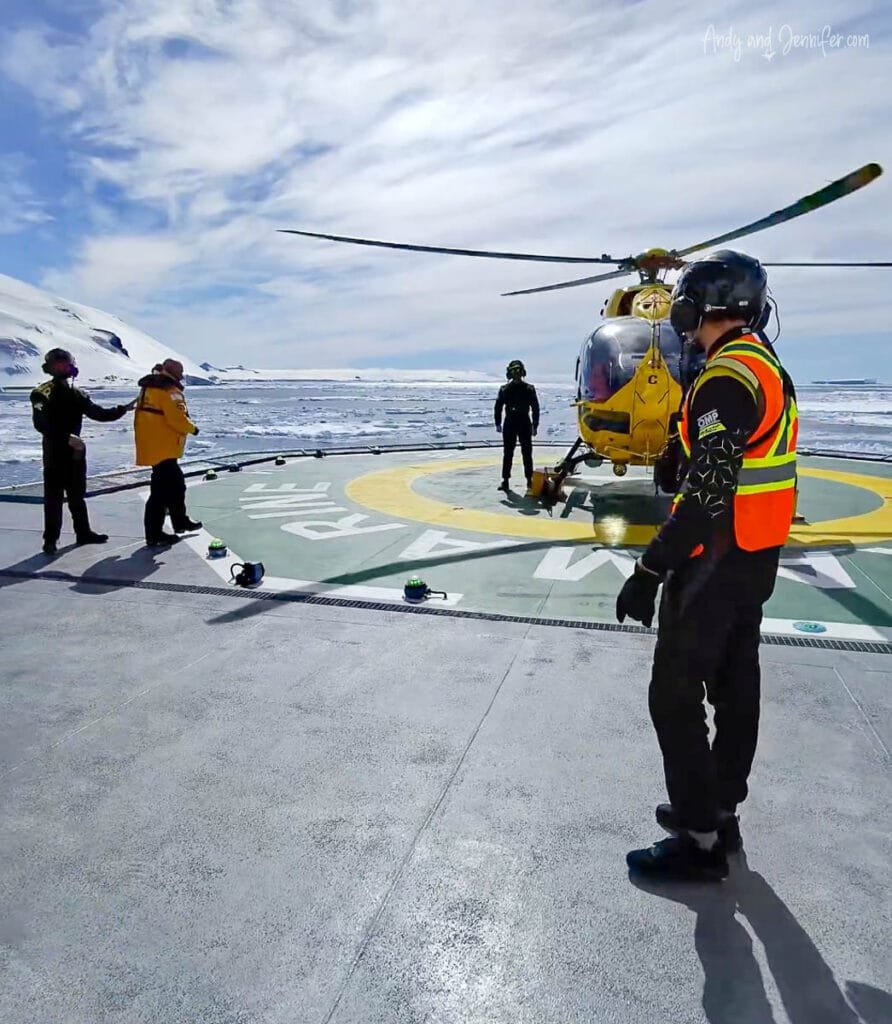
When the helicopter arrived, the crew guided us forward one by one, physically passing each person along until we reached the aircraft.
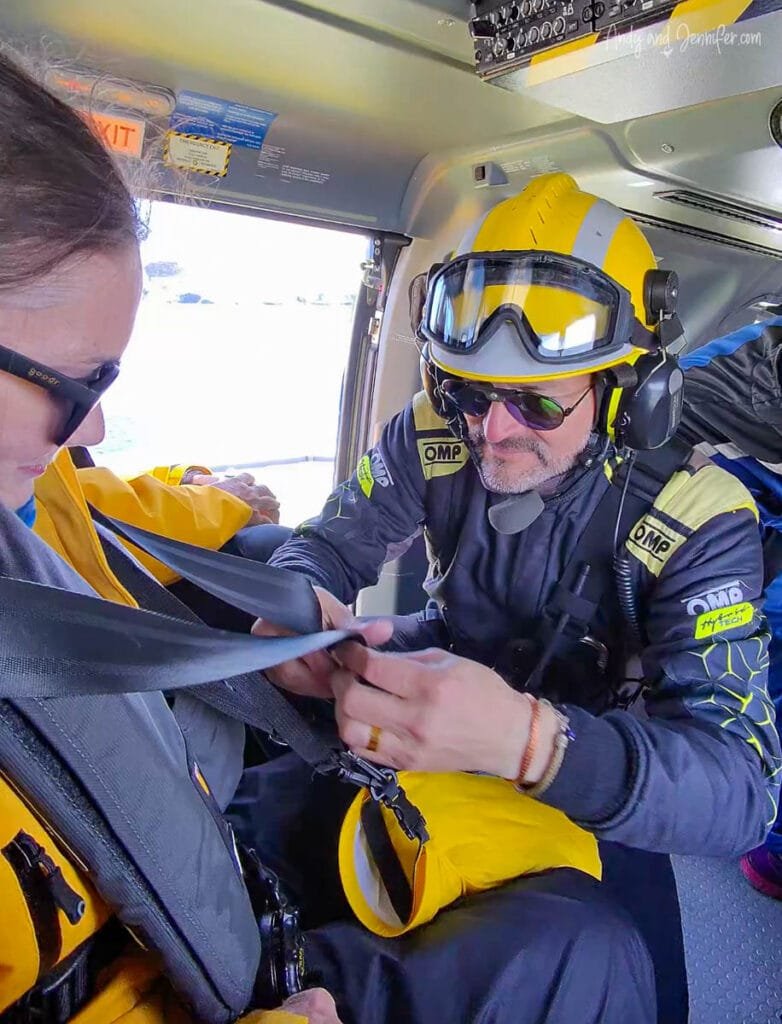
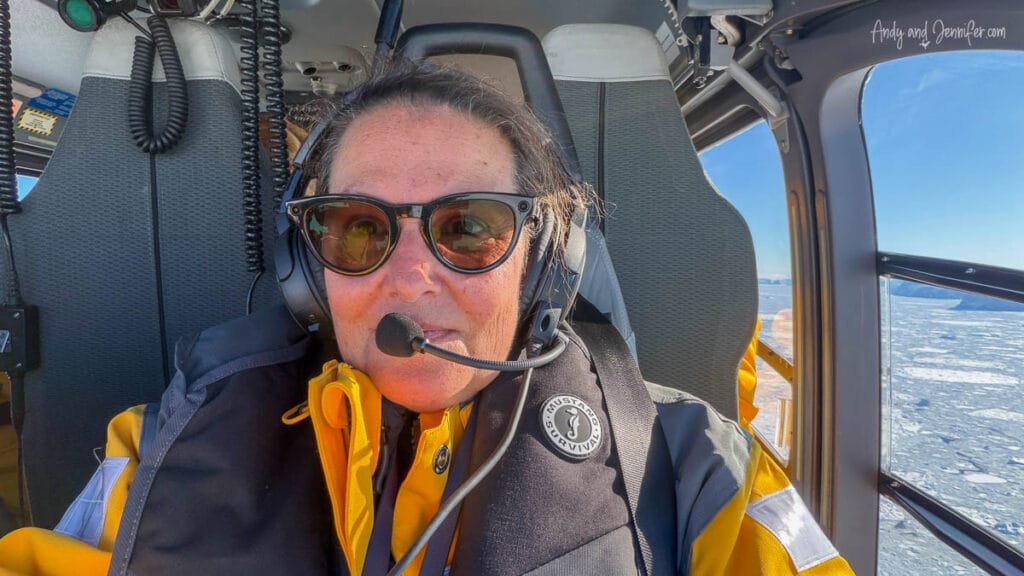
Once inside, they secured us into harnesses. With all the layers, there was no way I could have fastened my own. They also handed out headsets so we could hear the pilot.
And then we lifted off from the helipad on the back of the ship.
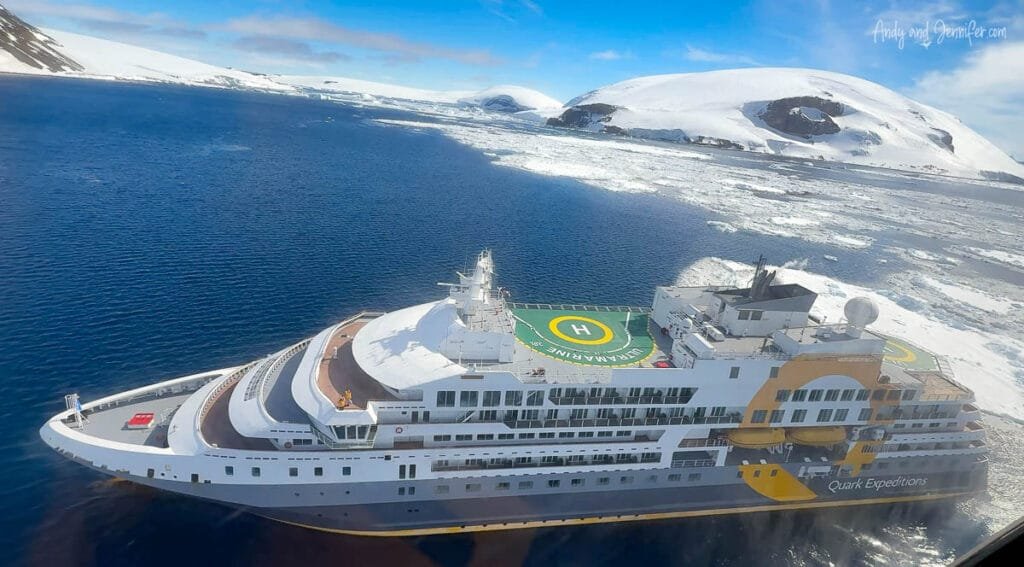
The Flight Across the Weddell Sea Ice to the Snow Hill Emperor Penguin Colony
The Weddell Sea stretched as far as you could see. The only word that accurately describes it is “unreal”. It felt like we were in an immersive documentary.
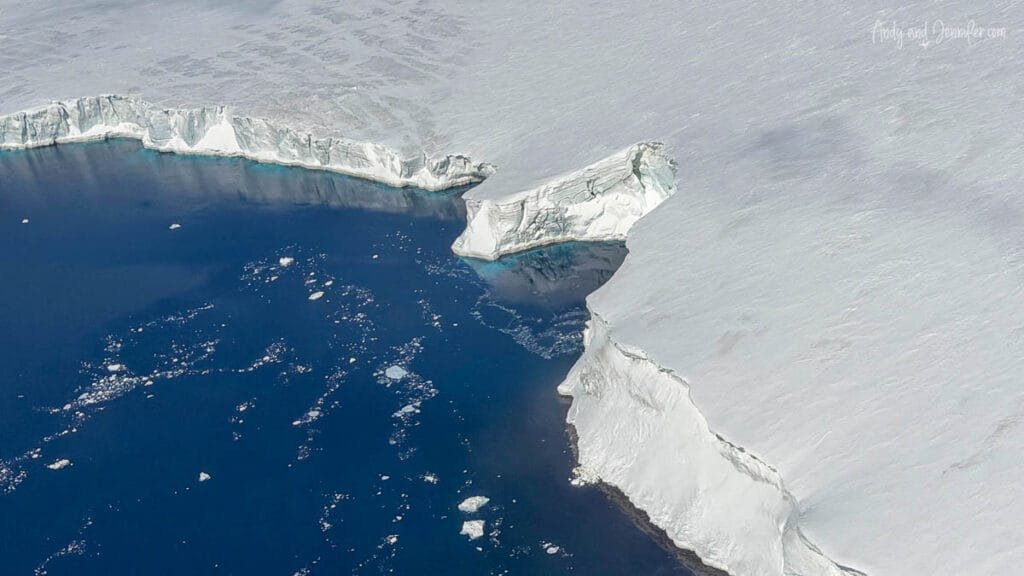
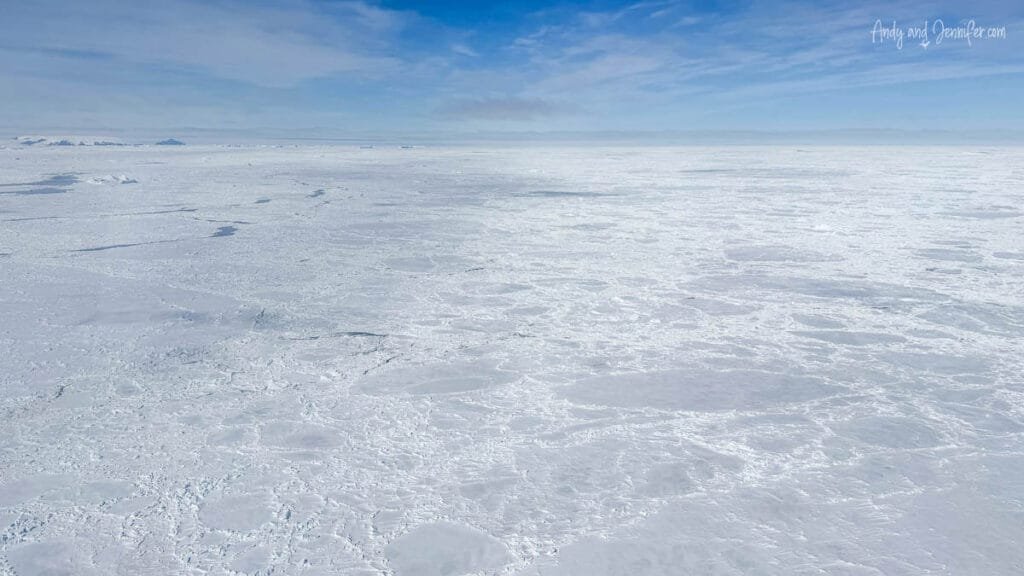
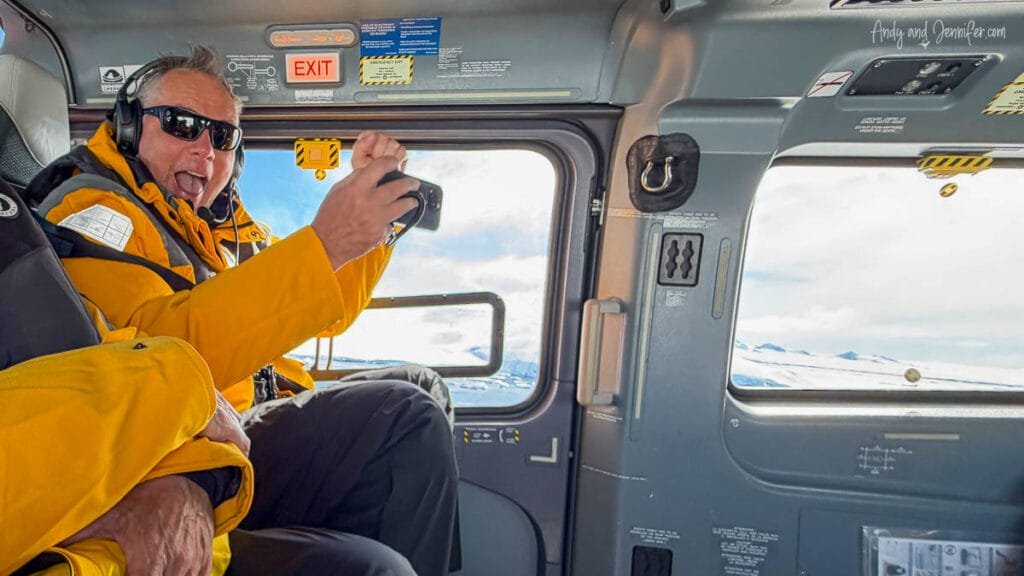
After almost 30 minutes, the pilot pointed ahead. You could see the emperor penguin colony before we landed. Fun fact, you can actually spot penguin colonies in satellite imagery, and that’s one of the ways scientists estimate their populations.
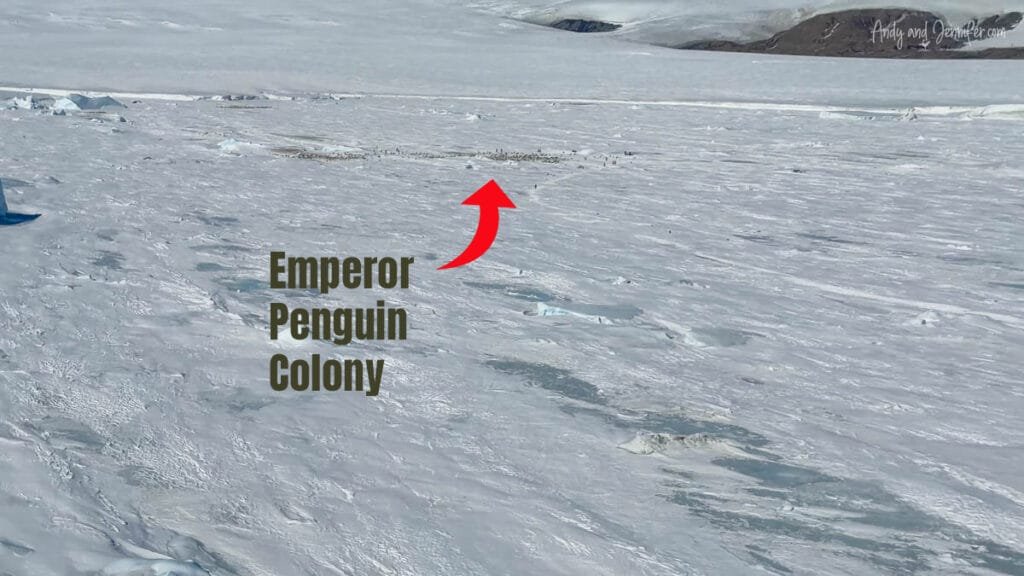
Landing at Snow Hill
The first clear emperor penguin was visible as we landed near the temporary basecamp.
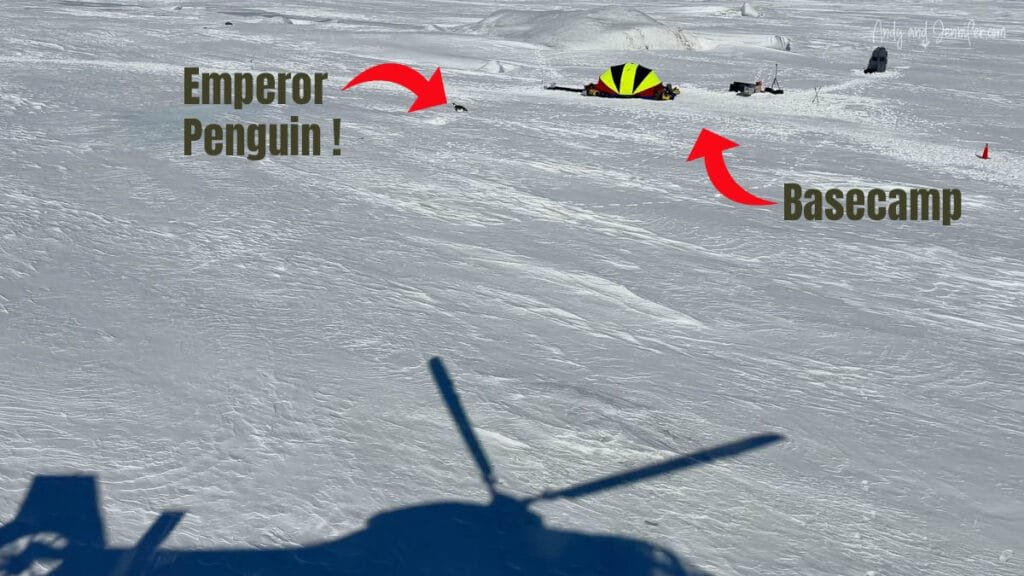
We exited quickly and moved toward the briefing area while our bags were transported by sled.
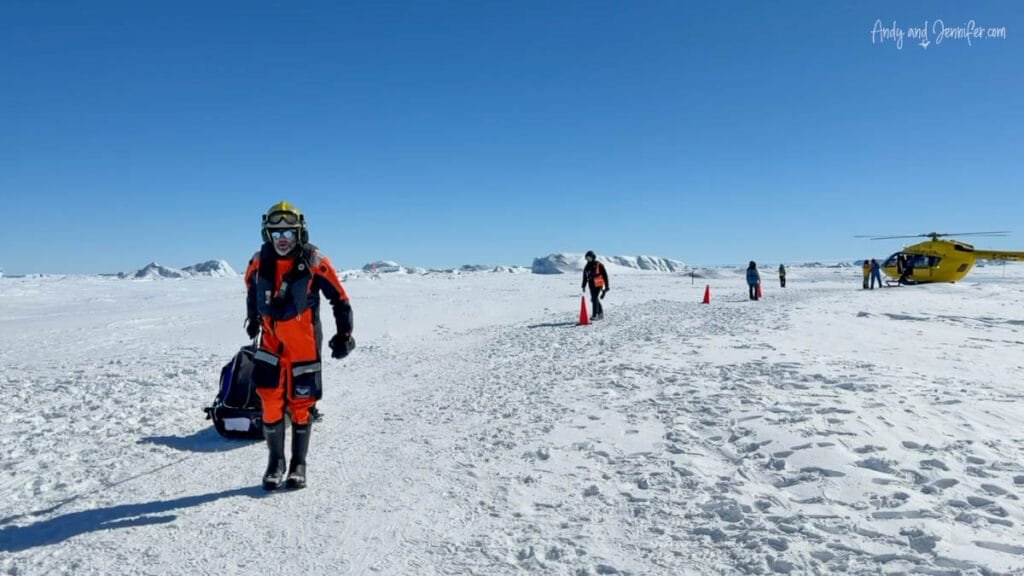
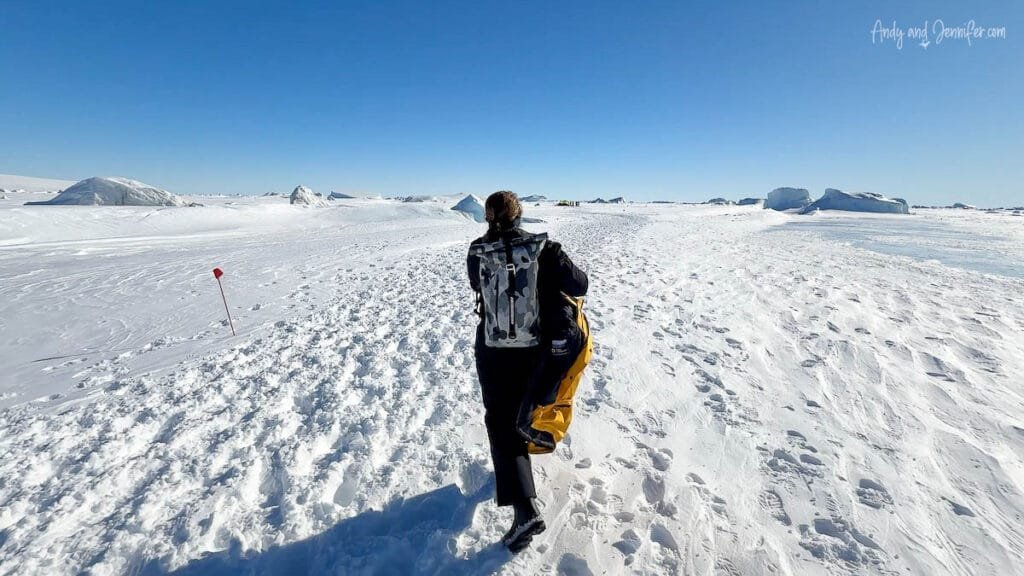
Basecamp itself was minimal. A small tent and a port-a-loo I hoped I didn’t have to use. The briefing was quick and to the point. We had two hours and needed to be back at basecamp by 7:15pm. Follow the red flags to the colony, which was 1.3 kilometres away. Keep your life vest on at all times, as this is sea ice, not land. Maintain at least 5 meters (15 feet) from the penguins. If they approach, remain still and quiet and allow them to pass.
Walking to the Emperor Penguins
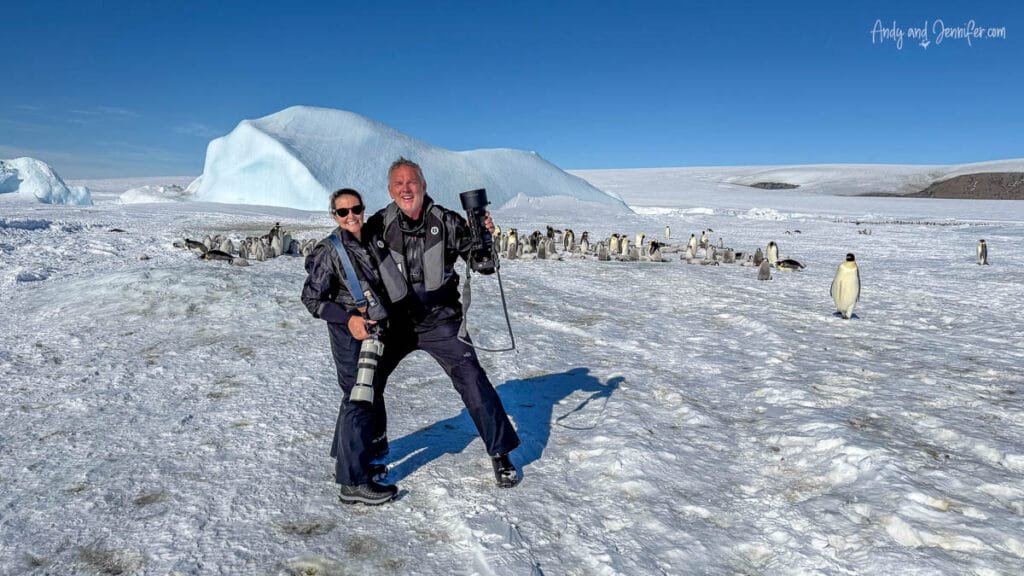
The walk took about fifteen minutes, and there was no chance of being cold. In fact, we were both sweating even though it was -10°C / 14°F. Emperor penguins slid past us on their bellies, effortlessly tobogganing across the ice.
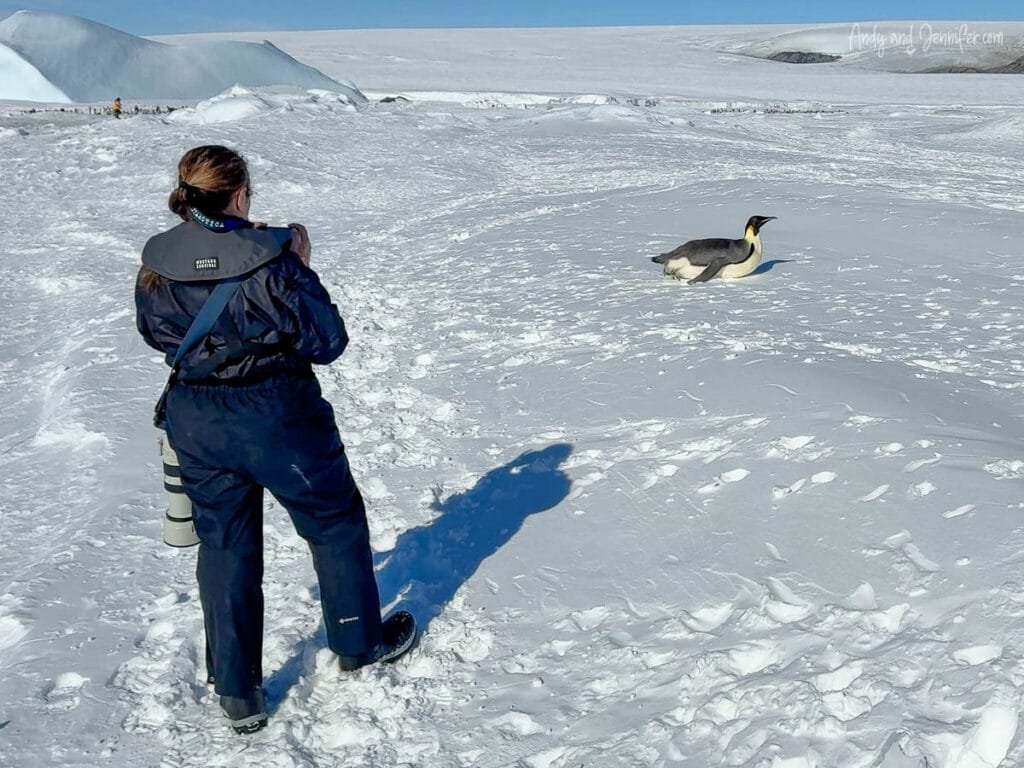
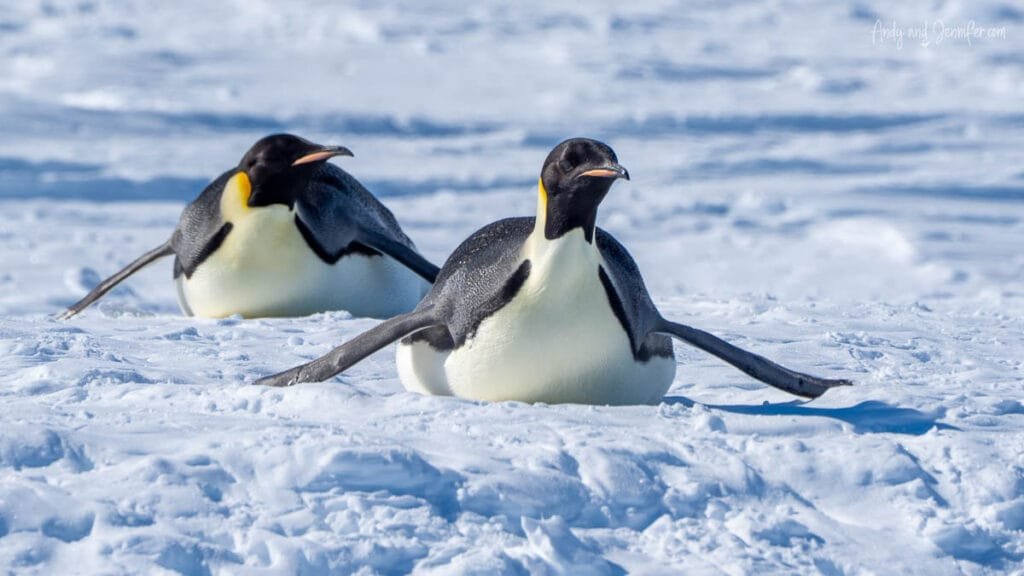
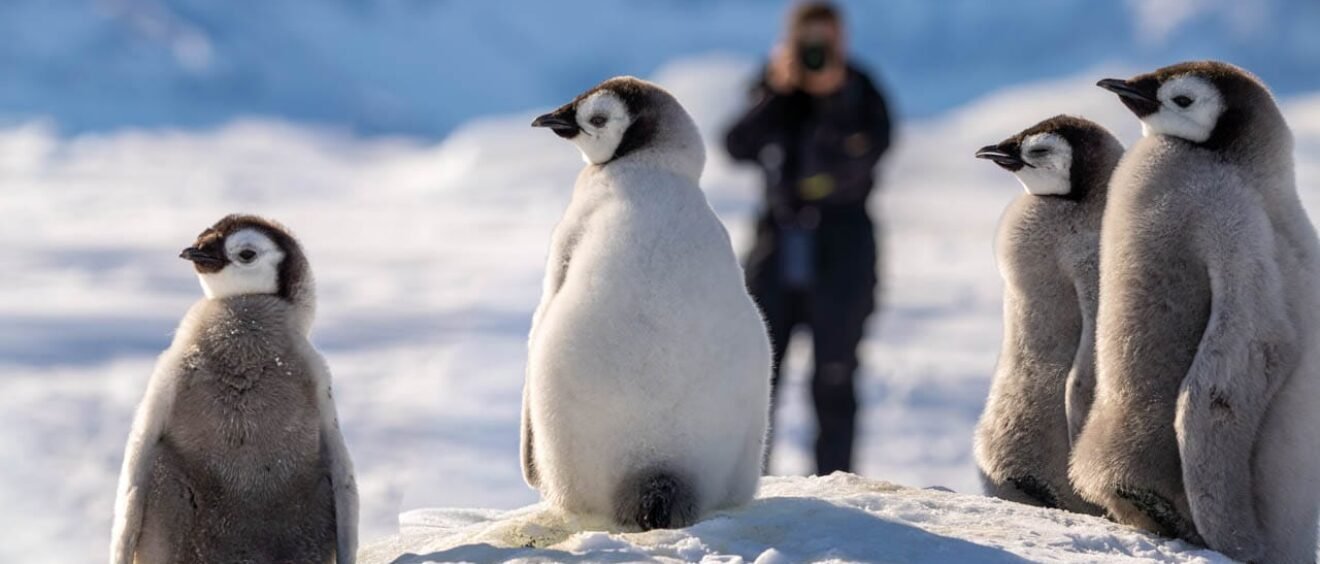
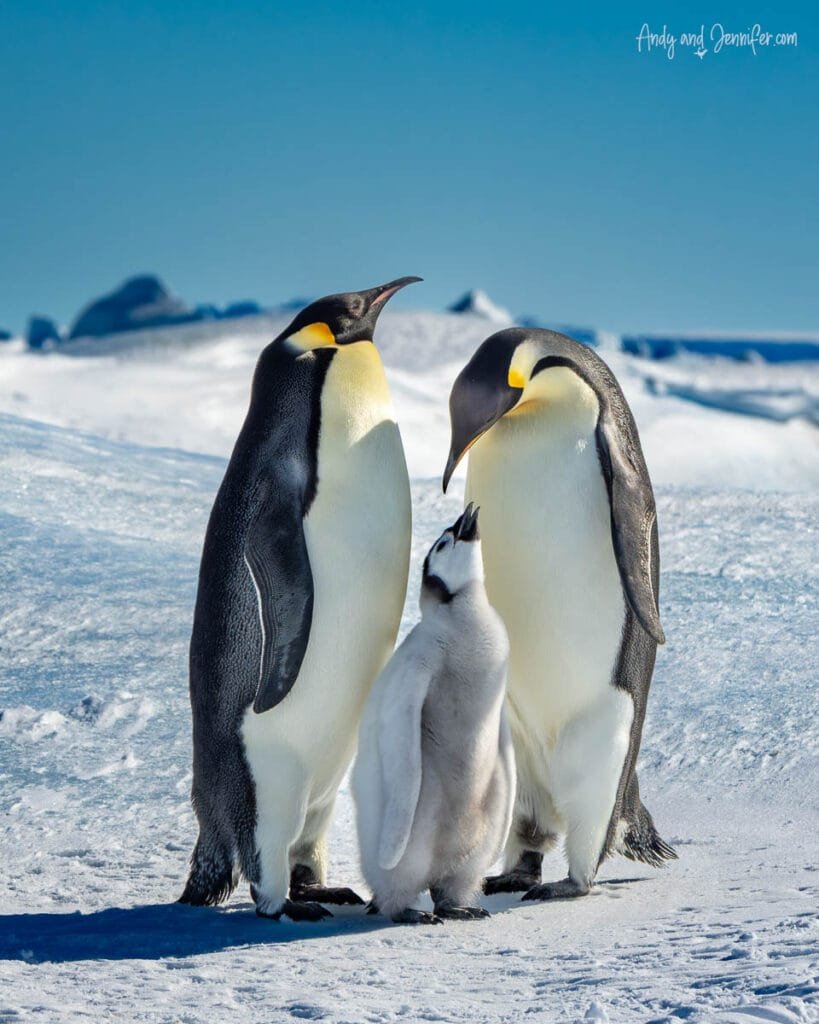
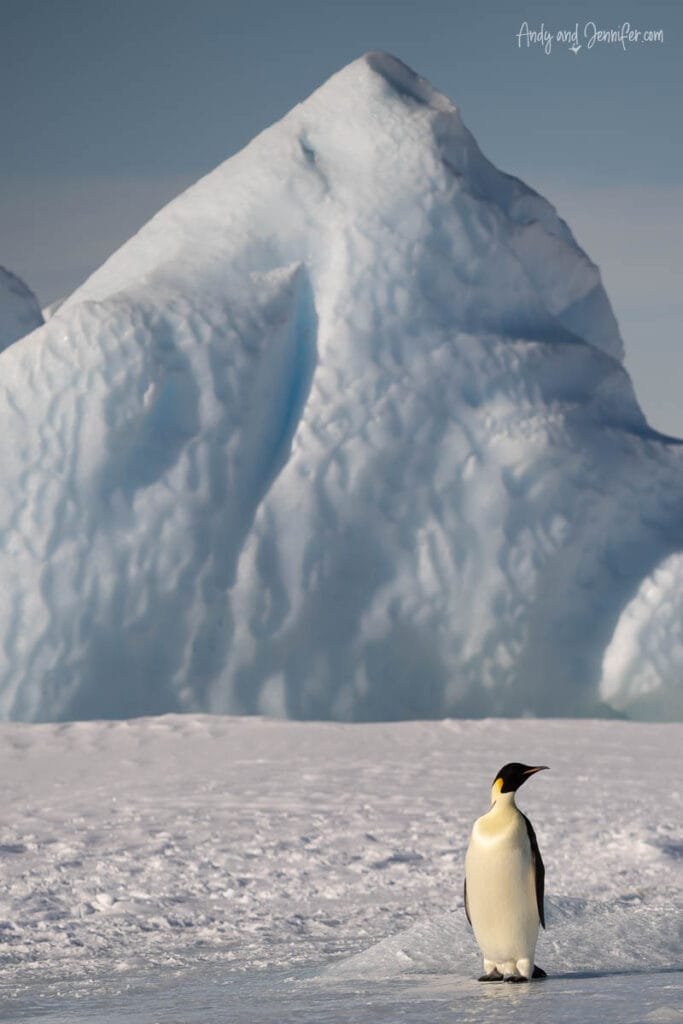
It was tempting to stop and watch every penguin we encountered, but I knew better opportunities awaited us at the main colony. Look how huge that bird is though! Photos don’t quite capture the scale of emperor penguins until you see one in person. At around four feet tall, they’re far larger than most people expect, and their posture gives them a surprisingly regal presence.
Photographing an Emperor Penguin Colony Antarctica
We dropped our bags on a tarp and immediately shed layers. Off came the parka, hat, gloves, and neck gaiter. Suddenly I was standing on Antarctic sea ice in thermals and a the flight suit.
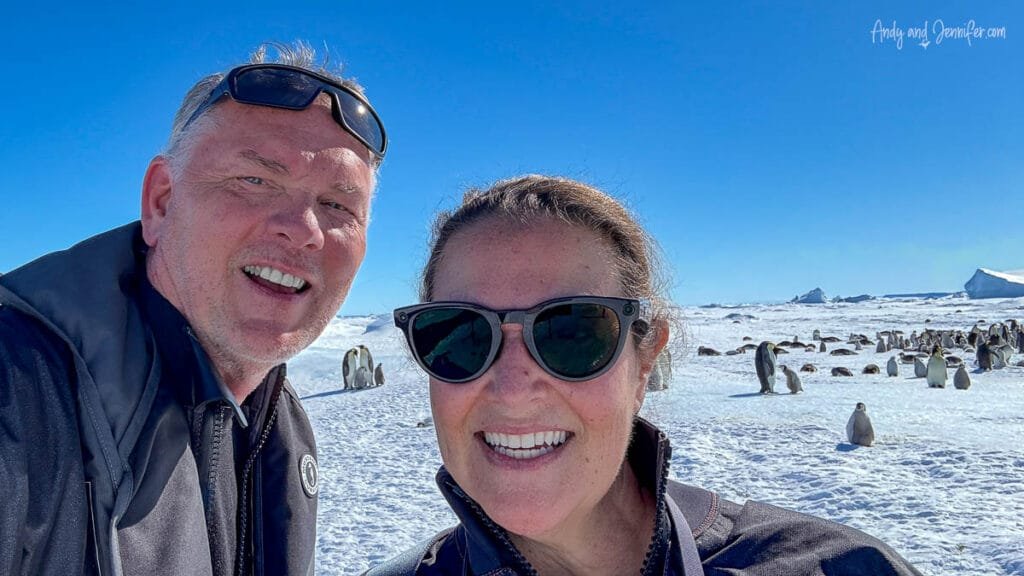
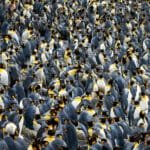
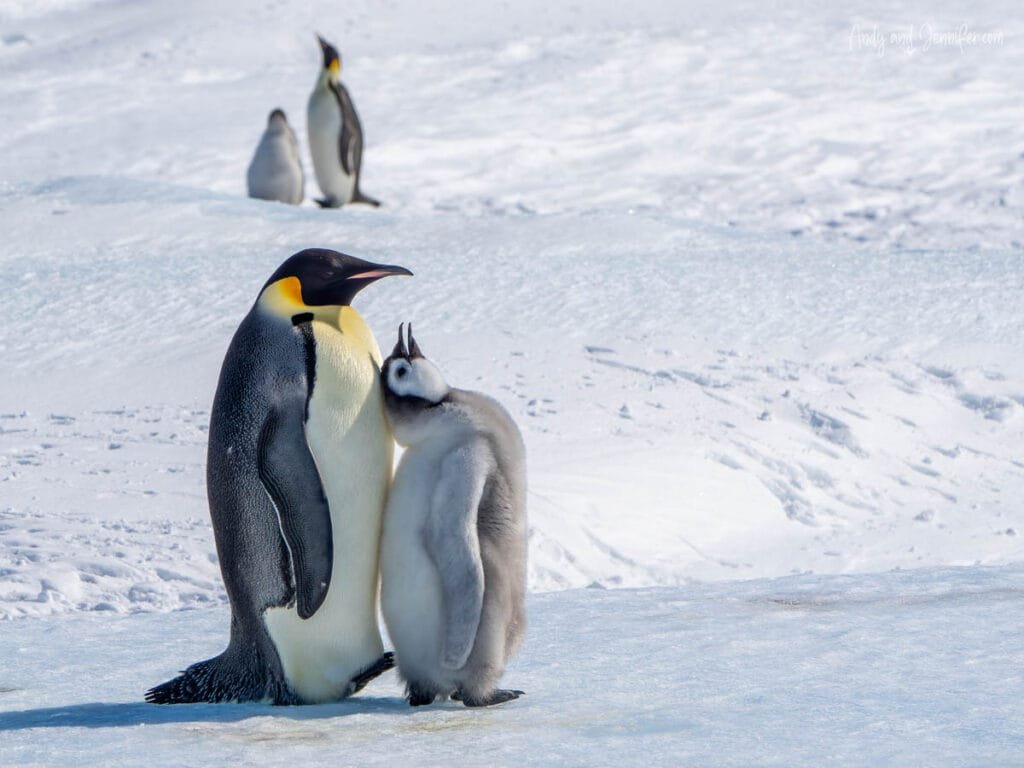
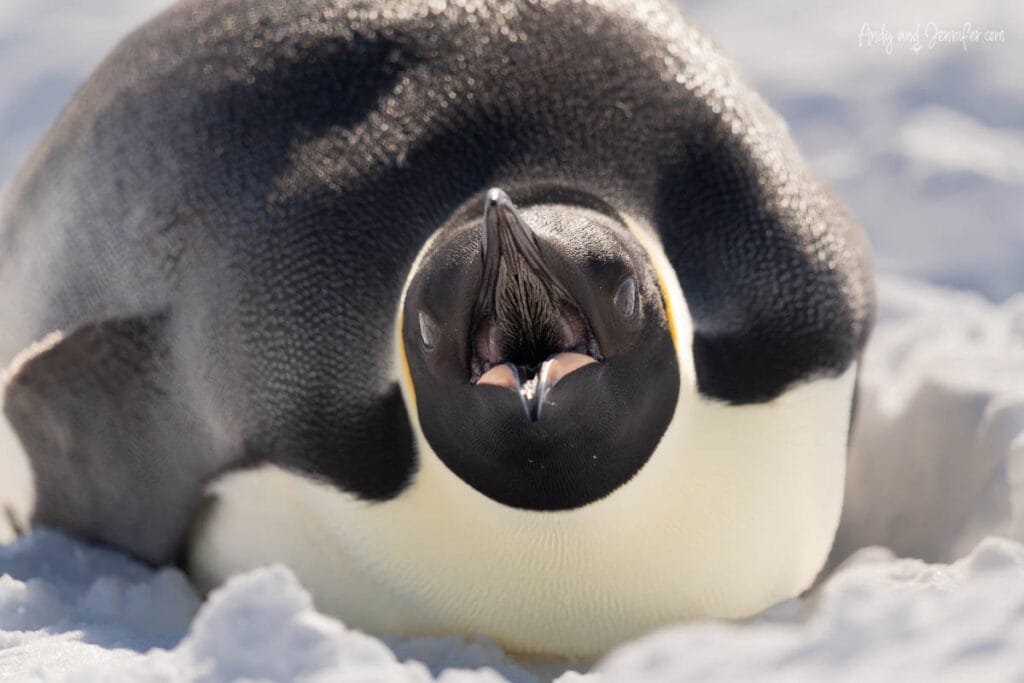
The soundscape was unforgettable. Adults braying and trumpeting. Chicks chirping and squeaking. Miscellaneous squawks and coos. I was torn between trying to capture it all and just stand there and observe in awe.
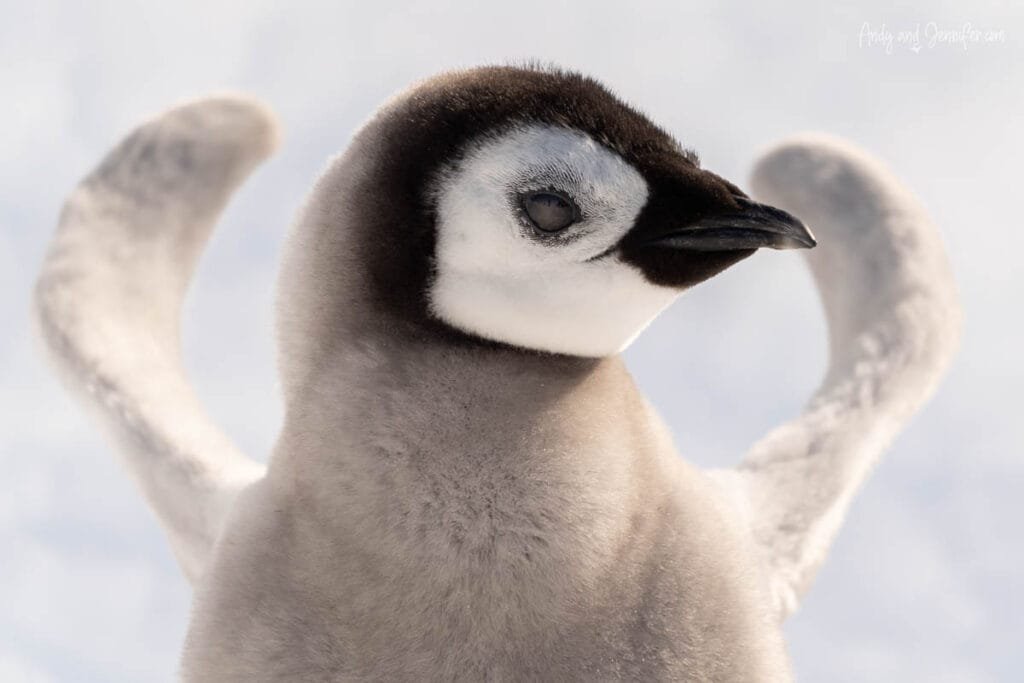
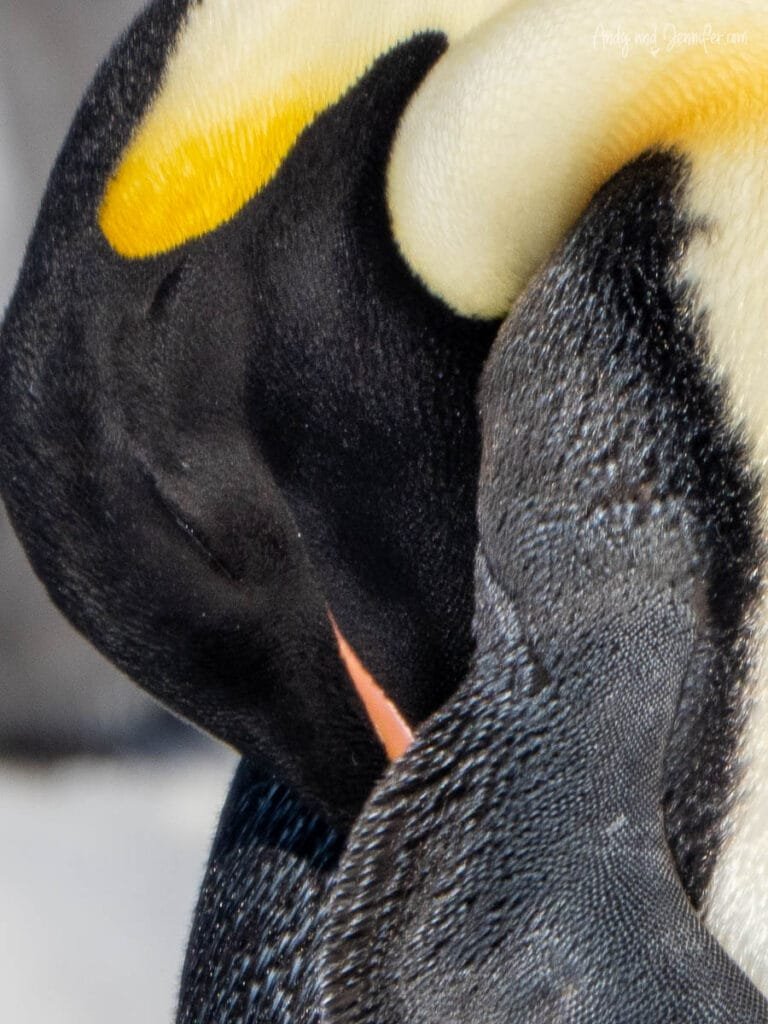
At times, the entire scene felt unreal. It almost looked like something AI might generate if you asked it to generate an image of a “perfect emperor penguin colony.” The chicks were somehow even cuter than I imagined. And what made it even more special was how few people were there. Because we were the last flight of the day, we were there with about fifteen other guests and a few members of the expedition team.
Exploring Other Colonies
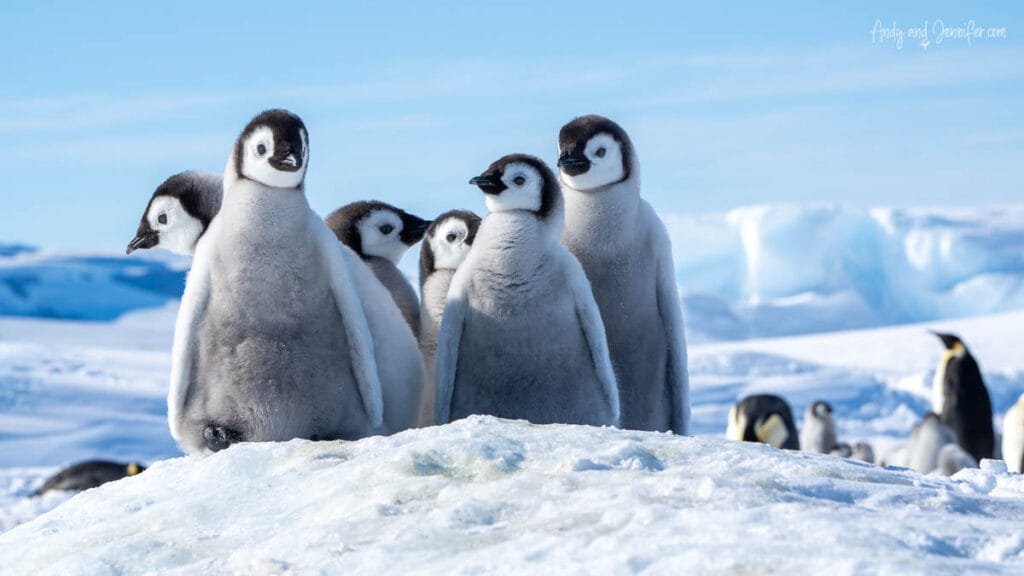
The first colony already felt incredible, but there were others nearby. A second colony was about five minutes farther. When we arrived, there were only two other people there. Several chicks gathered on a small mound of ice, repeatedly climbing to the top and then pausing as if they had no idea what to do next. It felt like a tiny game of king of the hill, without the rules.
Andy continued another few minutes to a third colony and found himself completely alone. By then, there were only seven of us spread across the entire landing site. And the golden afternoon light was perfect.
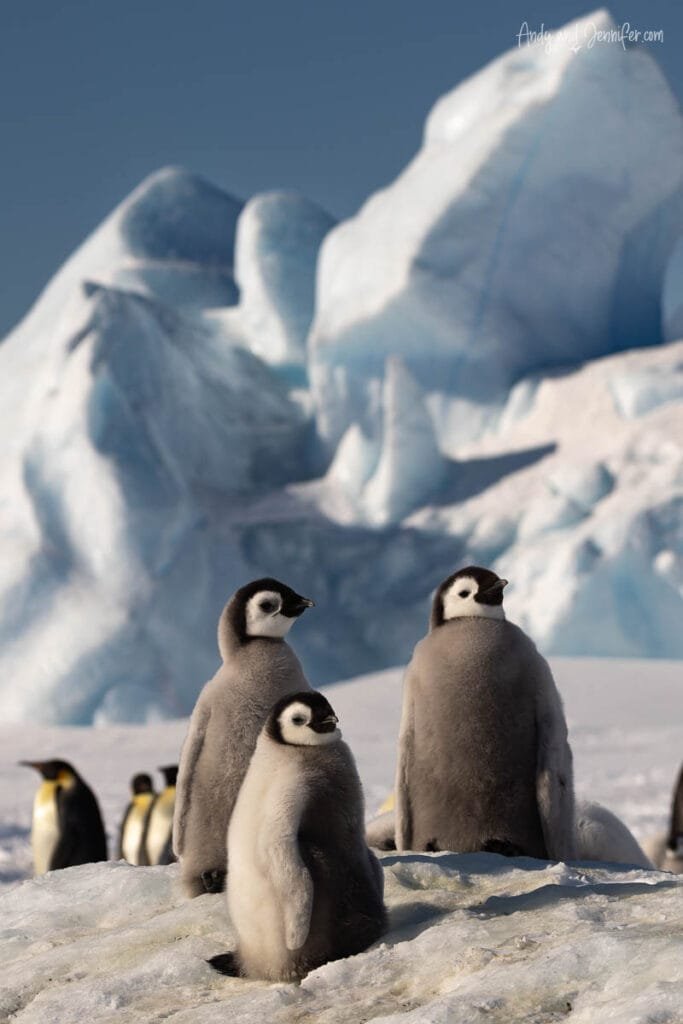
I stayed with the chicks, completely absorbed in the experience.
Returning to the Ship with the Penguin Glow
We stated for as long as we possibly could, which meant a brisk walk back to basecamp to make sure we got back on time. Remember the hidden straps that I raved about? The ones that let you carry your jacket like a backpack? They came in VERY handy on the walk back to basecamp. We made it to basecamp with seven minutes to spare, which felt like a small win.
For the return flight, we had to put all our layers back on. My sweat-soaked thermals inside the flight suit made me feel like a rotisserie chicken marinating inside a bag. Getting to sit in the co-pilot seat for the flight back made me temporarily forget that I was overheating.
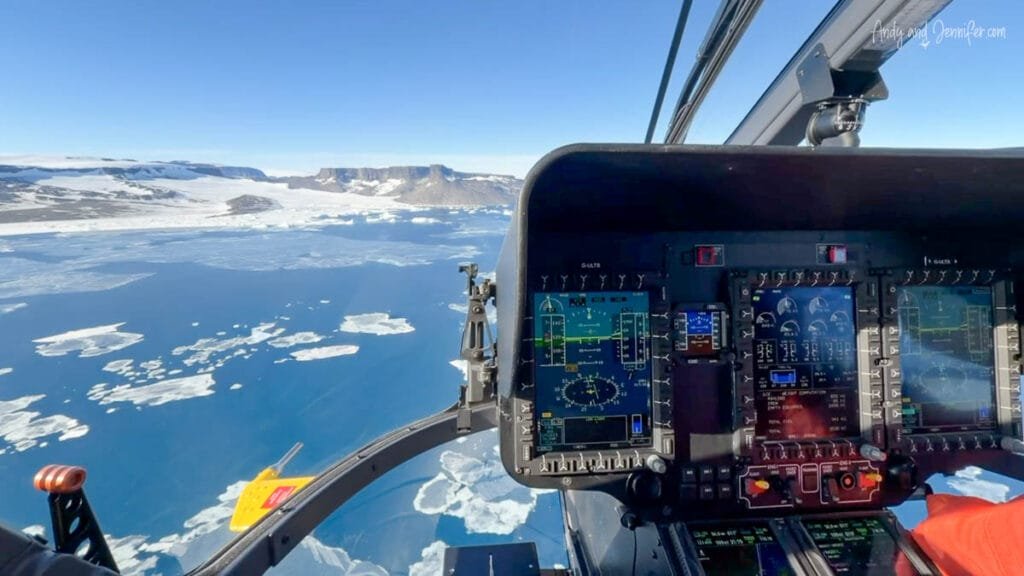
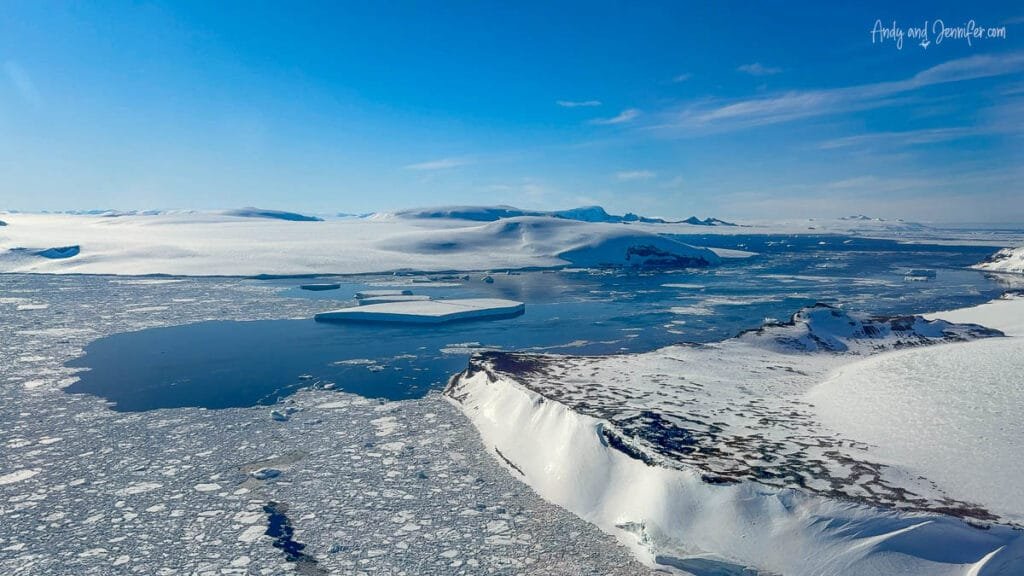
Thirty minutes later, we landed on the ship just after 8pm. We went straight to the cabin and started peeling off layers. Somewhere in that process, it hit us. I’m not an overly emotional person. I’ve been with people who cried when they saw a gorilla or swam with a humpback whale. While I appreciated those incredible experiences, I wasn’t moved to tears. When something really overwhelms me, I don’t get emotional. I get quiet. Speechless. I have no words. That’s how I reacted to Snow Hill. We had just stood in the middle of an emperor penguin colony, the one thing this entire trip had been built around, and it was everything we had hoped for. Even if it was probably the most expensive two hours of our lives… it was completely worth it.
On our trip to the New Zealand Sub Antarctic in 2024, there was a guest presenter named Charles Bergman. He wrote a book about his and his wife’s quest to see all 18 species of penguins. They introduced the idea of the “penguin glow,” that mix of wonder, connection, and quiet joy you feel around penguins. We definitely felt it after our time at the Snow Hill emperor penguin colony.
Penguin number 15.
The emperor penguin.
Check.
Snow Hill – Day Two
The entire next day was dedicated to getting the rest of the ship out to Snow Hill Island. Watching the helicopter operations unfold from the ship made us realise just how fortunate we had been the day before. We happened to be in the cabin when the phone rang, and that single moment had quietly changed the outcome of our trip. If we had missed that call, we would have missed the last flight of the day. The perfect light. And having the colony all to ourselves. The weather had shifted overnight. It was noticeably colder and windier, much closer to what you imagine when you picture Antarctica. The reports and photos coming back from the colony showed penguins dusted with frost and ice crystals, standing in a landscape that looked far more severe than the warm, almost comfortable conditions we had experienced.
Helicopter Operations: The Numbers
Later in the day, the expedition’s helicopter leader gave a recap of the aviation effort that had made the Snow Hill landings possible. The numbers were impressive. On the first day the helicopters completed 19 round trips, followed by 18 more on the second day. Each round trip covered about 240 kilometres, flying from the ship to the emperor penguin colony and back again. When you add it all together, the distance flown was roughly equivalent to traveling from Hawaii to New York, Los Angeles to London, or even Snow Hill Island to Sydney. Another way he explained it was that the helicopters had effectively flown the entire length of Africa, or crossed the Drake Passage ten times. He presented the numbers with animated slides and the kind of enthusiastic delivery only an Australian could pull off, saying repeatedly “That’s just bonkers.” It was hard to disagree.
Next up – Stand Up Paddleboarding at Tower Island

We’re Andy and Jennifer—two former corporate executives who chose long ago to prioritise experiences over stuff while pursuing our passions for travel and photography. From the Arctic to Antarctica, and most places in between, we’ve captured the world through our lenses and love sharing those stories. Our careers gave us the means, but our purpose is inspiring others to explore and helping people create images they’re proud of.