Snow Hill Emperor Penguins: Will We Even Get There?
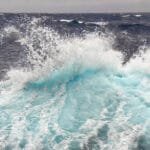
We woke to sustained winds around 60 knots, with gusts pushing close to 70. Fun fact: A knot is a unit of speed used in aviation and maritime navigation that equals one nautical mile per hour (about 1.85 km/h or 1.15 mph). The term comes from early sailors who measured a ship’s speed by counting the number of knots in a rope that passed through their hands over a fixed time.
The ship was listing enough that walking down the hallway required real balance. It felt like moving through the cabin of a plane in turbulence, except this time the turbulence wasn’t ending. This did not bode well for our quest to the Snow Will emperor penguin colony.
The captain eventually parked the ship in a sheltered pocket in the ice, essentially a dead end where the surrounding ice helped block the wind. From there, he and the expedition leader lifted off in one of the helicopters to scout conditions ahead. If we were going to reach the Snow Hill emperor penguins, everything depended on what they found.
Waiting on the Ice: Penguins and Photography on Deck
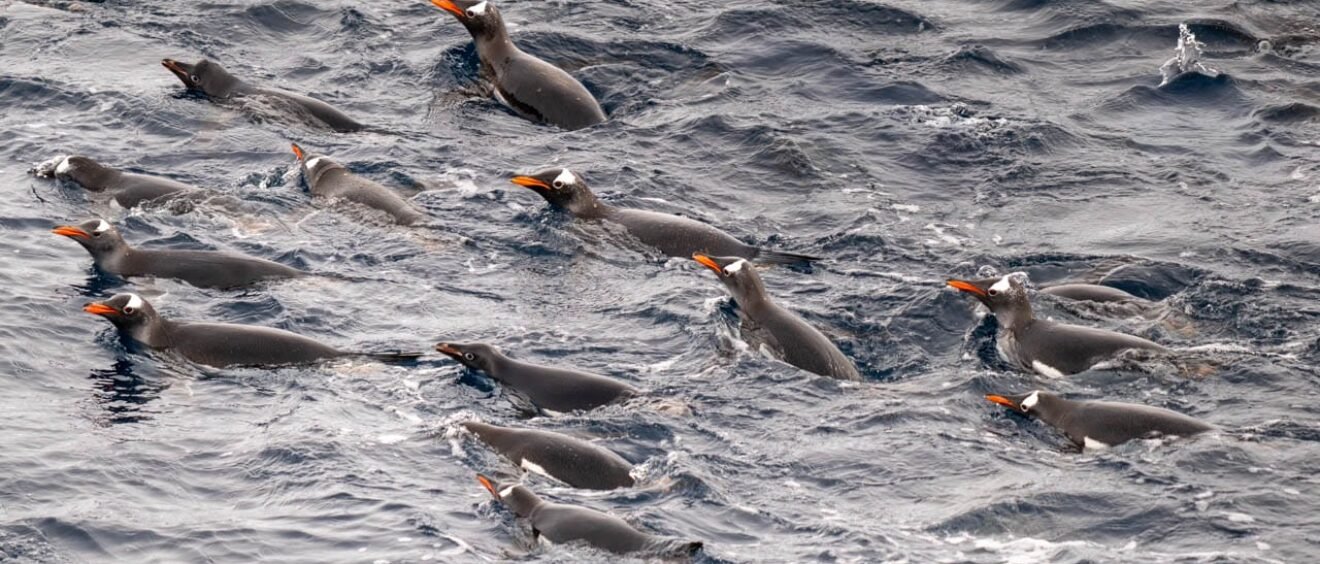
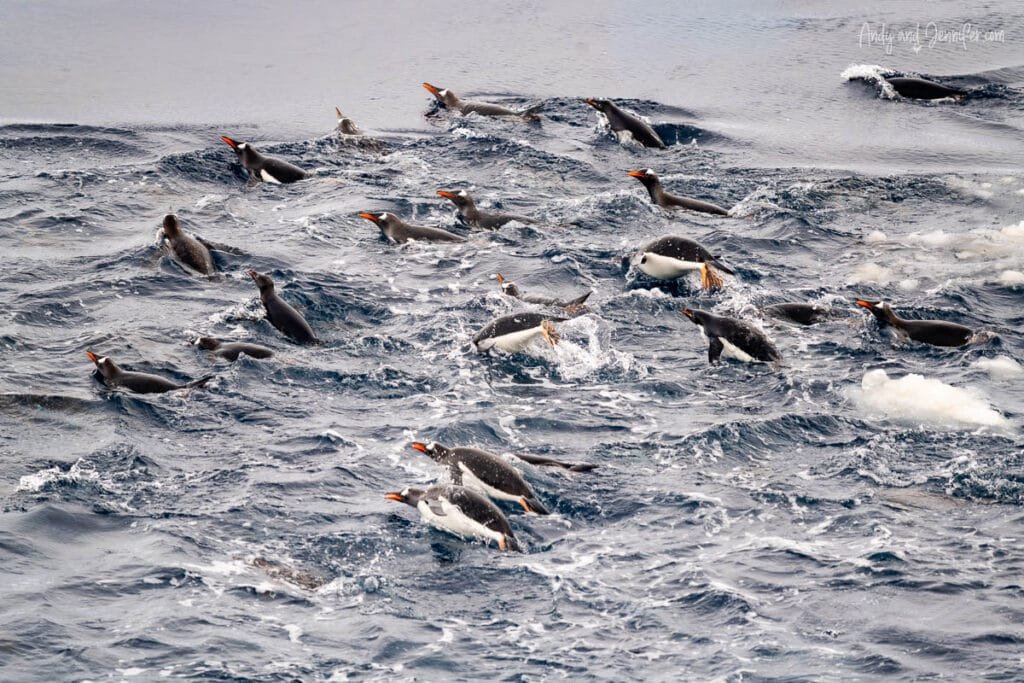
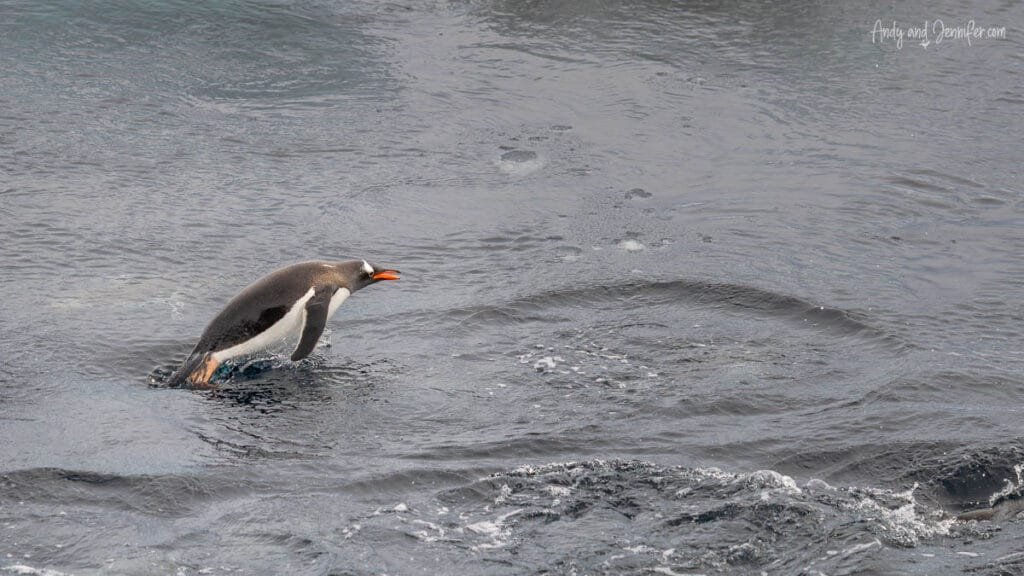
While the scouting helicopter was gone, we made our way to Deck 5 with cameras in hand. There wasn’t much else to do except watch the ice and wait. We first spotted the gentoo penguins in the water. Their bright orange beaks make them easy to identify as they porpoised alongside the ship and launched themselves out of the water in smooth arcs like tiny black-and-white torpedoes.
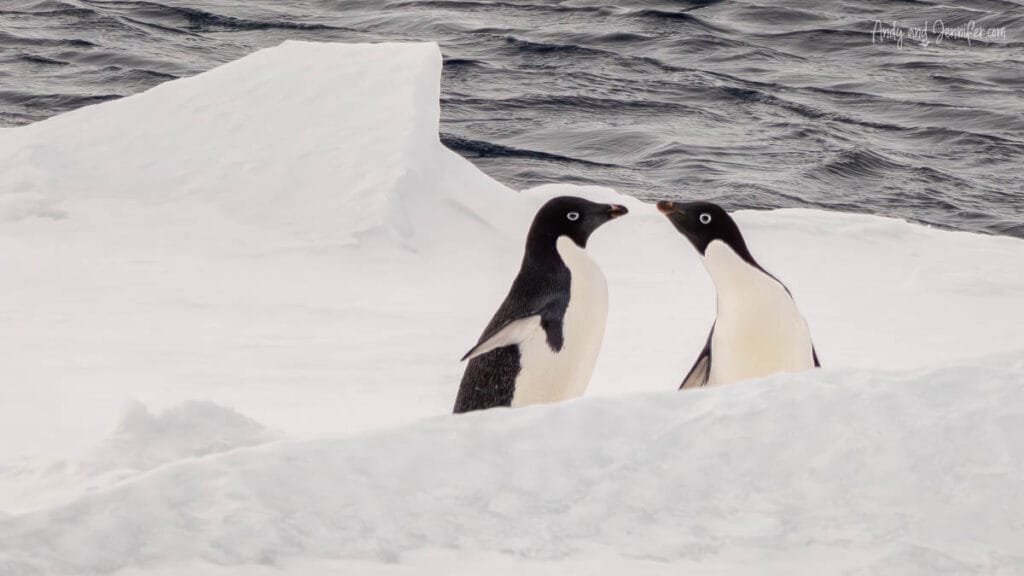
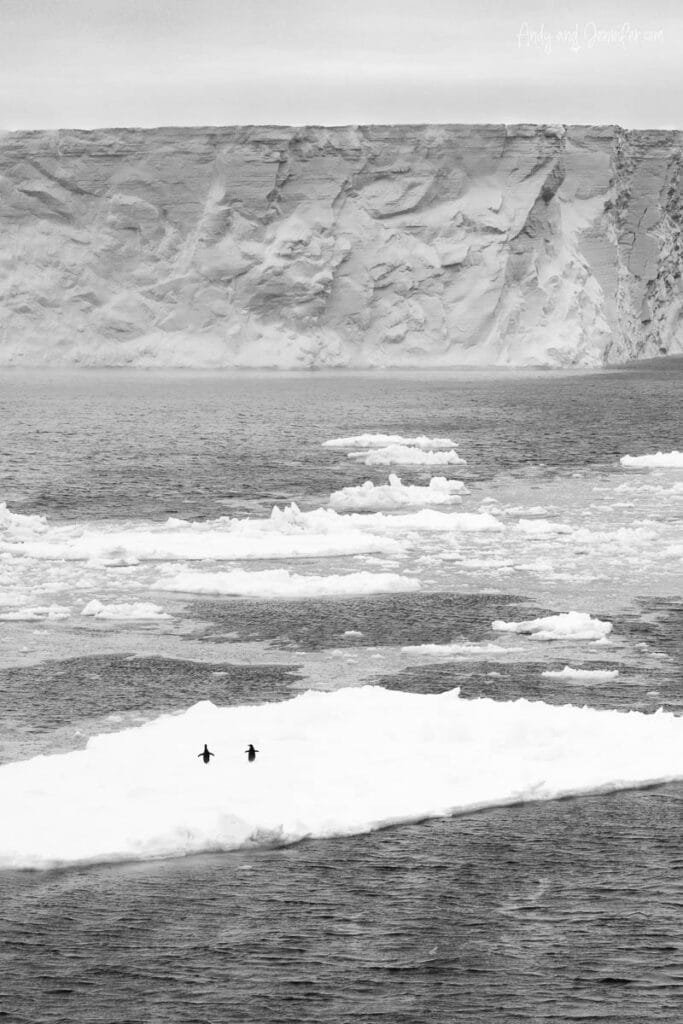
We passed icebergs dotted with Adelie penguins, who are smaller than the gentoo and have a distinctive white ring around their eyes.
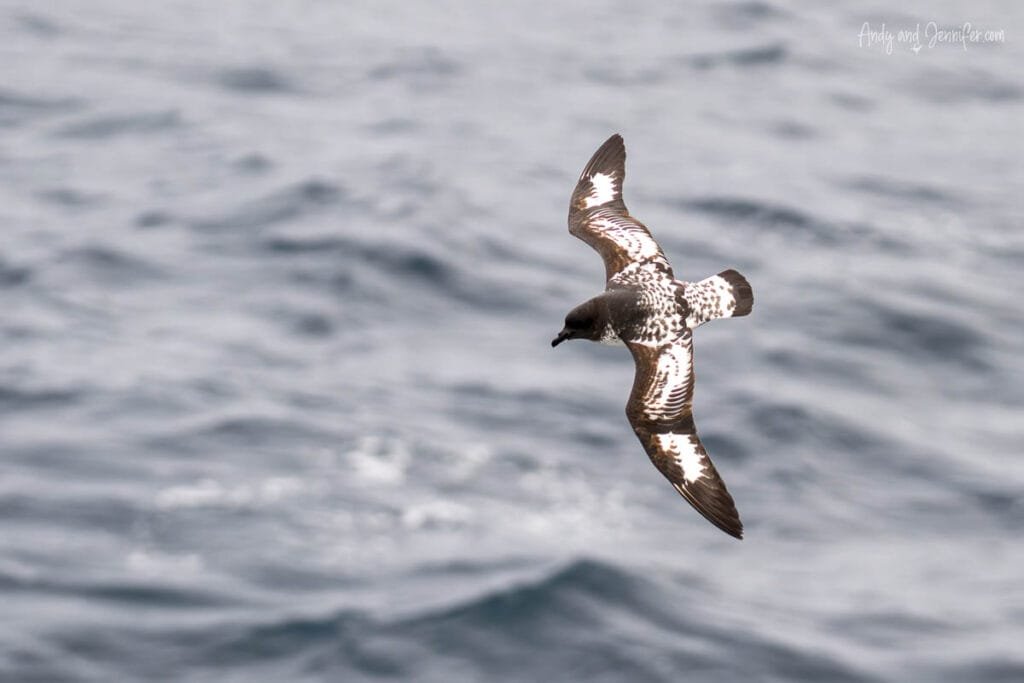
In addition to the penguins, Cape petrels, snow petrels, and southern giant petrels glided effortlessly around the ship.
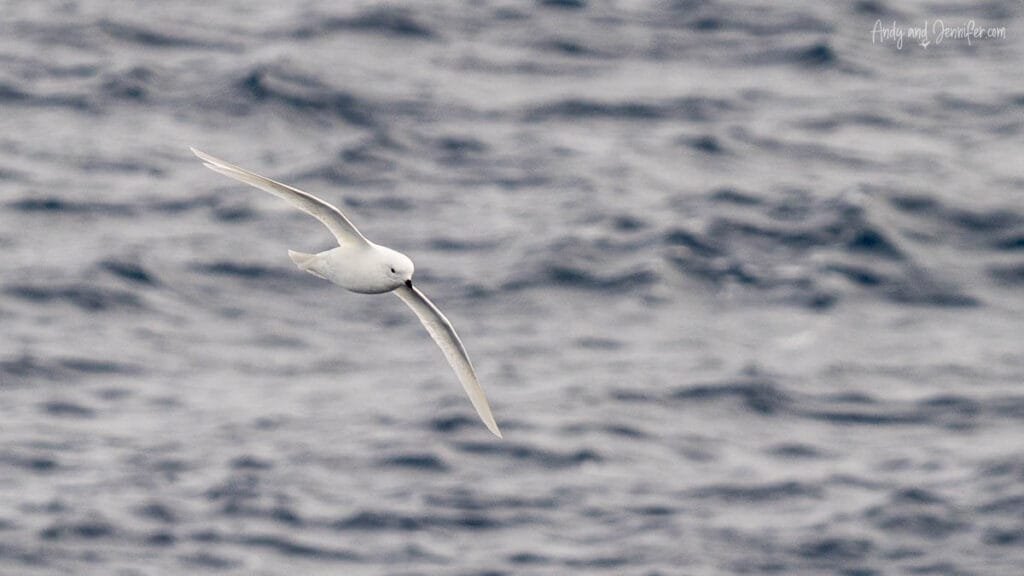
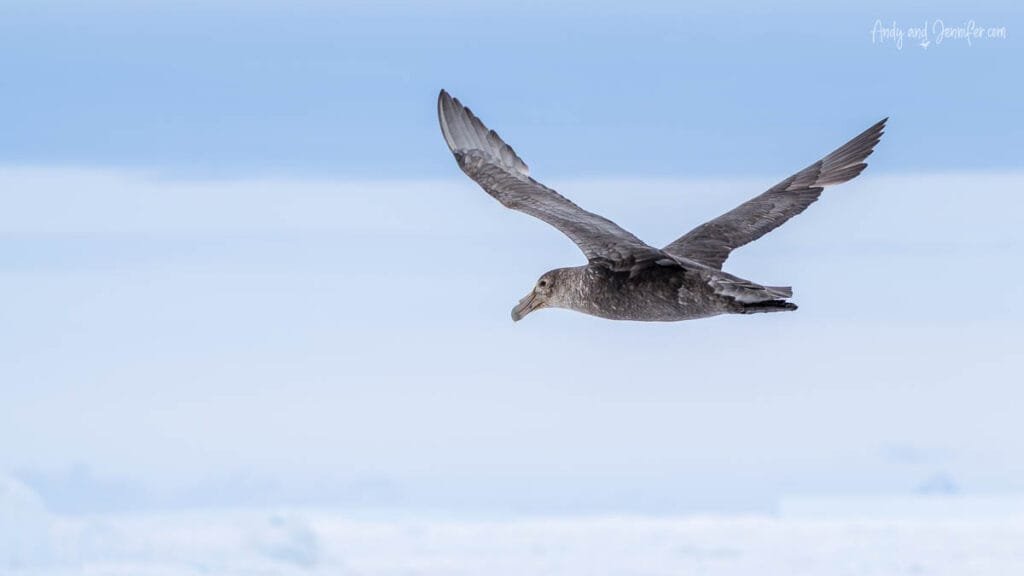
It turned into an unexpectedly great photography session. For a while, capturing those moments helped distract from the bigger question hanging over the expedition. Were we actually going to make it to Snow Hill?
Helicopter Operations Briefing in Antarctica
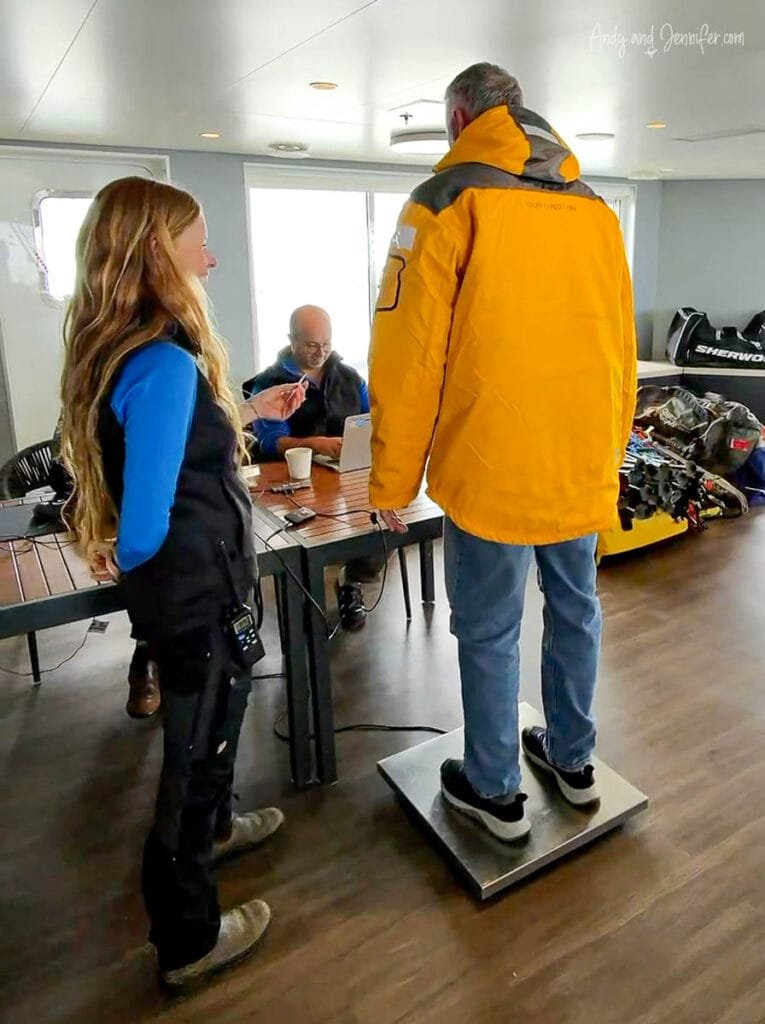
Later that morning we attended the helicopter briefing, which included one additional step. Everyone had to weigh in. Just body weight in normal clothing with parkas. Camera bags would be weighed separately prior to takeoff and could be up to 10 kilograms. When helicopters are involved, every kilogram matters.
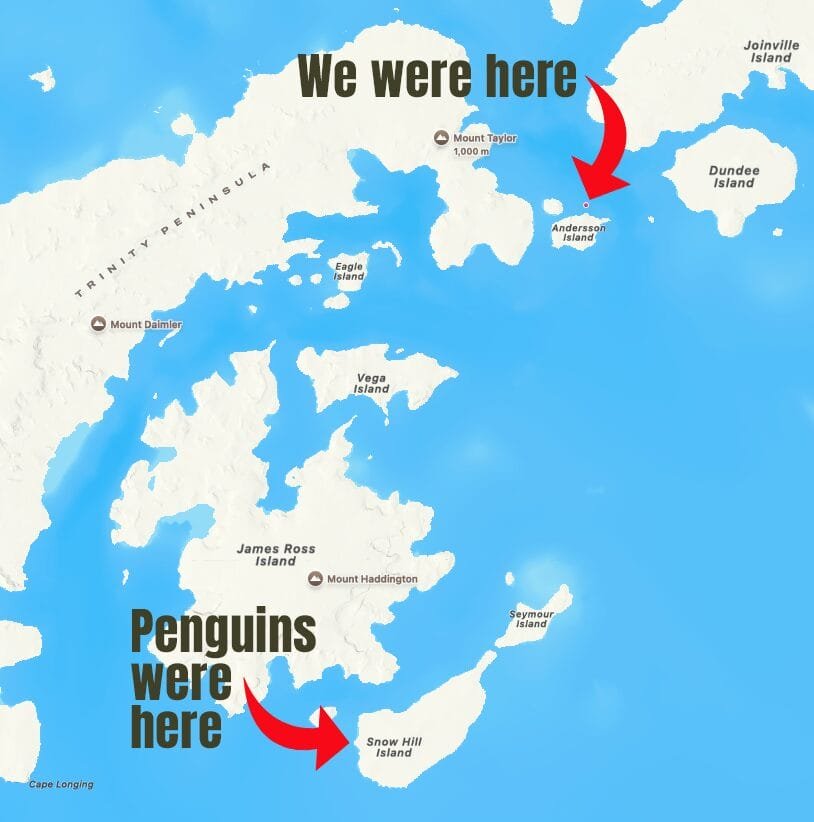
By the time the briefing ended, the scouting helicopter had returned. There was no announcement, and the ship started to retrace its path through the ice, eventually ending up tucked in behind Andersson Island. The ship would use it as shelter from the wind while the expedition team evaluated the situation. That evening’s briefing was the one everyone had quietly been bracing for.
The Ice Barrier: 50 Kilometres of Multi-Year Sea Ice
The news wasn’t great.
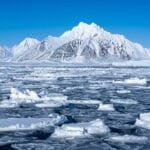
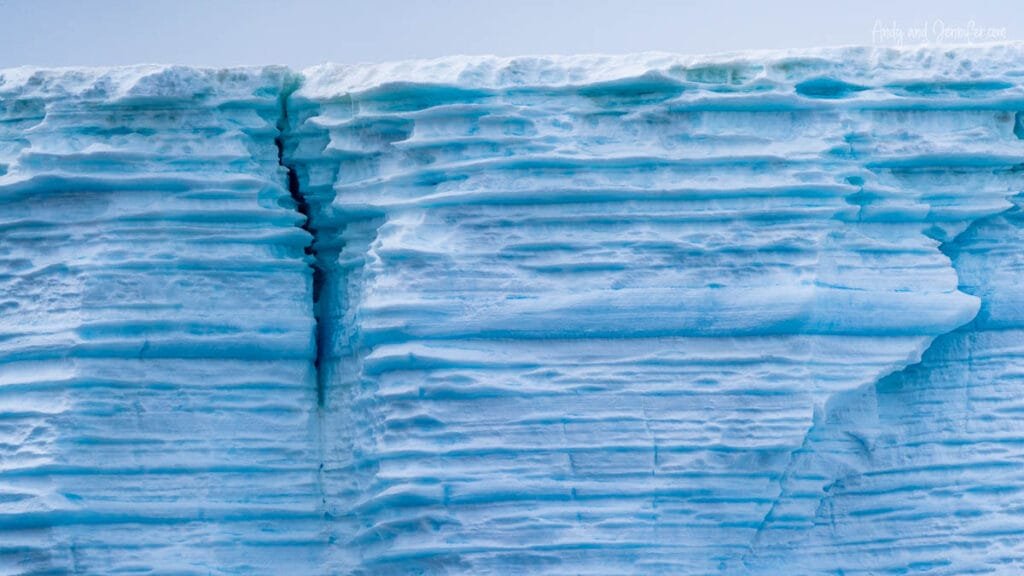
Ahead of us lay about 50 kilometres of multi-year sea ice. Ultramarine is built to Polar Class 6 (PC6) standards, but not an icebreaker. It is designed to operate safely in medium first-year sea ice with some older, thicker ice mixed in. But this was thick, stubborn ice that had survived multiple winters. In simple terms, the ship wasn’t getting through.
You could feel the shift in the room. My stomach dropped and I could feel my expression change as my mood went from hopeful to gutted in an instant. We knew this was a possibility. Reaching the Snow Hill emperor penguins depends entirely on ice conditions, and some seasons ships simply can’t get through the Snow Hill Antarctica sea ice.
A Bold Plan: Helicopter Flights to Snow Hill Island
But then there was a glimmer of hope.
The forecast showed a three-day weather window. If conditions held long enough for the helicopters to operate, we still had a chance to reach the Snow Hill emperor penguins, just not in the way anyone had planned. Instead of reaching Snow Hill by ship, the expedition team proposed running helicopter operations directly from the vessel. I had to check with Andy to make sure I heard them correctly. There was still a chance.
The flight distance would be around 60 kilometres each way, about 30 minutes in the air. For context, the flight to the colony is usually closer to 10 minutes. It was ambitious, but possible because of Quark’s planning and experience. This particular expedition had an unusually large aviation team: four pilots and two mechanics. With that setup, they believed they could keep the helicopters, which carry seven passengers each, cycling efficiently between the ship and the emperor penguin colony. I’m pretty sure that we were right at the edge of Quark’s risk tolerance. The plan was to begin flights the following day, assuming the weather cooperated. The first two passenger groups, roughly 60 people total, would travel on day one.
We checked the assignment board. We were allocated to day two.
While I would have much preferred to be in a group on the first day, at least we still had a shot. At this point, that was all that mattered. Whether we would get the chance to see the Snow Hill emperor penguins came down to weather, ice, and a bit of luck.
Next Up –> The First Flights to Snow Hill

We’re Andy and Jennifer—two former corporate executives who chose long ago to prioritise experiences over stuff while pursuing our passions for travel and photography. From the Arctic to Antarctica, and most places in between, we’ve captured the world through our lenses and love sharing those stories. Our careers gave us the means, but our purpose is inspiring others to explore and helping people create images they’re proud of.