
Landing on Tristan da Cunha – the Most Remote Habituated Island in the World
- The Things We’ll do For Penguins: An Expedition from South America to Africa to (Hopefully) see the Northern Rockhopper
- Birding in Santiago and Embarking on our Cape to Cape Expedition
- A Delayed Departure From Puerto Williams Aboard the Silver Wind
- A Day in Stanley and a Trip to Gypsy Cove
- A Perfect Landing at Salisbury Plain and a Cruise around Prince Olaf Harbour
- Rain at Jason Harbour and the Wind Wins at Gritviken
- Stromness, Gritviken & Four Days at Sea
- Nightingale Island: The Landing We Couldn’t Count On
- Landing on Tristan da Cunha - the Most Remote Inhabited Island in the World
- Four Days at Sea and the Unexpected End to Our Tristan da Cunha Expedition
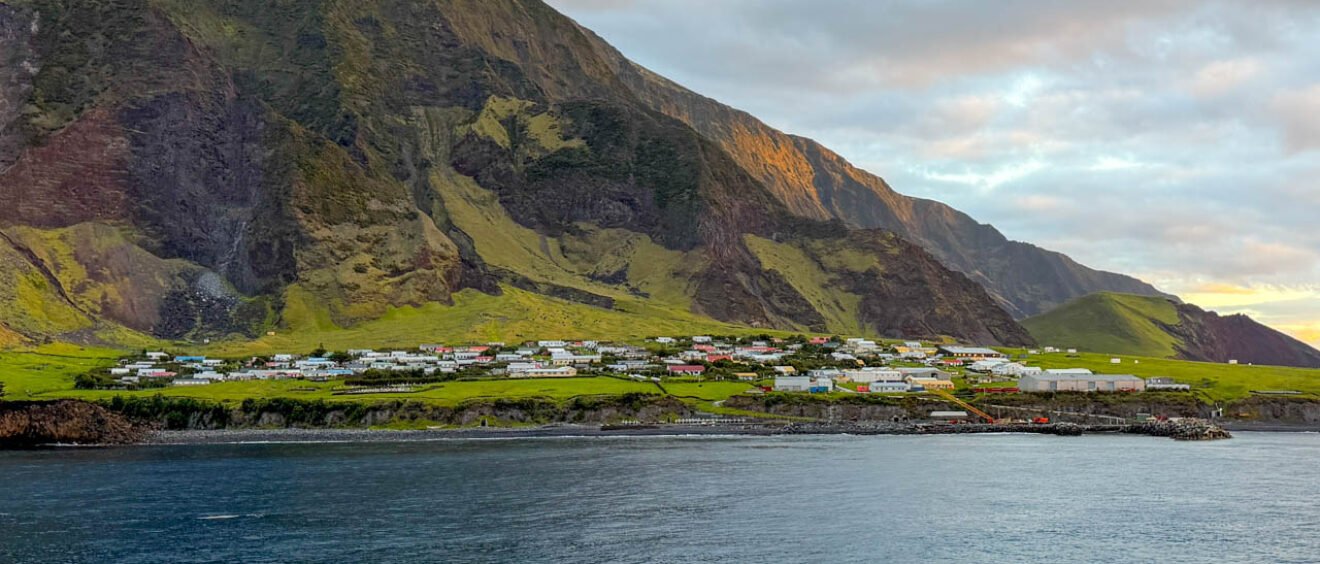
During lunch, the Silver Wind moved the short distance to Tristan da Cunha.
There were several options for the afternoon: a volcano hike, a walk to the potato patches, a town tour or a bird walk, and even golf.
We chose the bird walk. Then we arrived on shore and learned that the bird walk was heading to the dump to look for the flightless Tristan moorhen.
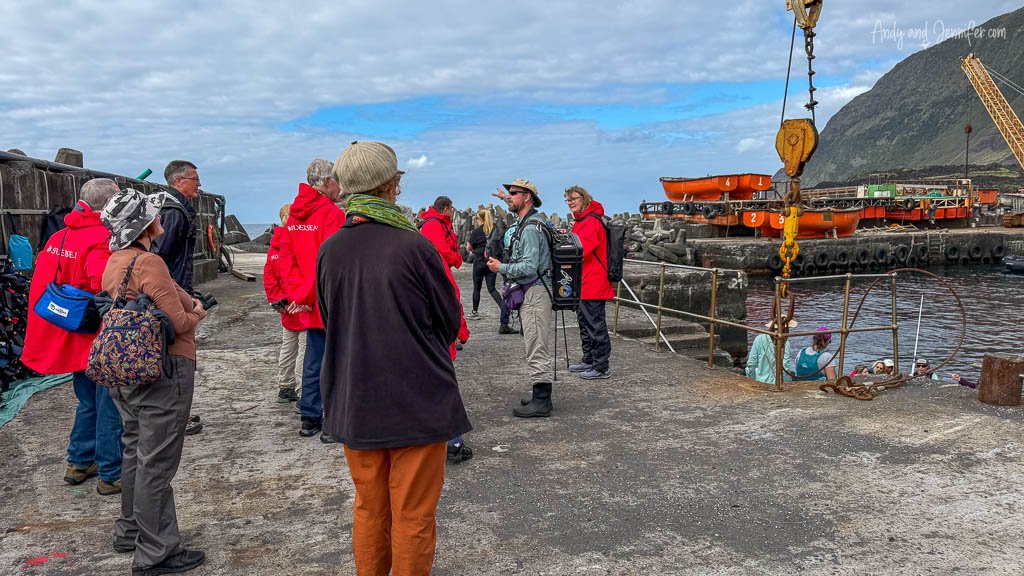
We decided to wander around town instead.
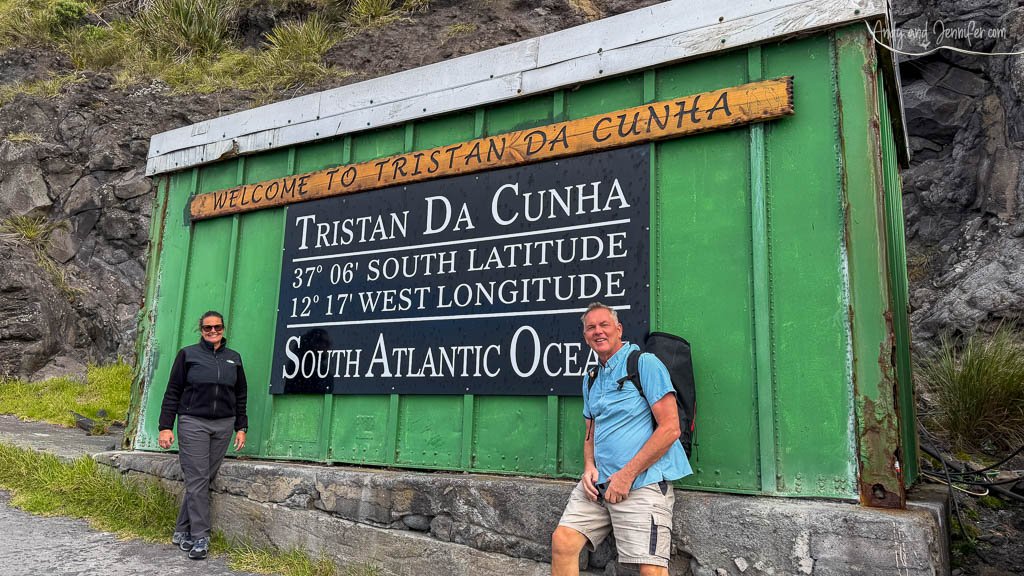
Just getting ashore was significant. Of the few members of the expedition team who had visited Tristan before, some more than once, none had managed to land before. Tristan da Cunha is the world’s most remote inhabited island. There is no airport, so everyone and everything arriving on the island comes by sea. Its only settlement, Edinburgh of the Seven Seas, sits more than 2,800 kilometres from Cape Town. So, obviously, we needed a photo in front of the sign declaring it the world’s remotest island.
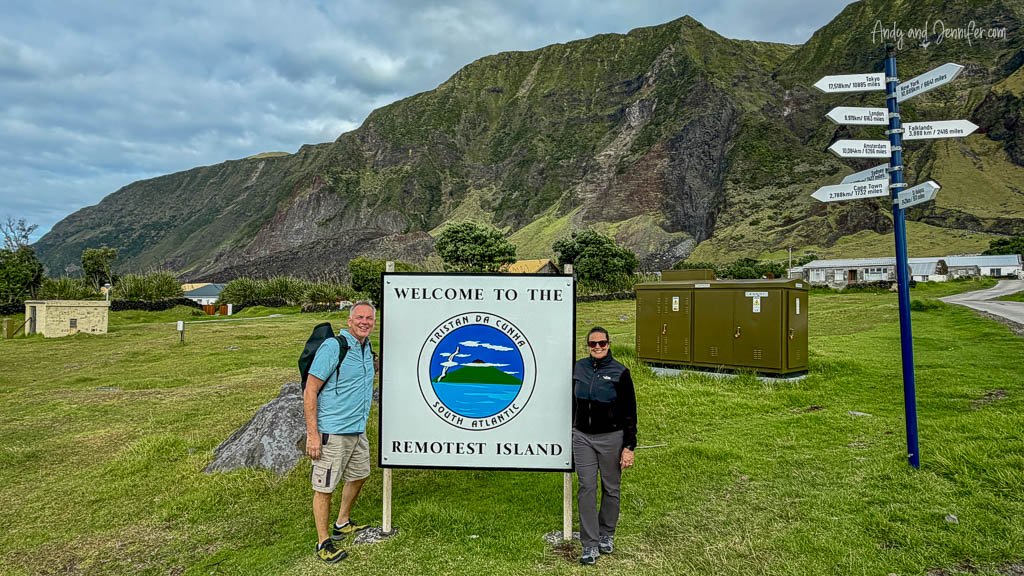
From there we simply wandered. First stop, the pub.
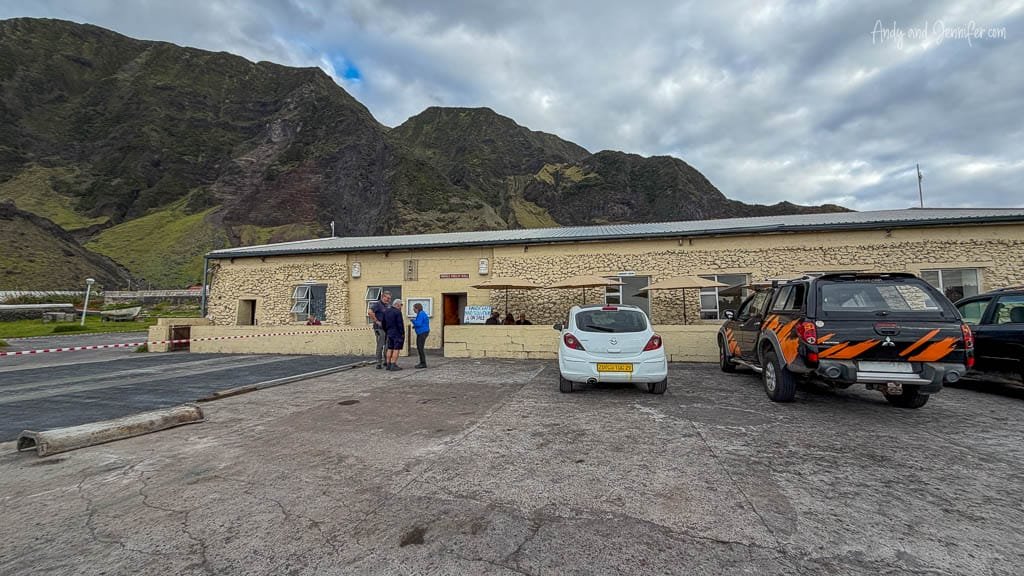
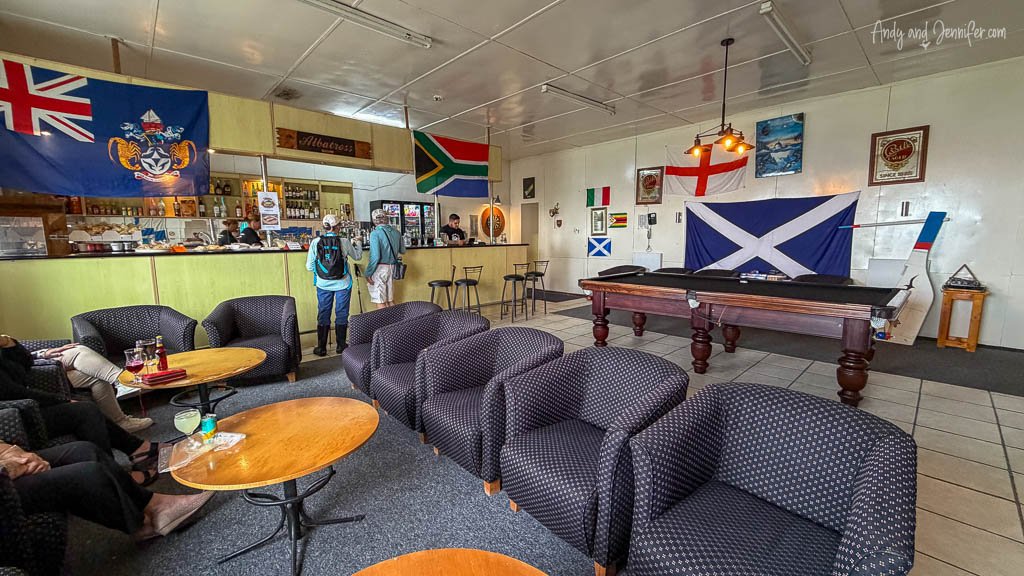
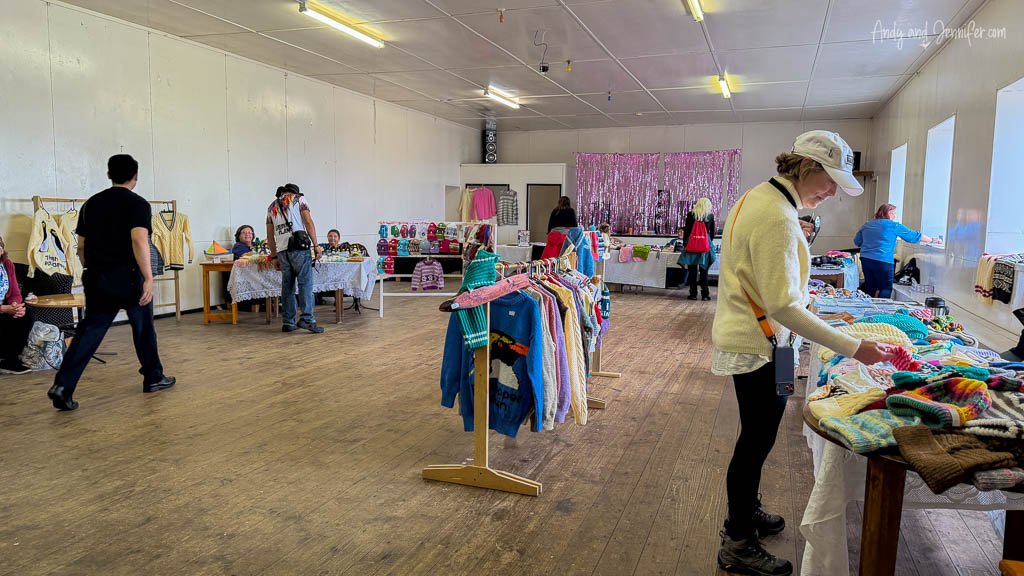
I bought some really cute penguin mittens at the adjacent craft market.
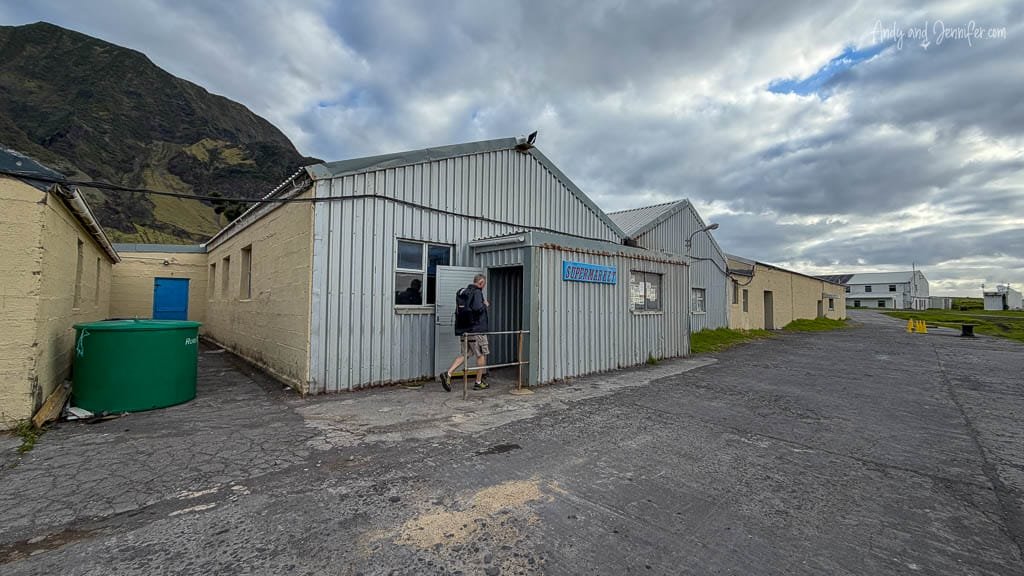
We also went into the grocery store out of sheer curiosity. The prices were on par with what we pay at our local general store, but our toilet paper doesn’t have penguins on the wrapper.

We passed small stone structures that looked a little like root cellars and explored the settlement without much of a plan.
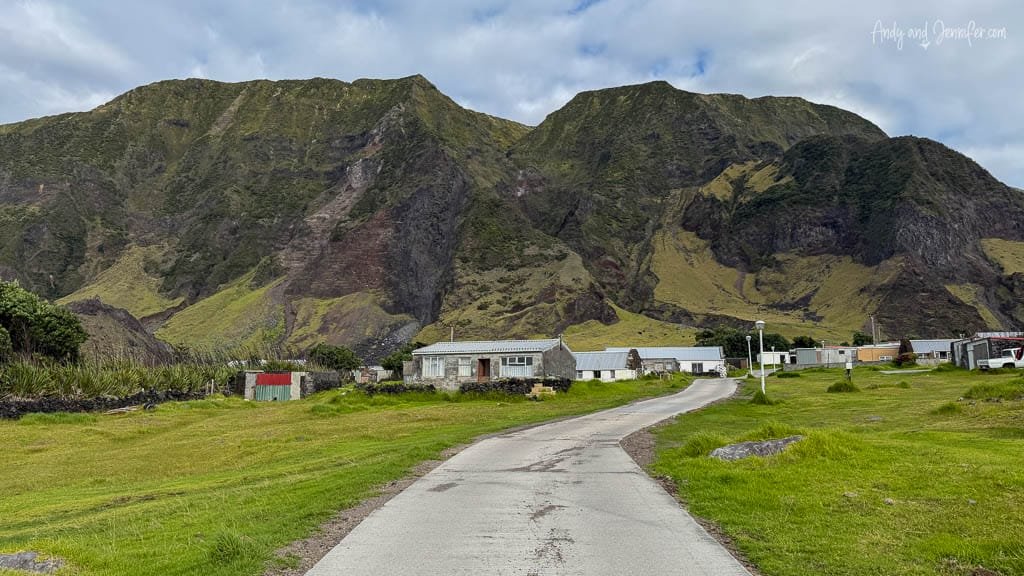
It was one of those places where simply being there was really the point.
Who Comes on a Cruise Like This?
By this stage of the expedition, we’d realised there seemed to be four broad groups of passengers on board.
There were the birders, which interestingly were the smallest group. There were the history buffs, drawn to places like the Falkland Islands and South Georgia by stories of Shackleton and the wider history of the South Atlantic. There were the country and territory counters, for whom setting foot on Tristan da Cunha was a major prize.
And then there were the cruisers. They were there for the experience onboard the ship. The ports were just a bonus for them. This group also included people who never got off the ship. I’m not making that up.
What struck me as we wandered around Tristan was that despite everything that had not gone to plan, the expedition had now managed to deliver something for everyone.
We’d had the flight problems before departure. The ship had left late. We’d lost a day in the Falklands and another in South Georgia. We skipped Gough Island entirely.
Yet the birders had the northern rockhoppers (and dozens of other endemics throughout the voyage). The history buffs had the Falklands and South Georgia. The territory counters had stepped ashore on Tristan da Cunha. And the people who simply enjoyed being on the ship had certainly had plenty of time to do that.
For the first time in a while, it felt as though the expedition had finally caught up with itself.
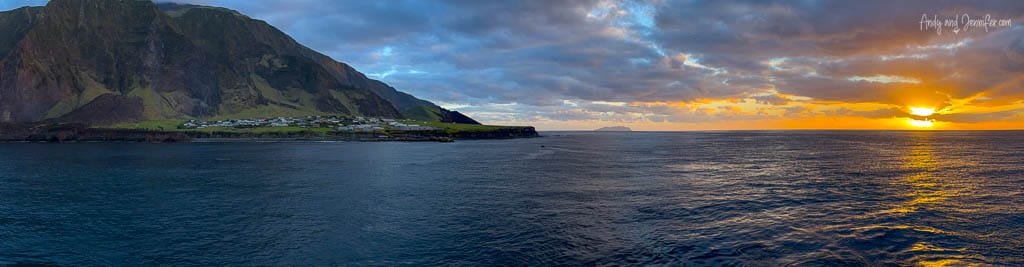
That feeling only lasted a few hours.
An Unexpected Turn Toward Cape Town
During dinner, Andy noticed something.
We were going very fast.
I opened CruiseMapper to see where we were heading. According to the map, the Silver Wind was on course for Cape Town.
We initially assumed it had something to do with the weather. The forecast for the following day included swells of around four metres, and our itinerary had effectively become “find somewhere to hide from it.” But Cape Town wasn’t on our itinerary. We were supposed to be going to Walvis Bay Namibia.
Then an announcement came. The captain would address passengers in the lounge at 9 p.m.
This felt eerily familiar.
On our first expedition aboard the Greg Mortimer, an unexpected captain’s announcement had resulted in a rather dramatic change of plans. We weren’t particularly interested in going to the lounge to hear this one, so we watched from our cabin television instead.
A passenger was seriously ill and needed to be medically evacuated. We were heading to Cape Town, the closest port with appropriate medical care.
The decision had only been made a few hours earlier, so there wasn’t much information yet. We didn’t know whether the ship would dock in Cape Town or whether the passenger might be transferred by helicopter once we were close enough. We also didn’t know what the diversion would mean for the rest of the itinerary.
What we did know was that we had four days at sea ahead of us.
Plenty of time for Silversea to work out its plan.
And plenty of time for us to start working on ours.
Next up –> Four More Days at Sea and the Unexpected End to our Tristan da Cunha Expedition
We’re Andy and Jennifer—two former corporate executives who chose long ago to prioritise experiences over stuff while pursuing our passions for travel and photography. From the Arctic to Antarctica, and most places in between, we’ve captured the world through our lenses and love sharing those stories. Our careers gave us the means, but our purpose is inspiring others to explore and helping people create images they’re proud of.
Related Posts
 Nightingale Island: The Landing We Couldn’t Count On
 Four Days at Sea and the Unexpected End to Our Tristan da Cunha Expedition
 South Island Wildlife Road Trip: Kea, White Herons & West Coast Drive
 Aqua Gliding with Beluga Whales in Churchill
 Drake Passage Sea Days: What to Expect on an Antarctica Expedition
 A Bucket List Trip to See the Brown Bears at Brooks Lodge