Penguin Highways at Palaver Point
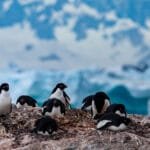
We woke up to the ship anchored off Palaver Point, home to a large chinstrap penguin colony along the Antarctic Peninsula.
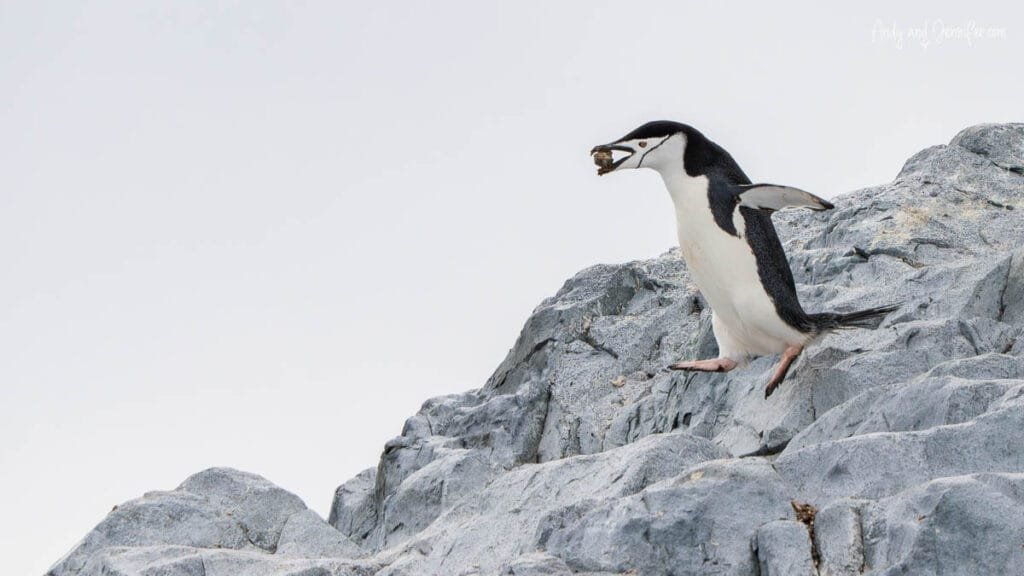
After landing, we followed the marked path to the left of the beach, climbing a broad snowy slope that overlooked the colony below. From there we watched the daily routine unfold as penguins carried small rocks to their nests and waddled back and forth between the sea and the hillside.
I realise how terrible this sounds given how much I love penguins, and honestly, I could happily watch them all day, but photographically the landing at Palaver Point didn’t immediately grab me. The light looked flat, the viewing angle forced us to shoot slightly downward, and most passengers gathered in the same small viewing area. And as always in Antarctica, nobody can sit or kneel near wildlife.
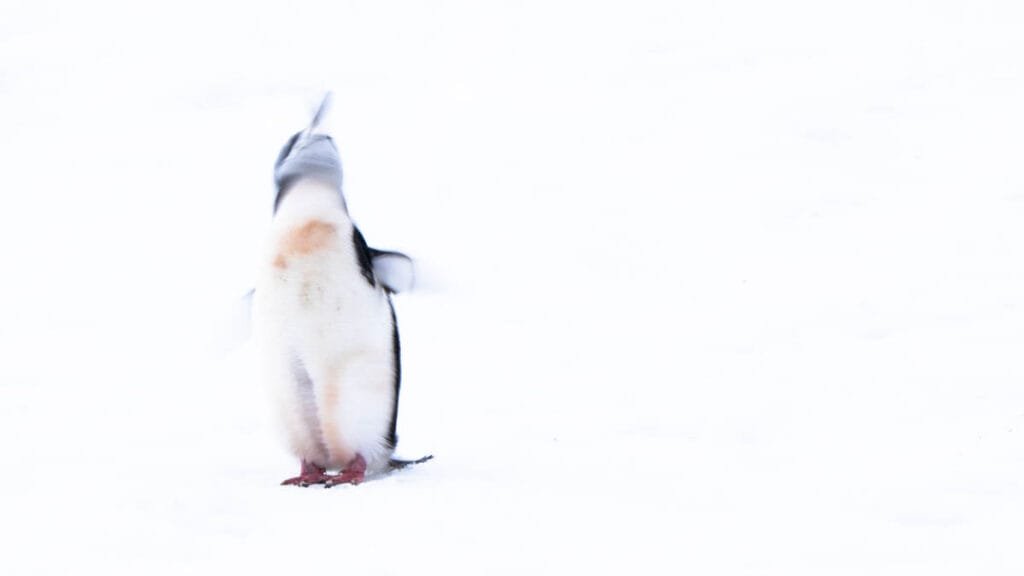
We wandered over to another section of the Palaver Point colony where the angle improved slightly, though the penguins themselves looked… well, not exactly pristine. Chinstrap penguins spend an enormous amount of time digging and rearranging rocks for their nests, and by that point in the season many looked like they had just finished a tough mudder race.
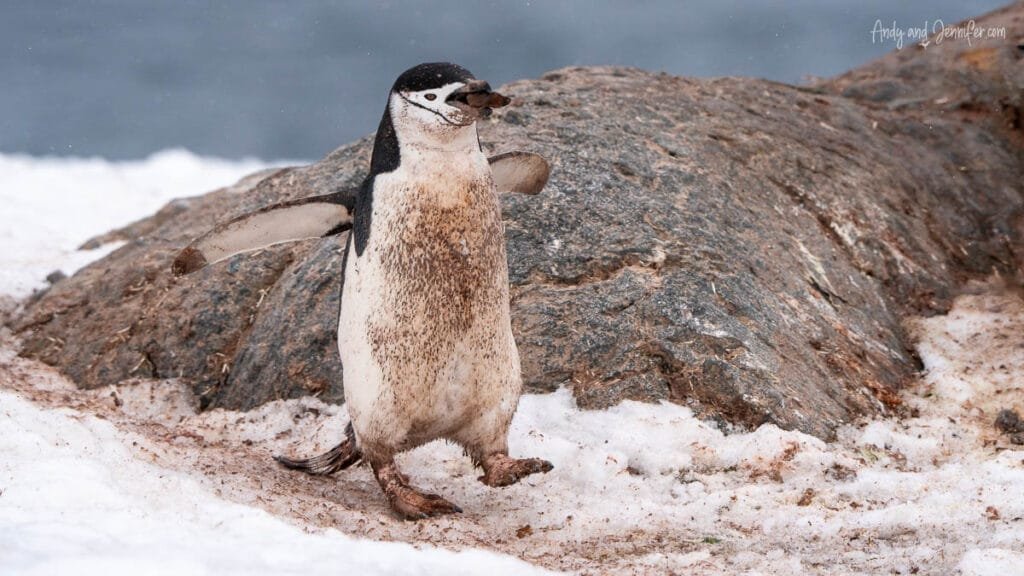
I know how spoiled that probably sounds. In reality, I felt perfectly happy just standing there listening to the colony. The constant chatter of penguins, the clatter of rocks getting stolen and relocated between nests, and the steady stream of birds moving to and from the water becomes strangely hypnotic if you slow down long enough to watch it.
Following the Penguin Highways
Then we noticed something interesting.The flagged path at Palaver Point continued all the way down toward the shoreline, but almost nobody walked down there. Most people stayed near the upper colony, probably because the climb back up looked a little steep. It turned out to be about a five-minute walk. And it completely changed the experience.
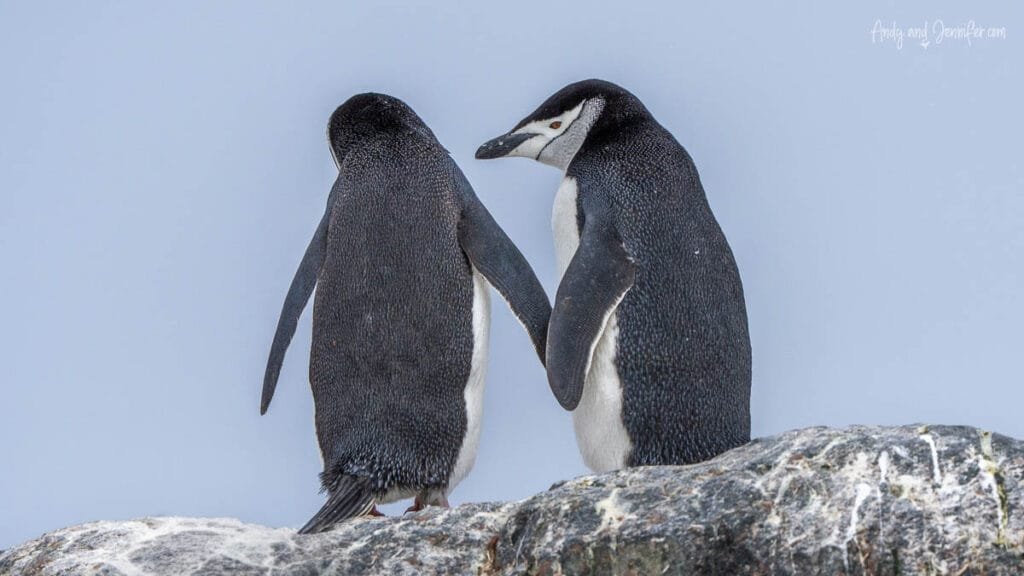
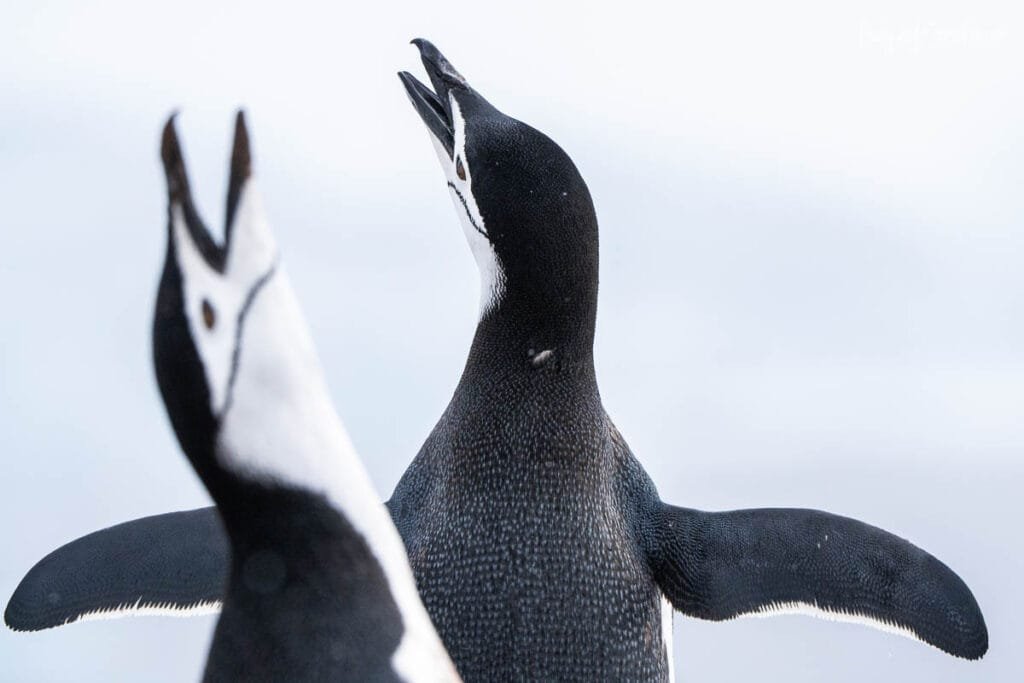
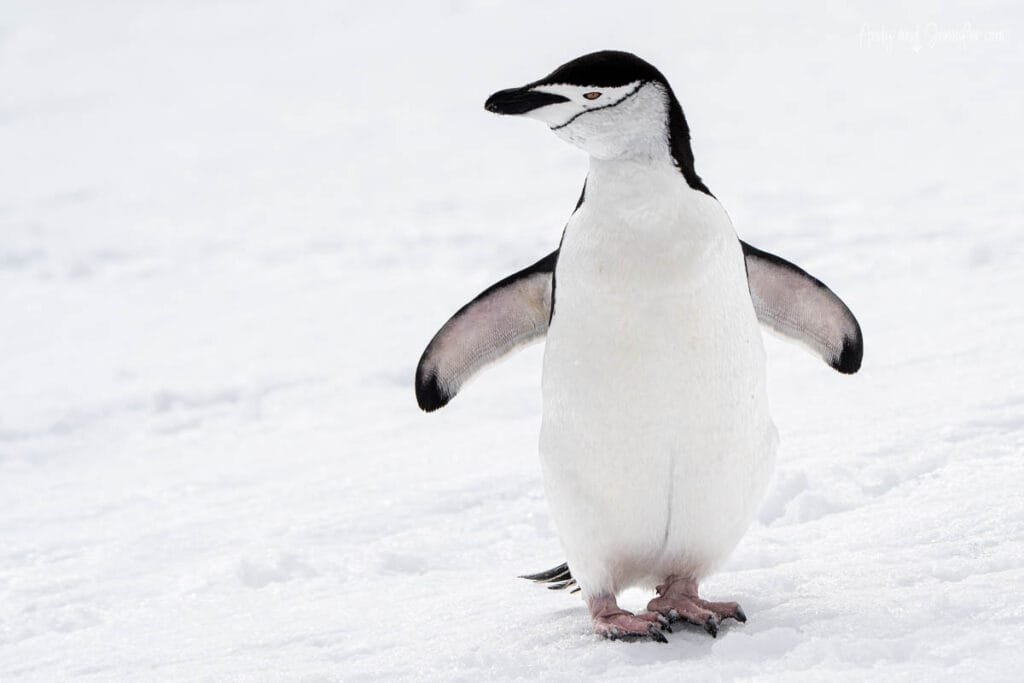
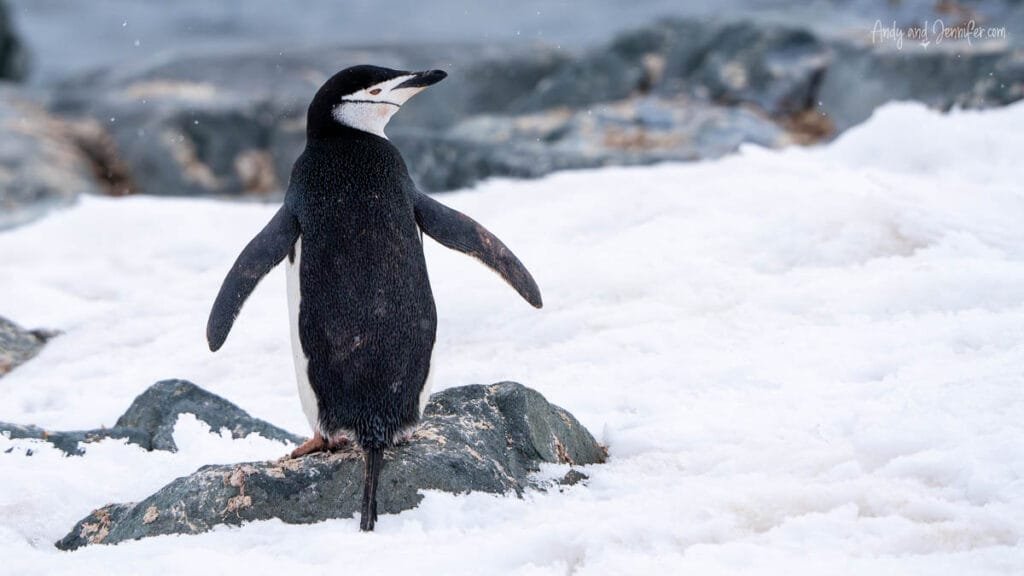
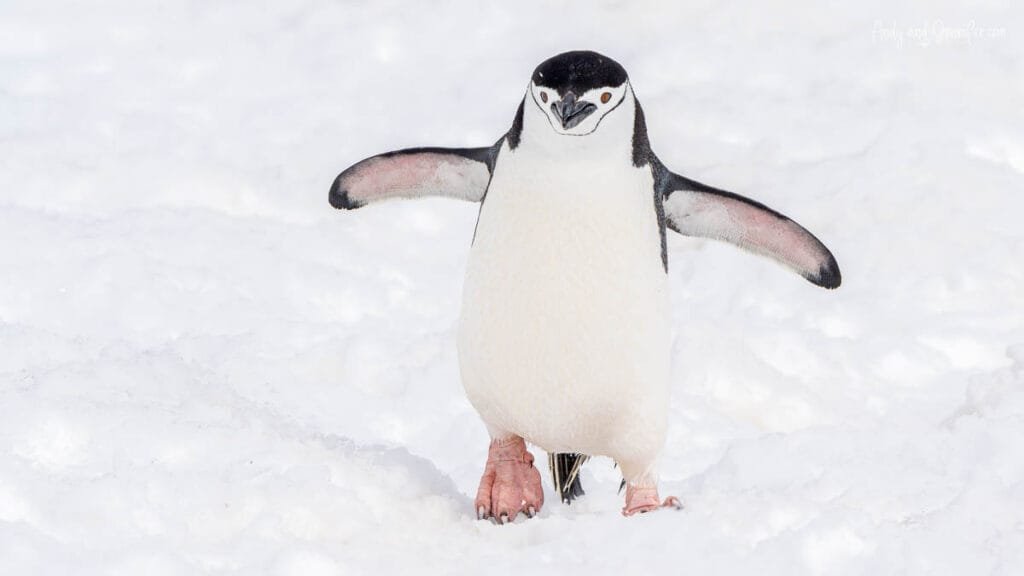
From the shoreline we no longer looked down at the colony. Instead, we watched chinstrap penguins return directly from the sea, fresh from swimming and perfectly clean. They waddled up the well-worn penguin highways through the snow, their bright white bellies glowing against the darker rocks and ice. And look at that foot!
Landing on the Antarctic Continent at Portal Point
During lunch the ship repositioned to Portal Point, which became our official continental landing of the voyage.
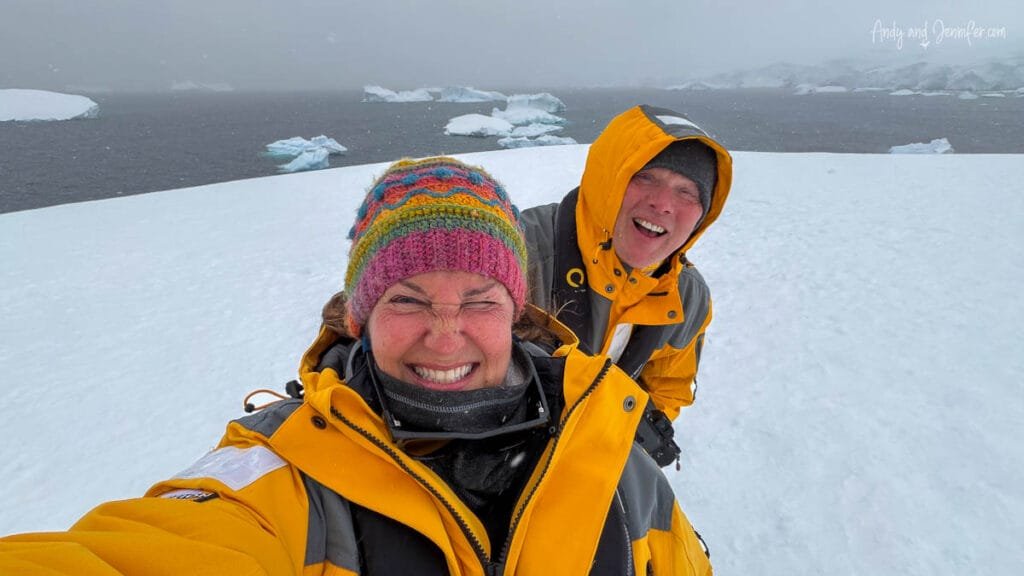
By the time we arrived, the weather had shifted dramatically. Snow blew sideways across the bay and visibility came and went as gusts swept through the landing site.
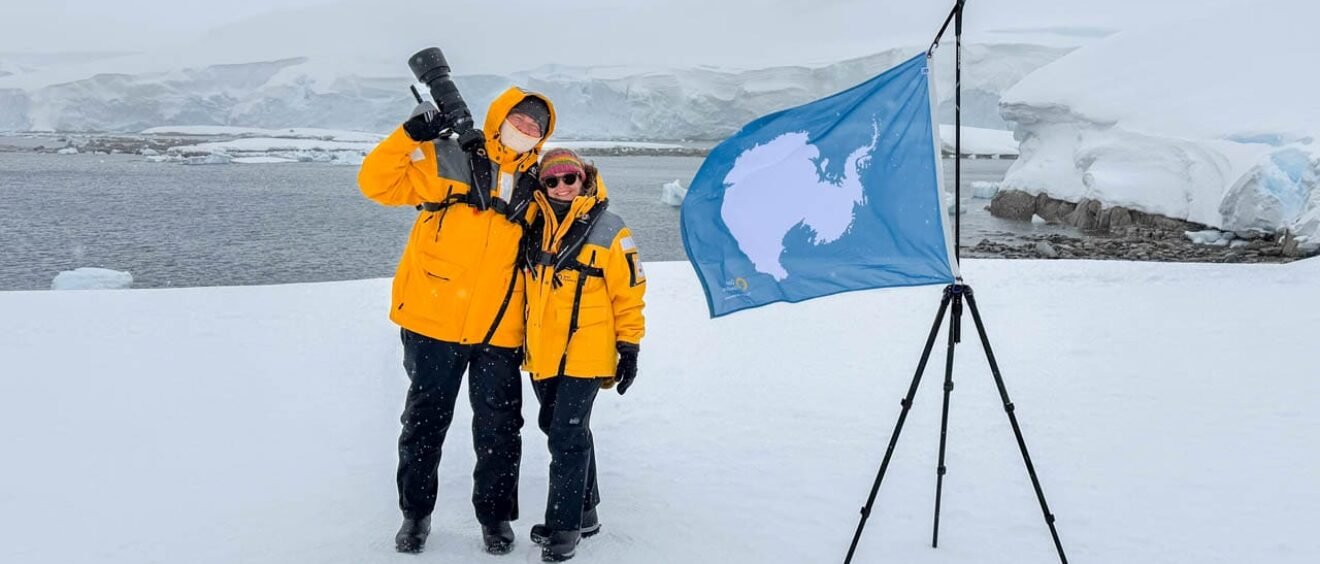
Although this was not our first time on the Antarctic continent, Quark had a classic expedition flag planted in the snow for photo opps.
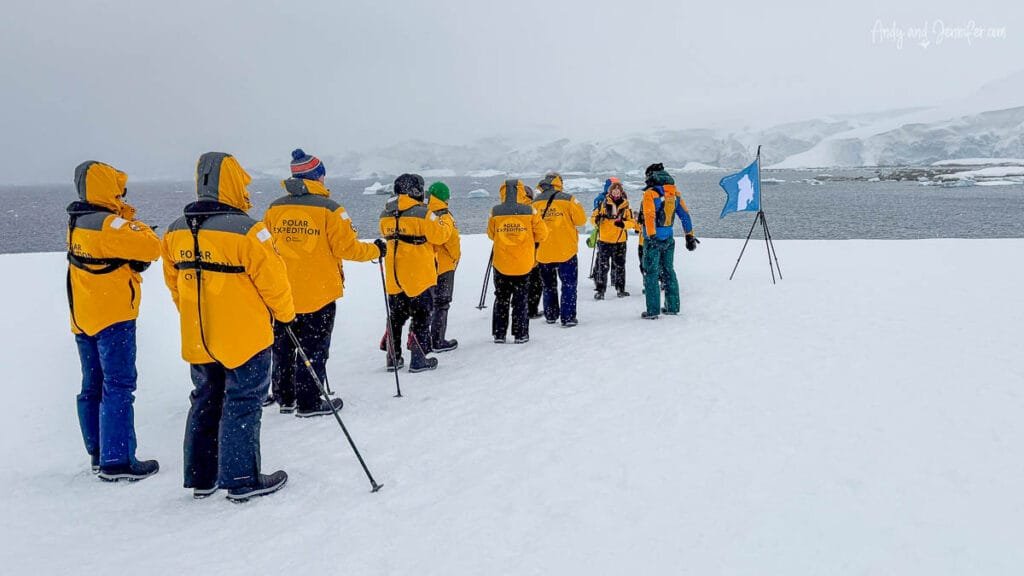
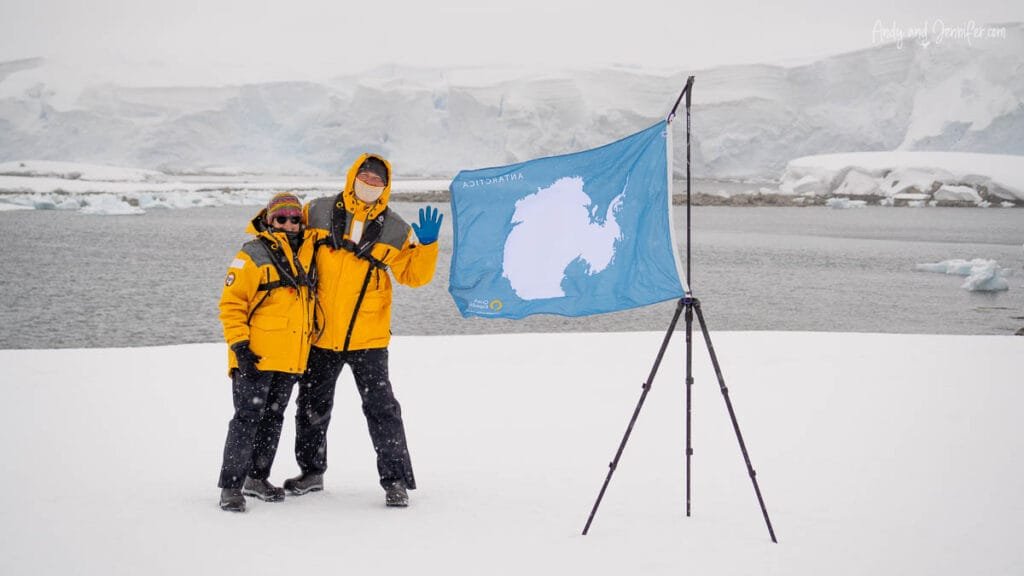
After getting our official continental landing photo at Portal Point, we headed off along the marked route. The strengthening wind and blowing snow quickly convinced us not to linger ashore for the full landing window. Sometimes Antarctica invites you to stay longer. Sometimes it gently encourages you back to the ship.
The Polar Plunge in Charlotte Bay
Later that afternoon the ship repositioned into a more sheltered section of Charlotte Bay for the polar plunge.
As with our previous Antarctic trips, neither Andy nor I planned to participate. Watching from the deck with cameras in hand felt like the far more sensible option.
What surprised me most was how few people actually jumped in.
Out of roughly 120 passengers, only 41 decided to take the plunge, which felt noticeably lower than on our earlier voyages. Even so, forty-one people willingly jumping into Antarctic water still seemed like a fairly impressive level of enthusiasm.
Next up –> Crossing the Drake Passage Back to Ushuaia
We’re Andy and Jennifer—two former corporate executives who chose long ago to prioritise experiences over stuff while pursuing our passions for travel and photography. From the Arctic to Antarctica, and most places in between, we’ve captured the world through our lenses and love sharing those stories. Our careers gave us the means, but our purpose is inspiring others to explore and helping people create images they’re proud of.