
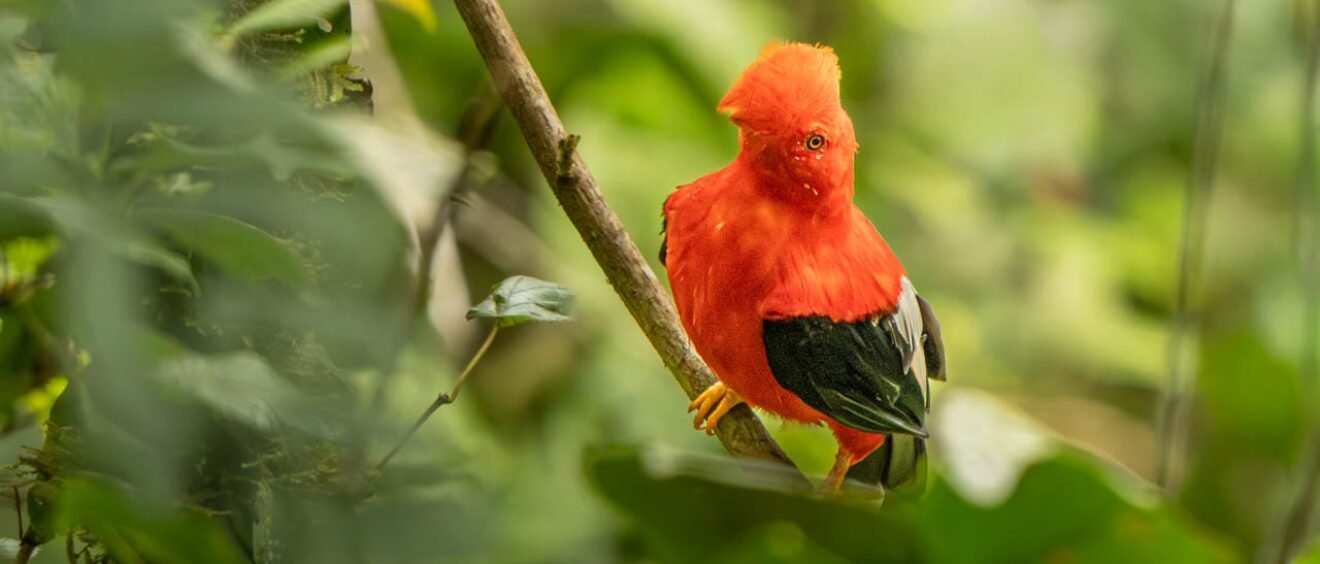
Andean Cock-of-the-Rock Lek at Finca La Victoriana, Ecuador
- From Bird Photography in the Galápagos to Bird Photography in Quito
- Bird Photography at San Jorge Tandayapa in Ecuador’s Cloud Forest
- Andean Cock-of-the-Rock Lek at Finca La Victoriana, Ecuador
- Andean Cock-of-the-Rock Lek at Finca La Victoriana, Ecuador
- Birding in Milpe, Ecuador: San Tadeo and San Jorge Milpe
- Searching for the Plate-billed Mountain Toucan at Balcon Tumpiki
It was a 5 a.m. start to visit an Andean cock-of-the-rock lek at Finca La Victoriana in Pichincha, Ecuador.
A lek is a communal display area where male birds gather to perform for females, competing for attention with calls, movement, and posture. In the case of the Andean cock-of-the-rock, that means a group of bright orange males hopping, calling, and posturing in the forest while the females watch and decide who is worth their time.
The drive followed a familiar pattern. Smooth tarmac for most of the way, then a turn onto a rough dirt road for the final 20 minutes.
Walking to the Cock-of-the-Rock Lek at Finca La Victoriana
We arrived at Finca La Victoriana just before dawn.
The owner met us and led us down to the hide. Our guide had mentioned that the path had been improved to “make it easier for older people.” We immediately asked what age counted for “older people” 🙂 It was a long walk, maybe fifteen minutes, and almost entirely downhill. Getting down required a bit of care, but the real question was how anyone with limited mobility was expected to get back up.
The hide itself was excellent. It had two levels, was well covered, and was thoughtfully positioned with clear views into the surrounding forest.
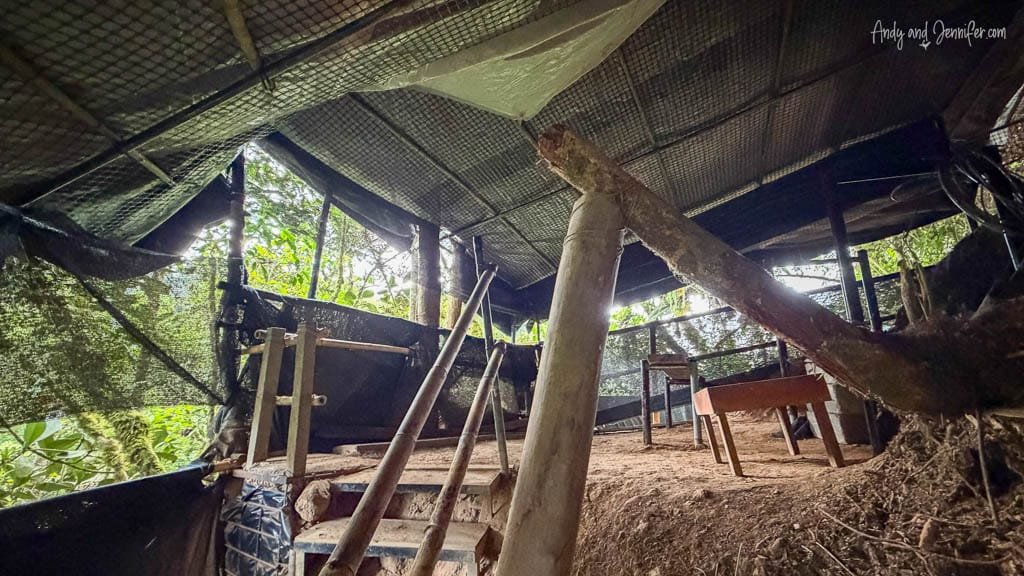
The property has been in the same family for around a hundred years, and apparently the birds have been using this lek site for just as long. There were only two other people there with their guide, so space wasn’t an issue.
Photographing Andean Cock-of-the-Rock in the Cloud Forest
We could hear the birds before we saw them. Excuse the blurry video.
Even once the sun came up, it was still very dark beneath the forest canopy. Between the low light and dense vegetation, photographing the Andean cock-of-the-rock was challenging. This was definitely one of those occasions when the experience was better than the photographs. The birds themselves are… distinctive. The males are bright orange, with a crest that almost completely hides the bill and a body shape that makes them look like they don’t really have a neck.
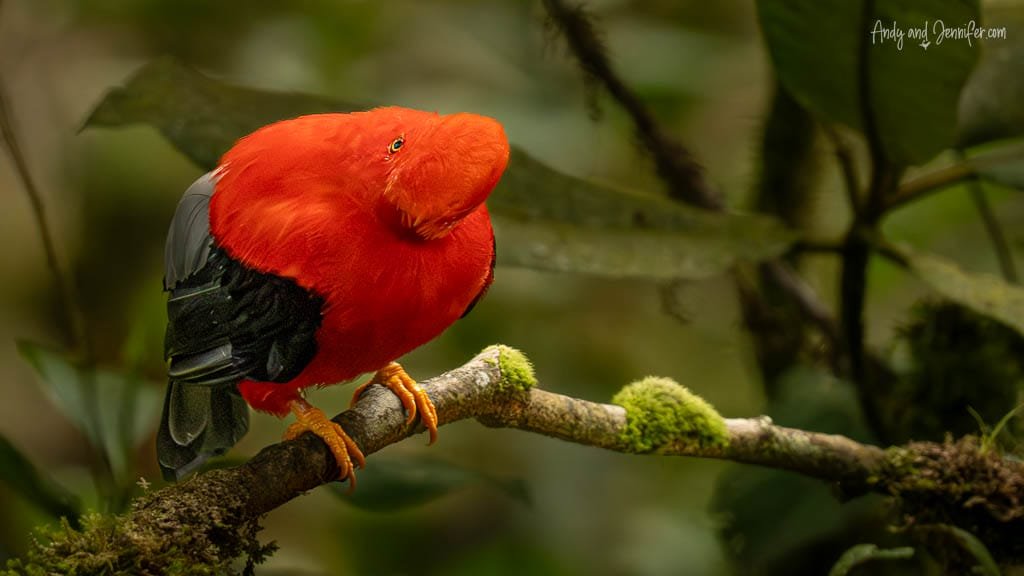
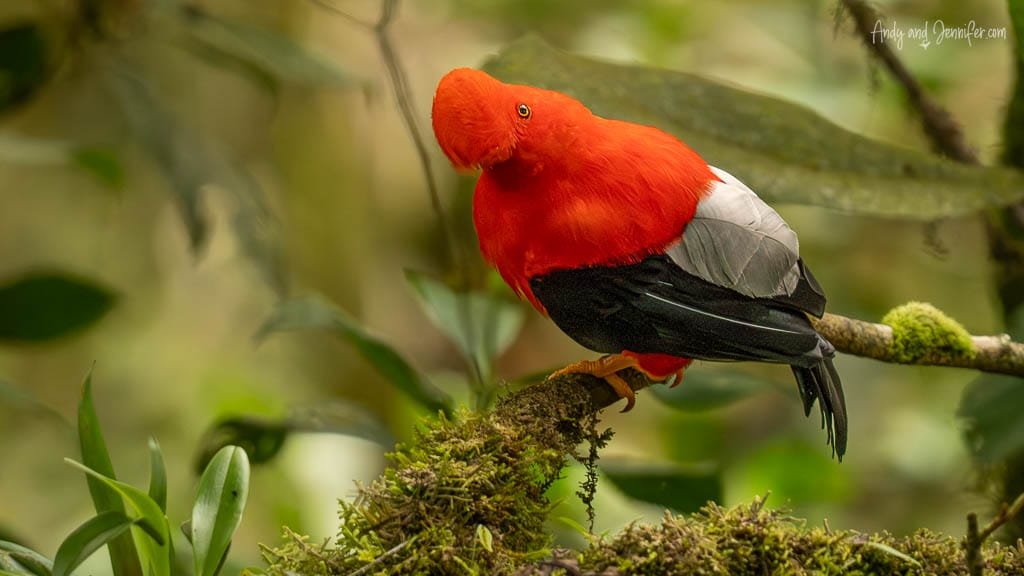
It’s easy to see why the Andean cock-of-the-rock is considered special among birders. And watching the males display at a lek in the cloud forest felt like one of those classic Ecuador birding experiences.
Breakfast and Hummingbirds at Finca La Victoriana
We brought a picnic breakfast from the lodge and ate it on the patio after leaving the hide.
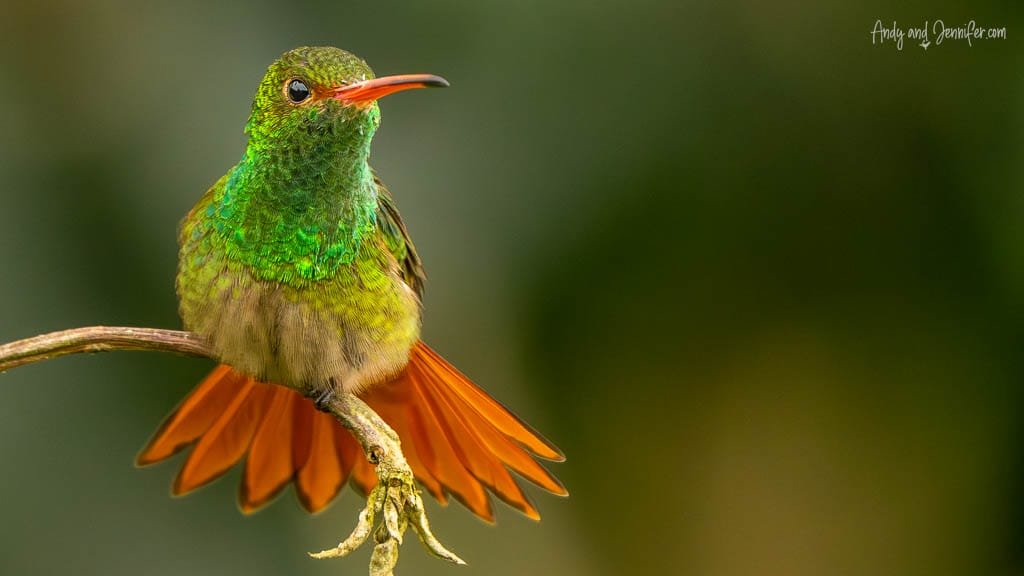
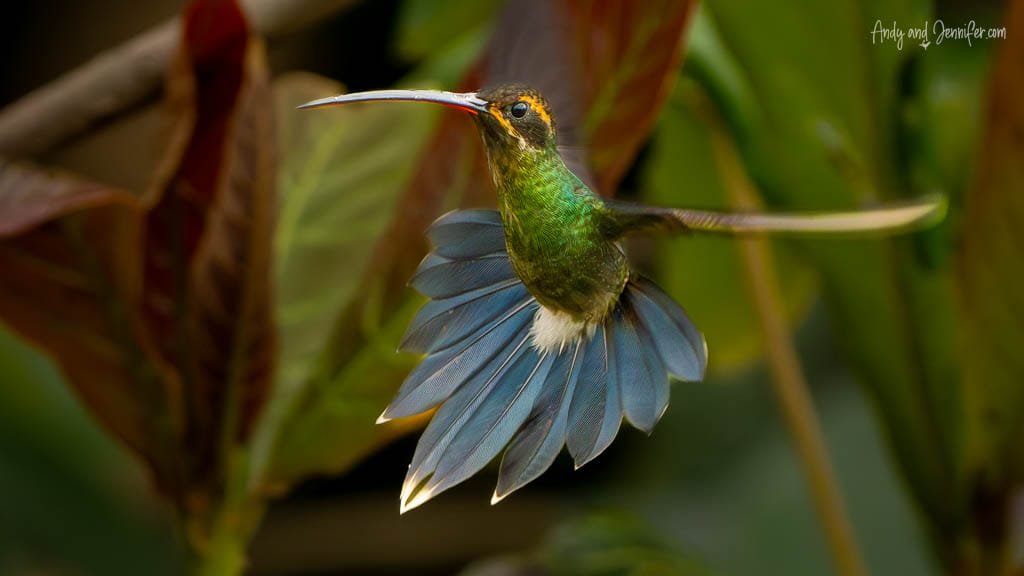
The garden surrounding the patio was full of verbena, which meant it was also full of hummingbirds. After the low-light conditions at the cock-of-the-rock lek, it was nice to be back in a setting where photography felt a little more straightforward.
Birding at Tandayapa
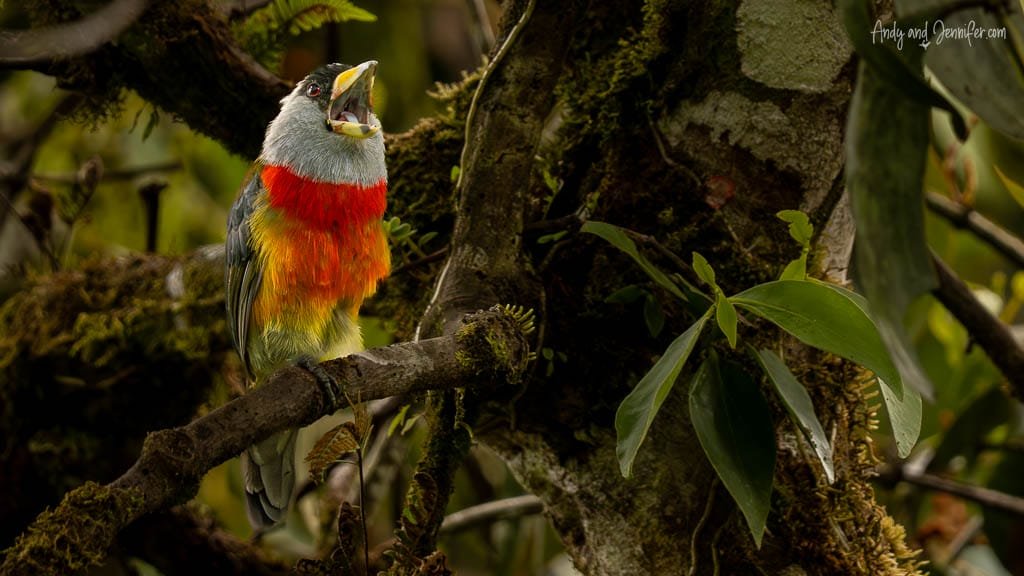
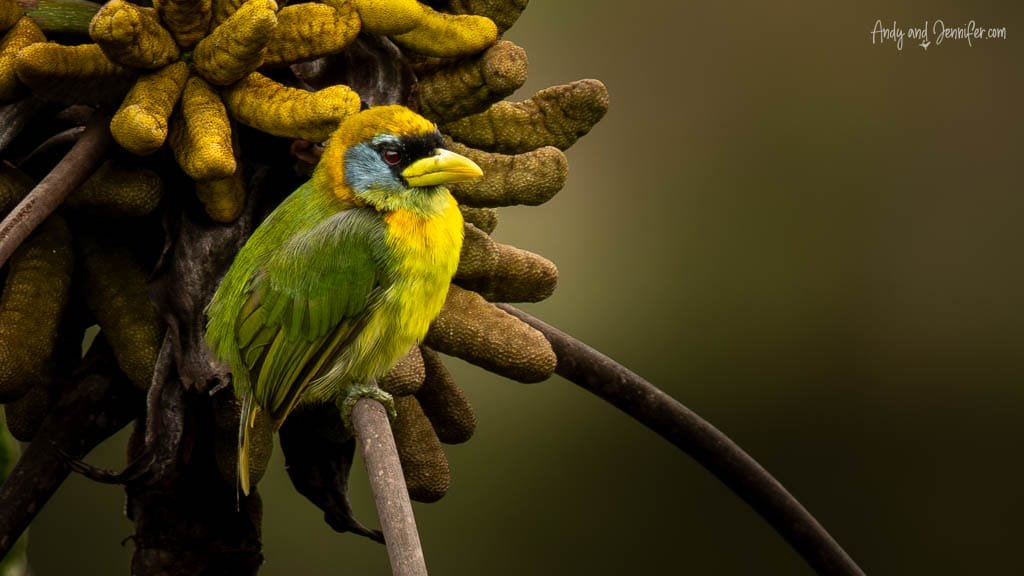
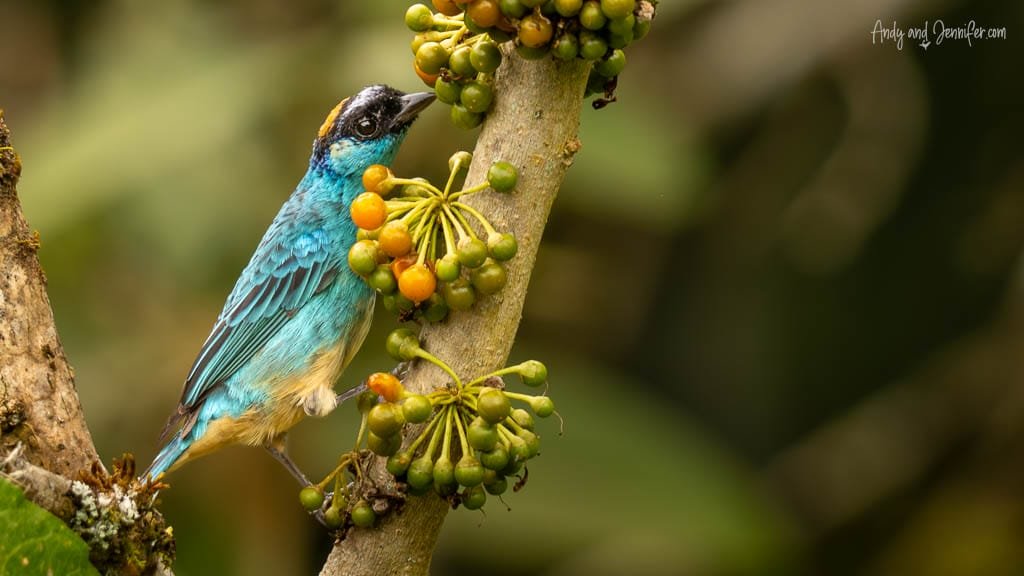
We returned to the lodge for lunch, which was interrupted by – you guessed it – birds. This time it was several toucan barbets, a female red-headed Barbet, and a Golden-naped Tanager.
Hummingbird Photography at Alambi Reserve
In the afternoon we visited Alambi Reserve, located just off the main road on the way to Tandayapa.
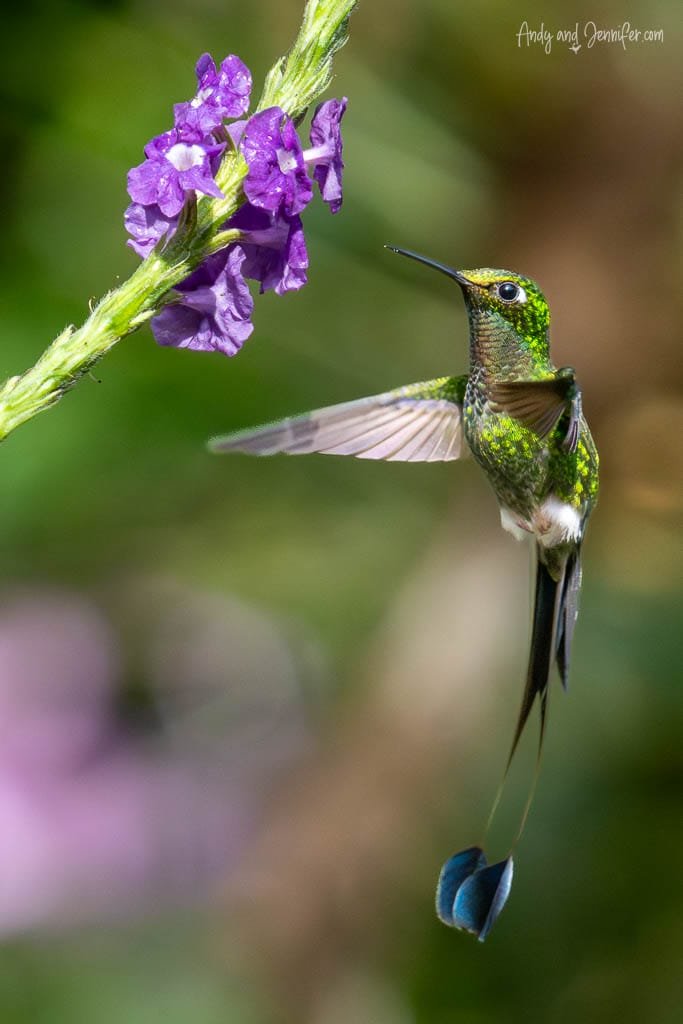
The number of hummingbirds here was almost overwhelming. Birds were everywhere, moving constantly between feeders and flowers. There were so many that it became difficult to know where to focus, to the point of almost becoming sensory overload.
We spent about two hours here and came away with a higher than average rate of “keeper” photos. This place was a photographers dream.
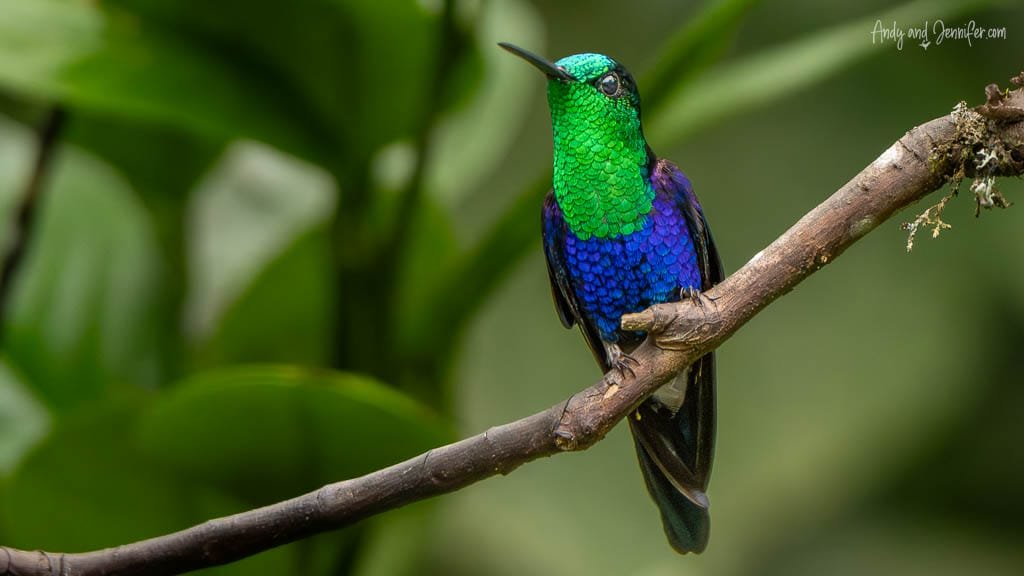
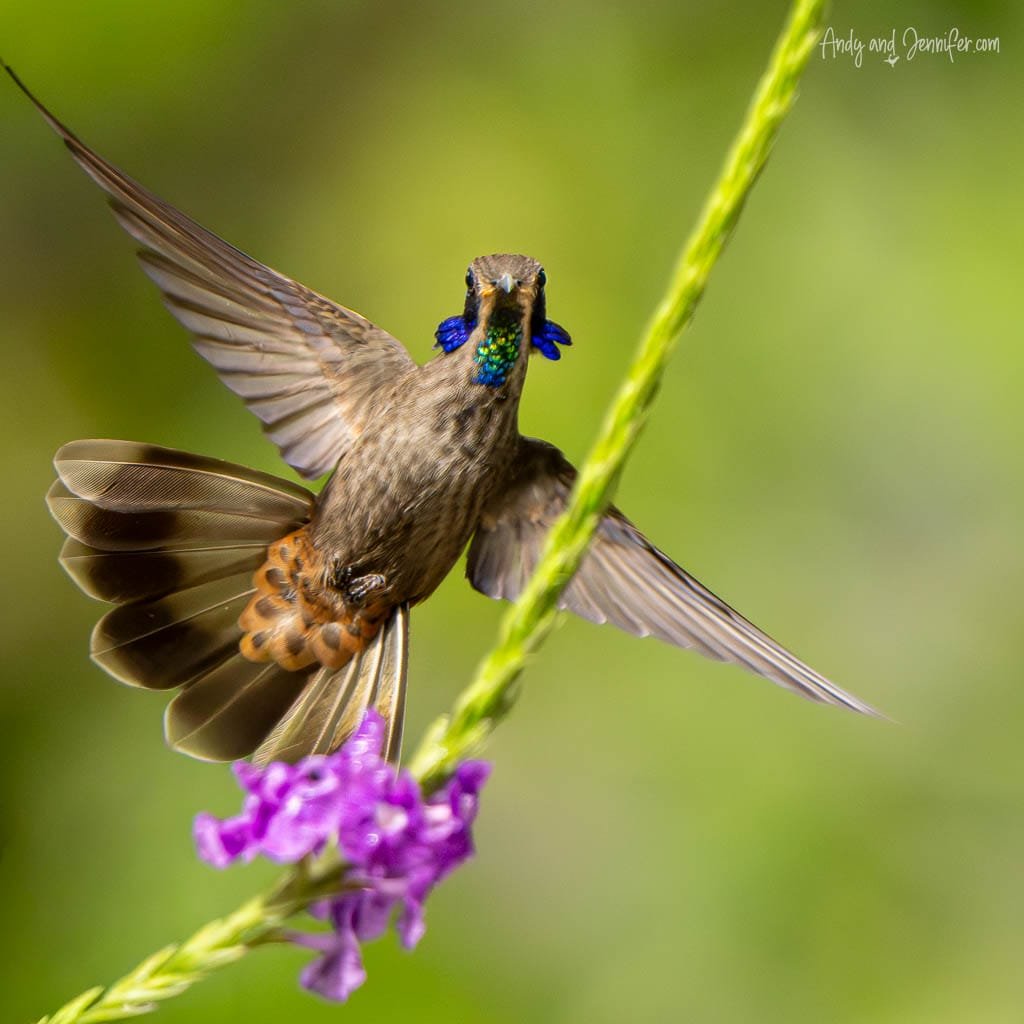
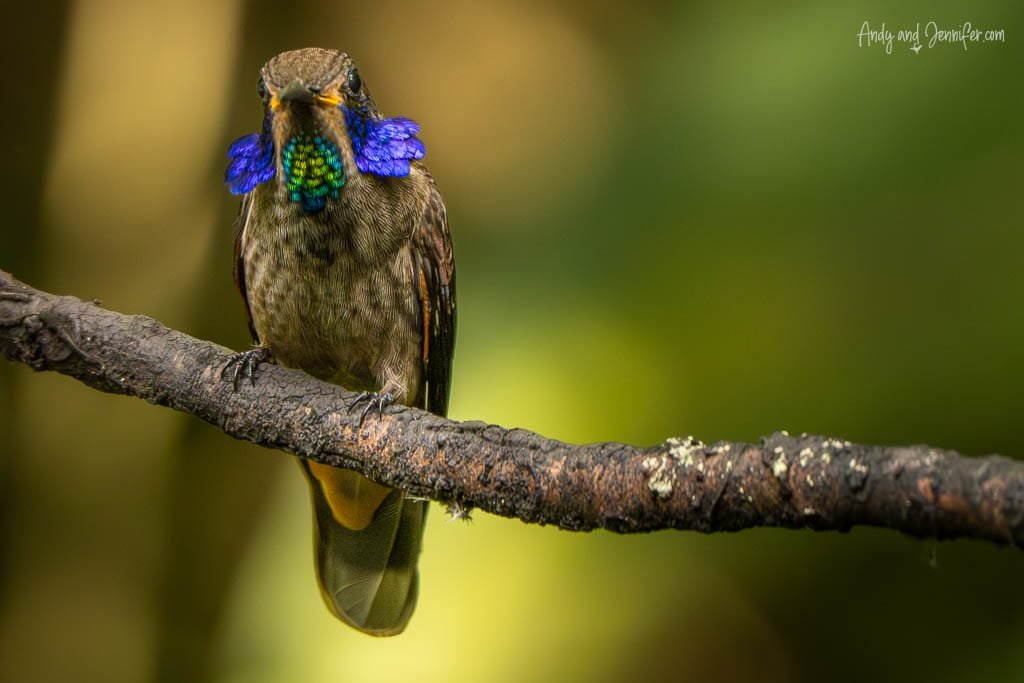
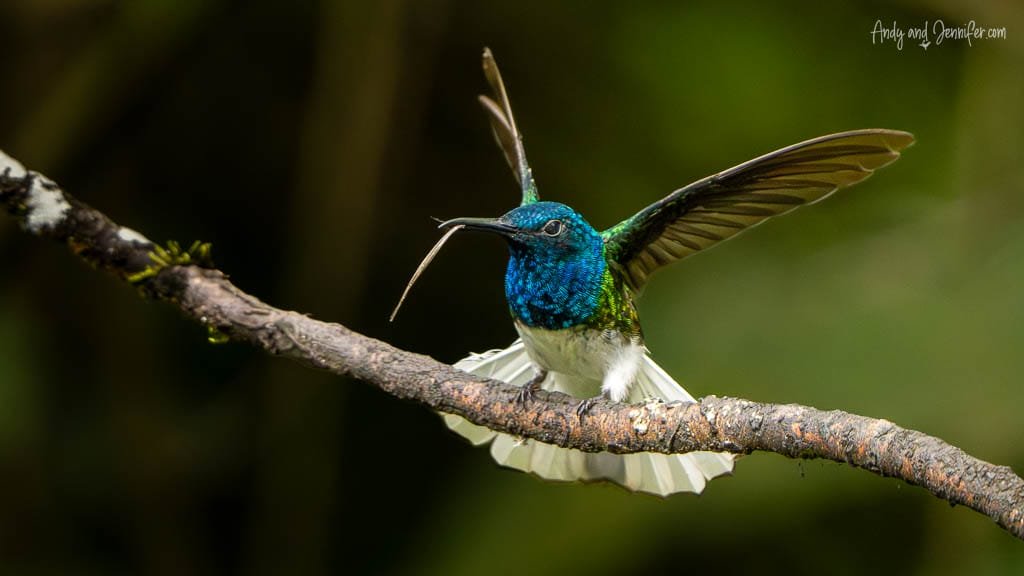
One unusual sighting was a Jacobin hummingbird with a broken bill. Its tongue hung awkwardly from its mouth, and it seemed to be perpetually on the defensive. Our guide explained that it had figured out how to feed despite the injury, so its ability to use the feeders gave it a good chance of surviving.
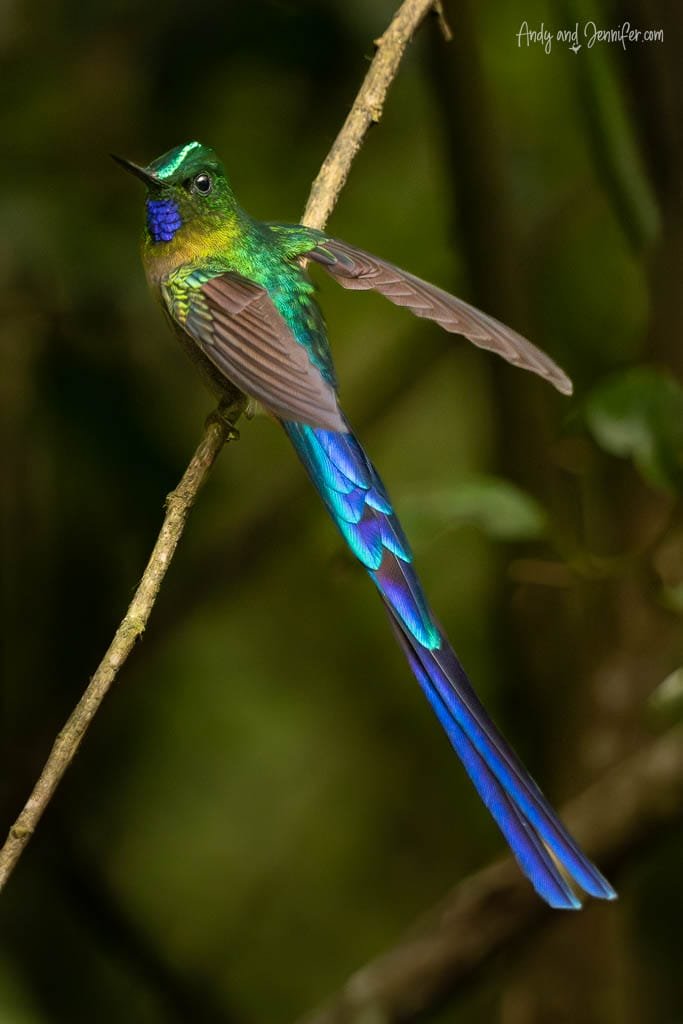
The standout was the long-tailed sylph, with its iridescent crown and trailing tail feathers. The sightings here were better than the lodge, but I still hoped to find some in brighter light before we left Ecuador in a few days.
Actually, the highlight was feeding the hummingbirds like we had experienced in Panama. For a brief moment, it feels like you’ve been singled out, even though you know perfectly well that it’s just following the sugar water. Still, it never gets old.

We’re Andy and Jennifer—two former corporate executives who chose long ago to prioritise experiences over stuff while pursuing our passions for travel and photography. From the Arctic to Antarctica, and most places in between, we’ve captured the world through our lenses and love sharing those stories. Our careers gave us the means, but our purpose is inspiring others to explore and helping people create images they’re proud of.
Related Posts
 Bird Photography at San Jorge Tandayapa in Ecuador’s Cloud Forest
 Birding in Milpe, Ecuador: San Tadeo and San Jorge Milpe
 Exploring the Canadian Rockies: Canmore, Lake Louise, and Jasper
 A Bucket List Trip to See the Brown Bears at Brooks Lodge
 Aqua Gliding with Beluga Whales in Churchill
 Bird, Frog and Macaw Photography in Sarapiquí, Costa Rica