
Drake Passage Sea Days: What to Expect on an Antarctica Expedition
With the help of the doc’s meclizine recommendation, we had the best sleep of the entire trip. We even missed our first breakfast.
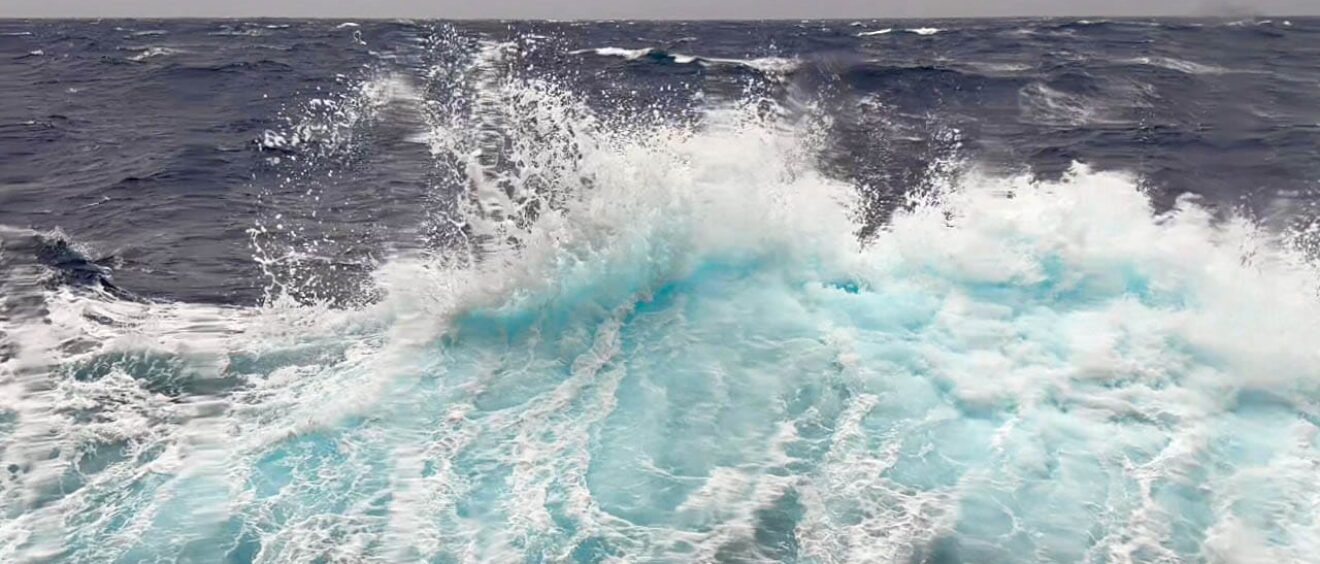
The outer decks were closed due to weather, which is fairly standard during Drake Passage sea days. For context, this is 4-meter seas.
A lot of people worry about the number of sea days on an Antarctica expedition. These aren’t traditional cruise ships packed with entertainment. But honestly, there is plenty to do. In fact, Drake Passage sea days are some of the busiest days of the trip.

Why Drake Passage Sea Days Matter
These aren’t just transit days. They’re preparation days. Before you’re allowed to step foot in Antarctica, you need to complete a series of mandatory briefings, safety sessions, and biosecurity checks. You don’t just arrive and go ashore. Everything is tightly regulated. That’s why Antarctica expedition sea days are so important. They set up everything that comes next.
IAATO Briefing: Learning the Rules of Antarctica
One of the first sessions is the IAATO briefing. IAATO stands for the International Association of Antarctica Tour Operators, and their guidelines govern how tourism operates in Antarctica. The briefing covers wildlife approach distances, landing protocols, environmental protection rules, why you should never sit down on the ground, and why absolutely nothing can be left behind. It’s not optional. Without completing this, you don’t go ashore.
Fun fact: I’m an IAATO Antarctic Ambassador.
Zodiac Safety on Ultramarine
Next came the zodiac safety briefing. This covers how to board and disembark, how to position yourself, and what to do when conditions change quickly. Ultramarine has a really efficient platform which can load two zodiacs at a time (assuming conditions permit). Key points about zodiac operations:
- Listen to the sailors (also called seamen, but the 12-year-old in me still can’t say that without giggling)
- Use the sailor’s grip. Don’t grab their hand. You grab their forearm and they grab yours
- When you get in, sit down immediately, then scoot over to where they direct you
- When landing on the beach, it’s usually nose first. When it’s your turn, scoot to the front, face away from the beach, and swing your legs over
- When getting back in from the beach, they reverse the zodiac in. Sit on the edge facing the beach, then swing your legs over and scoot down into your seat
- When getting back onto the ship, wait until you’re called. Move to the step, use the sailor’s grip with the guide in the boat, then again with the sailors on the platform
Antarctica Biosecurity: Every Detail Matters
Biosecurity is one of the most important parts of Drake Passage sea days. You bring all your outer gear to the lecture theatre, and the expedition team inspects everything.
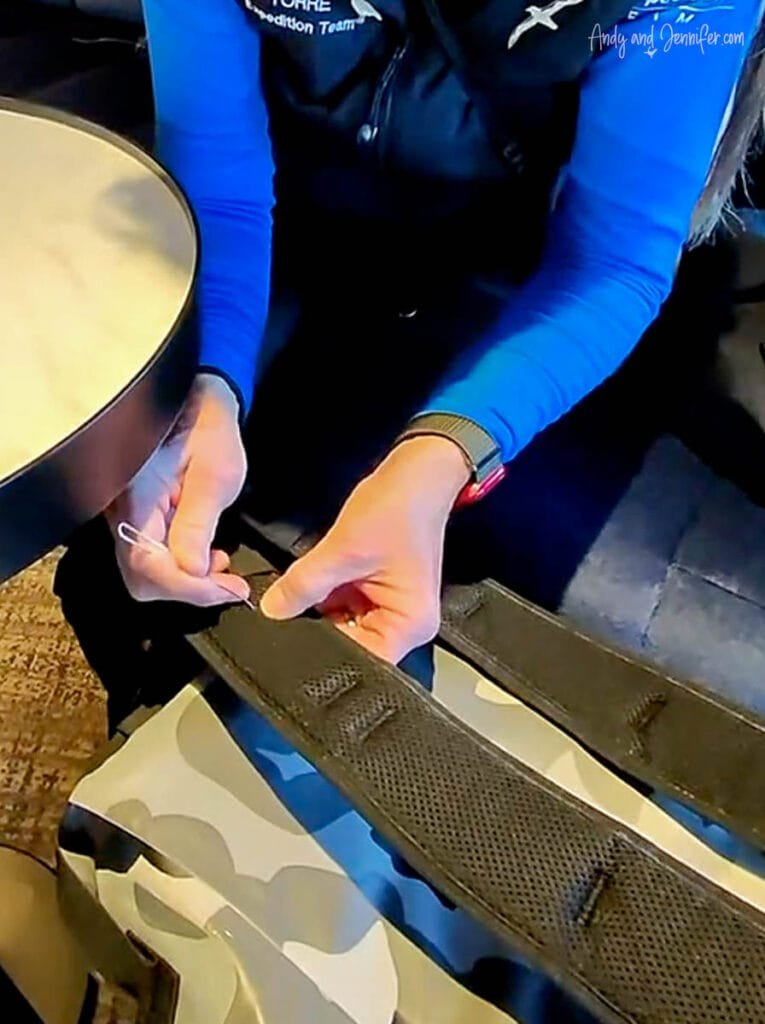
Antarctica gear tip: Avoid clothing with Velcro or mesh. They trap seeds, dirt, and fibres easily, which makes biosecurity checks slower and more tedious. Smooth, simple fabrics are much easier to clean and will save you time.
Every pocket, seam, Velcro strip, and cuff. You remove hair, seeds, dirt, anything that could introduce foreign material into Antarctica. Staff move through the room with vacuums and tape rollers. It’s meticulous. And it should be.
Paddling and SUP Preparation
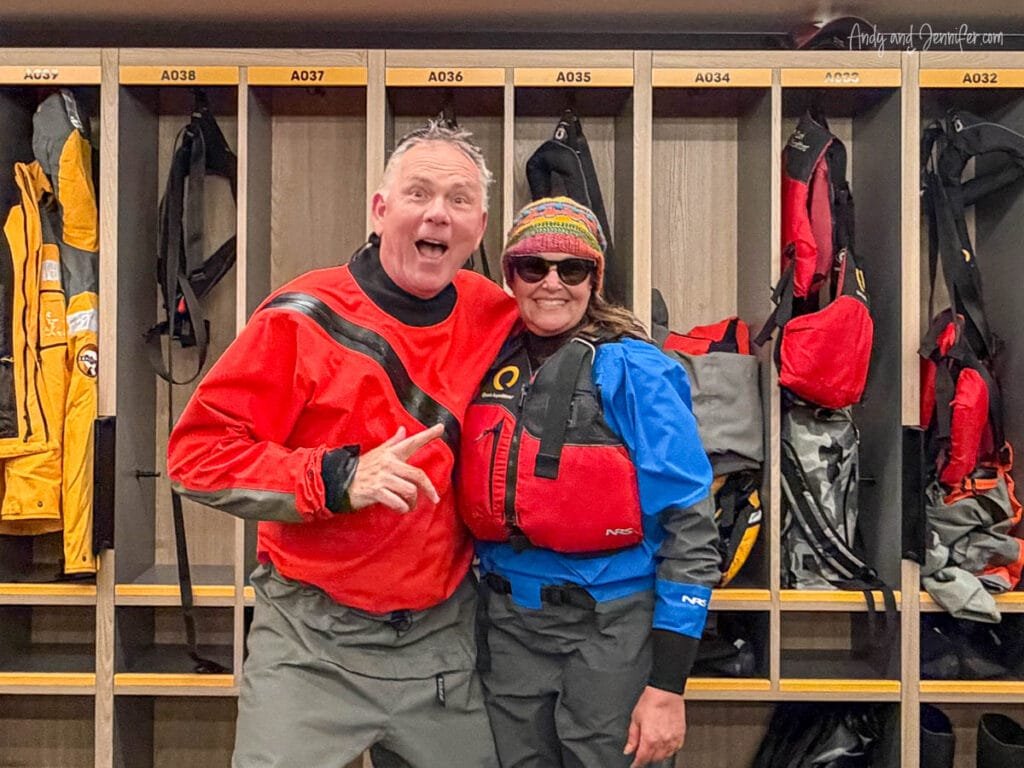
We had prebooked both stand-up paddleboarding and paddling, so we attended the activity briefing. If you didn’t prebook, you could join a waitlist and hope for availability. After the briefing, we headed to the mudroom for dry suit fittings. These are proper paddling suits, and yes, paddling is different from kayaking.
The mudroom on Ultramarine is thoughtfully designed. At the start of the voyage, you’re assigned a locker, and conveniently it’s not right next to your cabin mate’s locker. Since you’re usually getting dressed at the same time, it avoids everyone being on top of each other. Each locker has hooks for life vests and jackets, a large space for muck boots, and a small cubby for the shoes you wore down. Even with all the extra gear for SUP and paddling, we had plenty of room. Super efficient.
All of these activities depend entirely on conditions. SUP requires calmer water, so it’s less likely to happen. The expedition team usually gives you a heads-up the day before, but even then, plans can change quickly. On our voyage, we knew these activities would only happen after Snow Hill. We just didn’t know when that would be. That’s Antarctica.
What to Wear for Zodiac Cruises vs Landings vs Helicopter vs Paddling vs SUP
With so much gear onboard, it can feel confusing at first. So here is the be all end all of explanations.
- Zodiac cruises (in this order)
- Base Layer – Smartwool (or similar) bottom and top, plus wool socks
- Mid Layer – Fleece
- Outer Layer – Expedition parka and waterproof pants
- Shoes – Muckboots (possibly with additional pair of socks depending on size)
- Accessories – neck gaiter, warm hat, sunglasses, gloves (ideally waterproof)
- Lifevest – the black one that stays in the mudroom
- Landings (in this order)
- Essentially the same as zodiac cruises, however we tend to get warmer when moving around, so sometimes skip mid-layer
- Sometimes you can remove your life jacket and leave it in a designated area at the landing site
- Helicopter (in this order)
- Base Layer – Smartwool (or similar) bottom and top, plus wool socks. You won’t be able to remove any of these layers so it is important not to
- Dry Suit / Flight Suit – Wear this over your base layers
- Mid Layer – Fleece (depending on if it is really cold).
- Outer Layer – Expedition parka and waterproof pants
- Shoes – Muckboots
- Accessories – neck gaiter, warm hat, sunglasses, gloves (ideally waterproof)
- Lifevest – the one provided right before you board the helicopter
- Paddling (in this order)
- Base Layer – Smartwool (or similar) bottom and top, plus wool socks
- Mid Layer – Fleece
- Outer Layer – Expedition puffer
- Dry Suit
- Shoes – Muckboots (possibly with additional pair of socks depending on size)
- Accessories – neck gaiter, warm hat, sunglasses, thermal glove liners (waterproof freezer gloves were provided)
- Lifevest – paddling life vest provided at paddle briefing
- Stand up Paddle Boarding (SUP)
- Essentially the same as paddling, except booties (provided at briefing) instead of muckboots
Lectures During Drake Passage Sea Days
Sea days also mean lectures. A lot of them. During our two Drake Passage sea days, we attended sessions on penguins, cetaceans, Antarctic geology, photography, and even penguins observed from space. If you don’t feel like sitting in the lecture theatre, you can watch everything from your cabin. The audio quality is excellent, though you only see the slides, not the presenter.
One slightly nerdy detail: Quark’s presentation design was excellent. The slides were built for a wide screen, with key information positioned high so it stayed visible above people’s heads. The presenters used embedded video and meaningful animations to keep the audience’s attention. The presenters were also just great presenters, rather than reading slides. It sounds minor, but when you’re attending multiple lectures a day, it makes a real difference.
Are Drake Passage Sea Days Boring?
Not even close. Between briefings, biosecurity, gear fittings, lectures, and general preparation, you’re busy. Drake Passage sea days aren’t just about getting from South America to Antarctica. They’re about getting ready. Because once you arrive, everything moves fast.
First Iceberg and Arrival at Deception Island
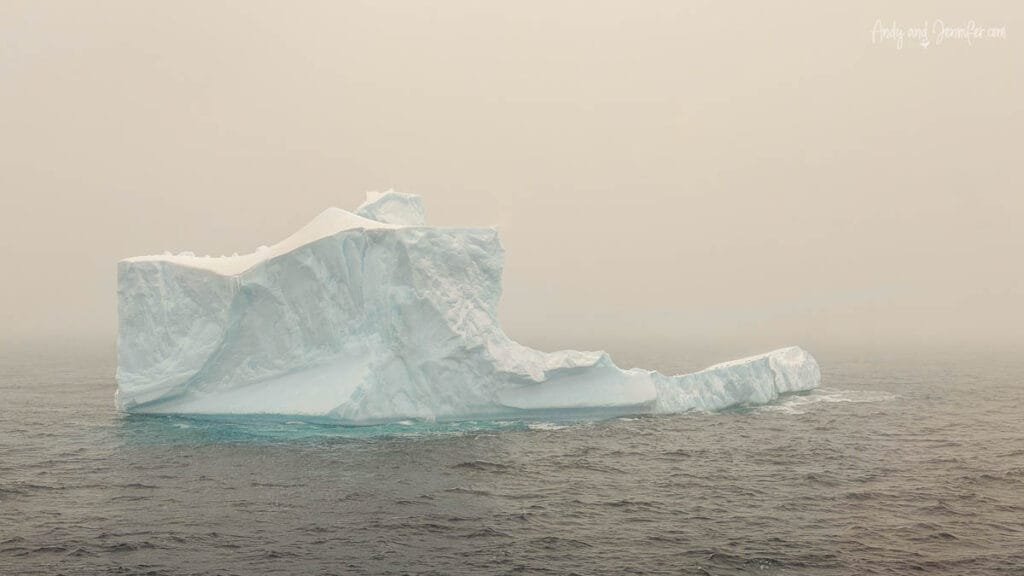
We spotted our first iceberg around 3pm on day two. You know Antarctica is coming, but when you actually see that first piece of ice rising out of the ocean, something shifts and suddenly it feels real.
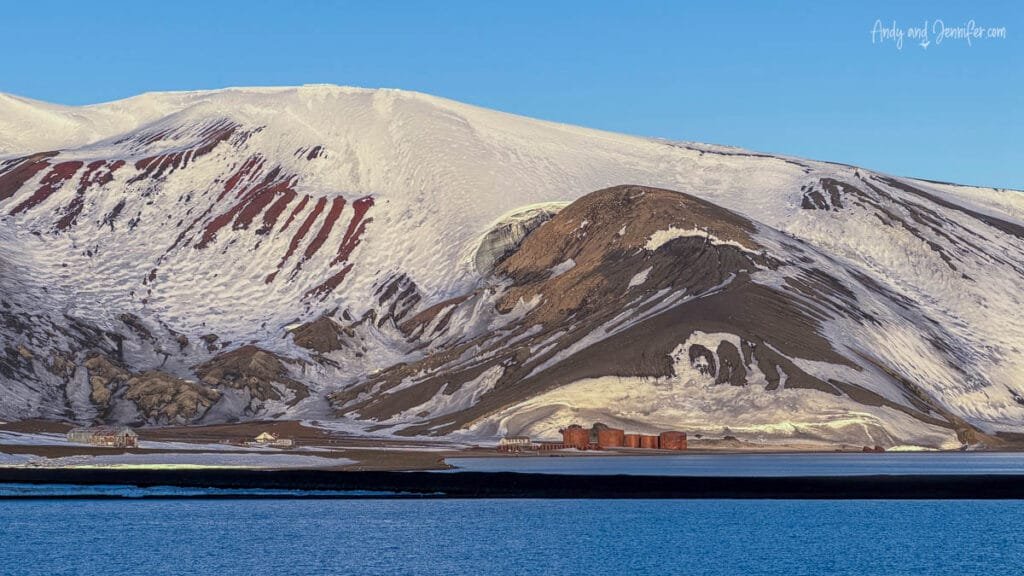
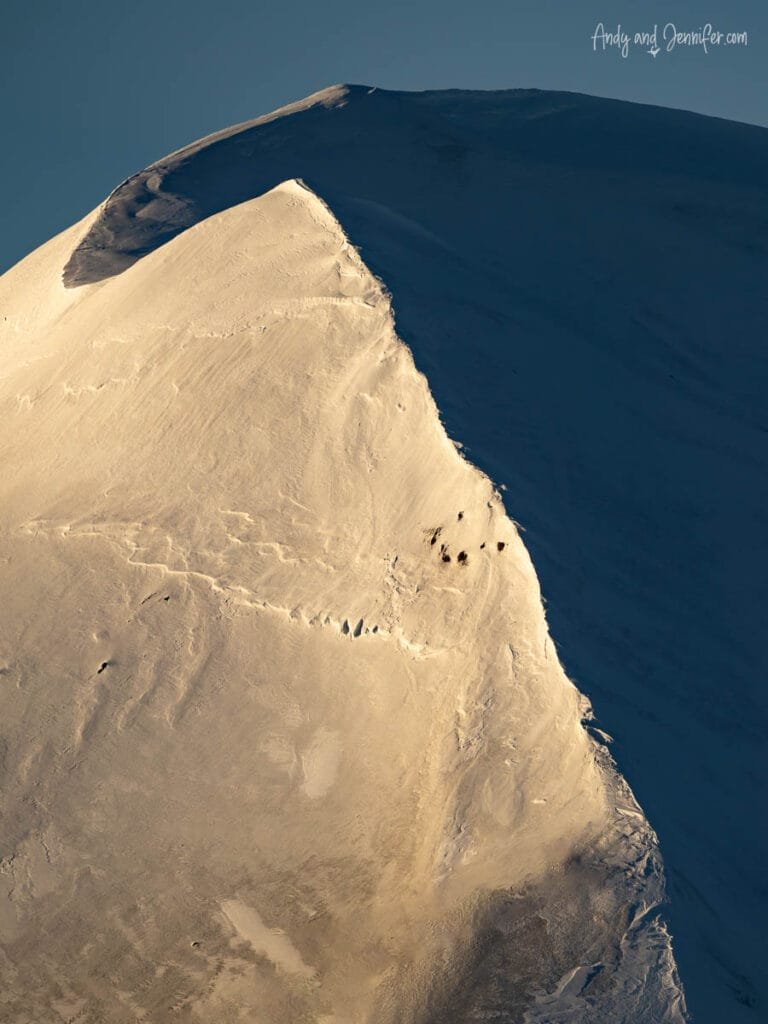
Around 10pm, we approached Deception Island, an active volcanic caldera in the South Shetland Islands.
Smaller ships can enter the caldera through a narrow gap called Neptune’s Bellows. As we approached, another ship was exiting. Through the long lens it was just a silhouette at first, but of course I had the MarineTraffic open. Within minutes I had identified it.
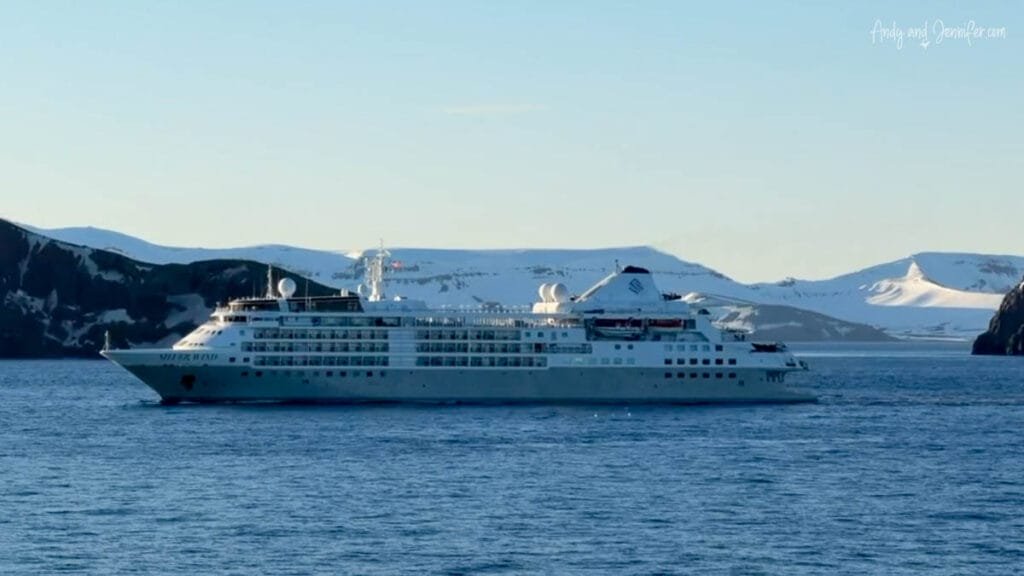
Now this felt oddly circular, and in order to explain, I have to backtrack a bit. Back at Lake Moeraki, we met someone who had seen all 18 penguin species. Naturally, we asked questions. One of the hardest to see is the northern rockhopper, which lives in the Tristan da Cunha archipelago in the middle of the South Atlantic and requires a very specific expedition route.
He suggested two options. Oceanwide runs one trip a year. The trip for 2026 was on a ship with only 100 passengers, which sounds ideal until you read the fine print and see that it doesn’t have stabilisers. AND it was already sold out! The other option he mentioned was Silversea, which had availability, and more importantly stabilisers, but the ship held up to 250 passengers. So when we realised the ship passing us at Neptune’s Bellows was the Silver Wind, the very same ship making the expedition to the Tristan da Cunha archipelago in 2026, it felt… notable. A coincidence, maybe. But there we were. Ten weeks into the longest trip of our lives, already talking about the next one.
Deception Island is steeped in history, with the remains of an early 20th-century whaling station still visible at Whalers Bay.
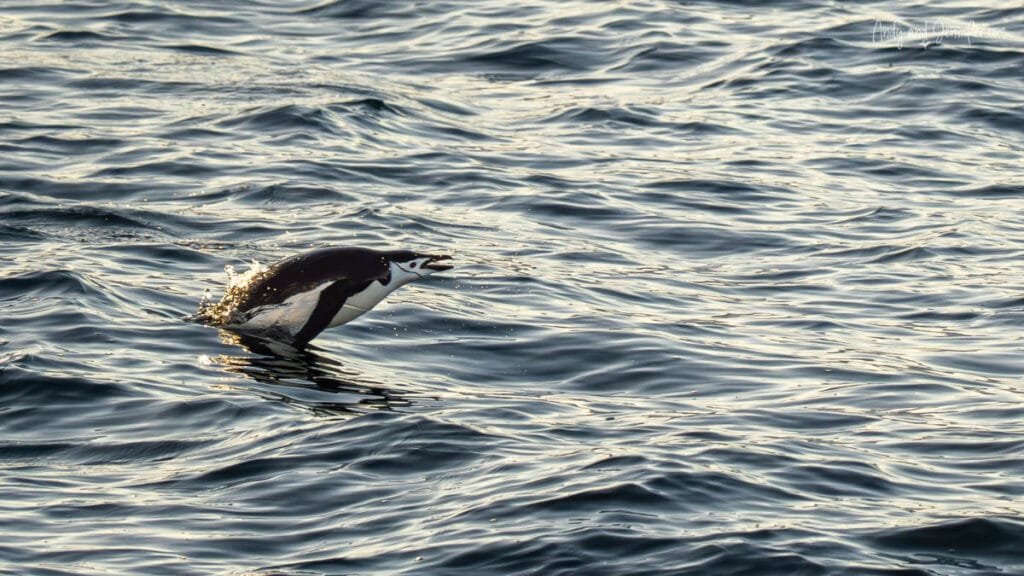
And we spotted our first penguins, Chinstraps, around 11pm. I still can’t believe the shots Andy captured from the bow of the ship.
With the sea settling and the sun finally out, we allowed ourselves a bit of cautious optimism that Snow Hill might actually happen.
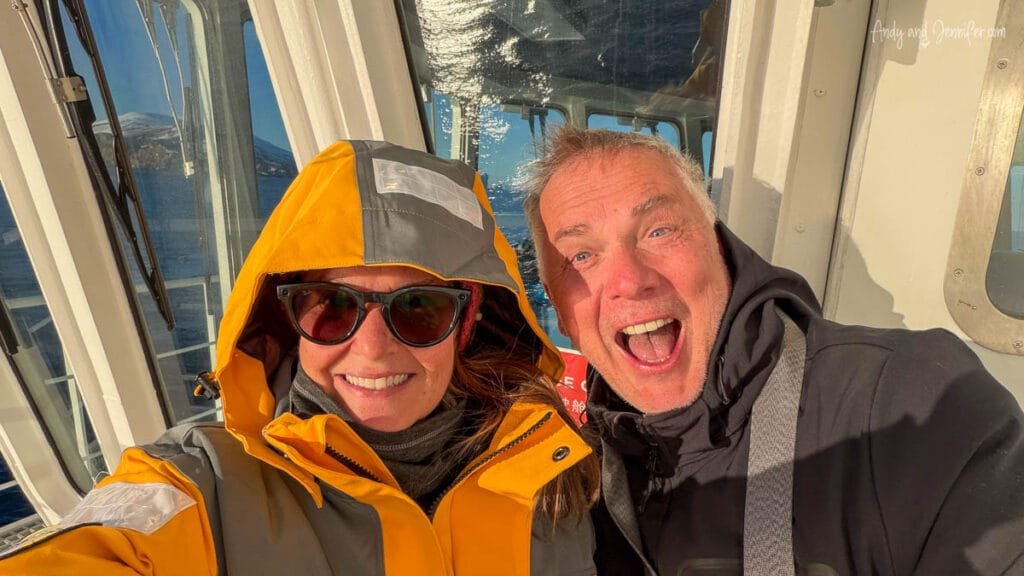

We’re Andy and Jennifer—two former corporate executives who chose long ago to prioritise experiences over stuff while pursuing our passions for travel and photography. From the Arctic to Antarctica, and most places in between, we’ve captured the world through our lenses and love sharing those stories. Our careers gave us the means, but our purpose is inspiring others to explore and helping people create images they’re proud of.
Related Posts
 Embarkation Day in Buenos Aires: What to Expect on Quark Ultramarine
 Cruising the Lemaire Channel and Flightseeing in Antarctica
 Emperor Penguins at Snow Hill: The Day It Finally Happened
 Crossing the Drake Passage Back to Ushuaia on the Ultramarine
 Stand Up Paddleboarding in Antarctica: Icebergs, Penguins, and Orcas at Tower Island
 Two Days on the Infamous Drake