
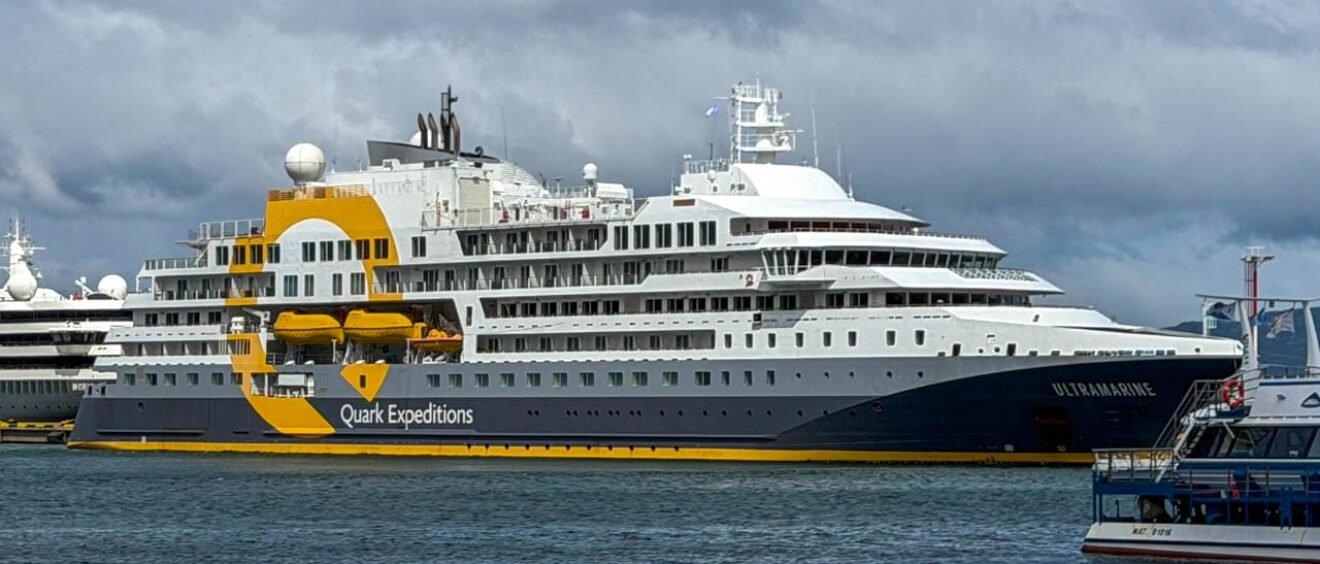
Embarkation Day in Buenos Aires: What to Expect on Quark Ultramarine
This was the first time that our expedition had Antarctica embarkation in Buenos Aires. On previous expeditions, the expedition started in Ushuaia. We weren’t sure what to expect, and if this starting point would be a positive or a pain in the a$$.
Neither of us slept much that night. We had already experienced several major wins on this trip. The Fiordland penguin. The Humboldt penguin. The unexpected Inca tern. We had even snorkelled with tiny dolphins. But everything had been building toward one thing: Snow Hill.
The expedition to see emperor penguins has less than a fifty percent success rate, heavily dependent on weather and ice conditions. You can plan everything perfectly, and it still might not happen.
Would we see them? Or would we need to come back?
Antarctica Embarkation Morning at Hotel Emperador
Embarkation day usually starts early, but this was very early. We both woke up at 1am, even though we didn’t need to be downstairs until 4:30am. There’s a nervous energy on Antarctica departure day that makes sleep almost impossible.
This was our third expedition to Antarctica. Before we left the room, I asked Andy if this would be our last. Without hesitation, he said no.
We were fully packed, so we headed down to the lobby at 4am to beat the elevator rush.
Embarkation tip: Everyone is told to be in the lobby at the same time, which leads to a rush. Go about 30 minutes early and it’s far more relaxed.
There was one other person in the lobby with us. At 4am. I already had three stands logged on my Apple Watch.
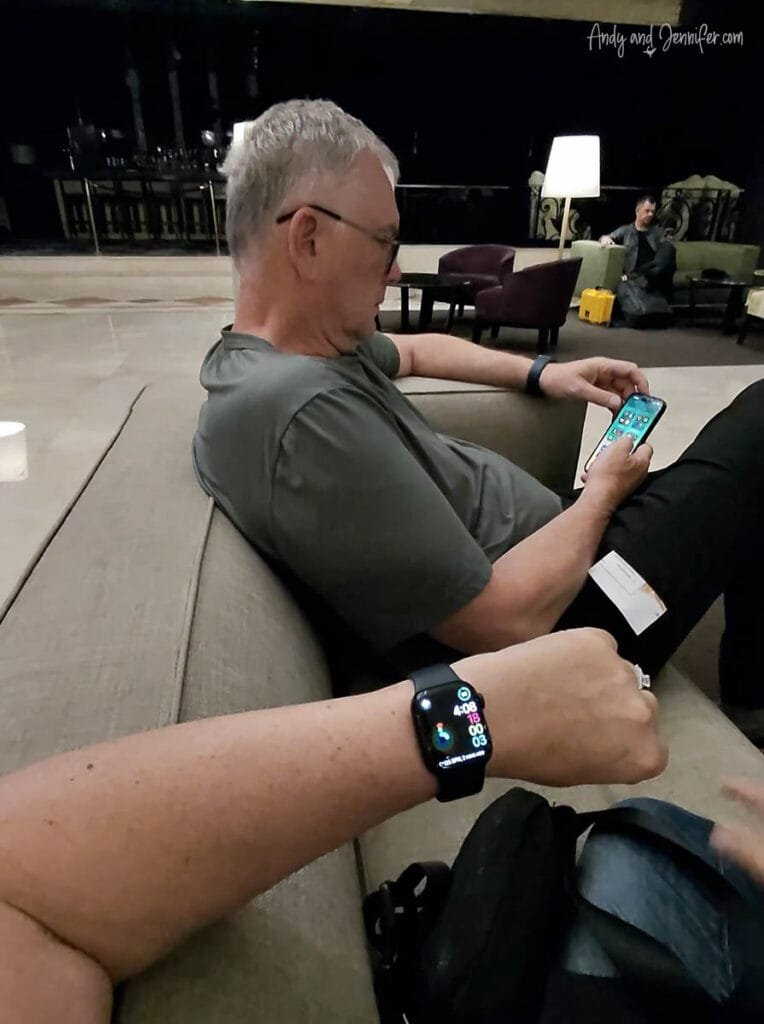
At 4:30am, breakfast opened in one of the hotel ballrooms. It was efficient, busy, and filled with that mix of excitement and low-level anxiety that comes with Antarctica embarkation Buenos Aires. We badly needed coffee and it was absolutely terrible. No one was there for the coffee though.
How Charter Flights and Luggage Work for Antarctica Embarkation in Buenos Aires
If you’re doing Antarctica embarkation from Buenos Aires with a charter flight, the process is surprisingly straightforward, just a bit repetitive when it comes to your luggage.
You bring your bags down to the lobby and place them in a designated area. When it’s time to leave, you collect them again, load them onto a coach, and wait until the bus fills before departing for the airport. Once you arrive at the airport, you get your bags and make your way to check-in on foot. There’s no porter service, and it’s a longer walk than you might expect, so you do need to be comfortable handling your own bags.
Antarctica packing tip: If you can’t carry your own luggage, bring less so you can carry your own luggage.
The charter departs from AEP, not EZE, which is closer to the city. You weigh your bags at check-in. We expected a strict 21kg limit, but it seemed slightly flexible. After that, it’s a fairly standard security process, just with longer lines because everyone arrives at once. The key difference is there’s no stress. It’s a charter flight. They’re not leaving without you.
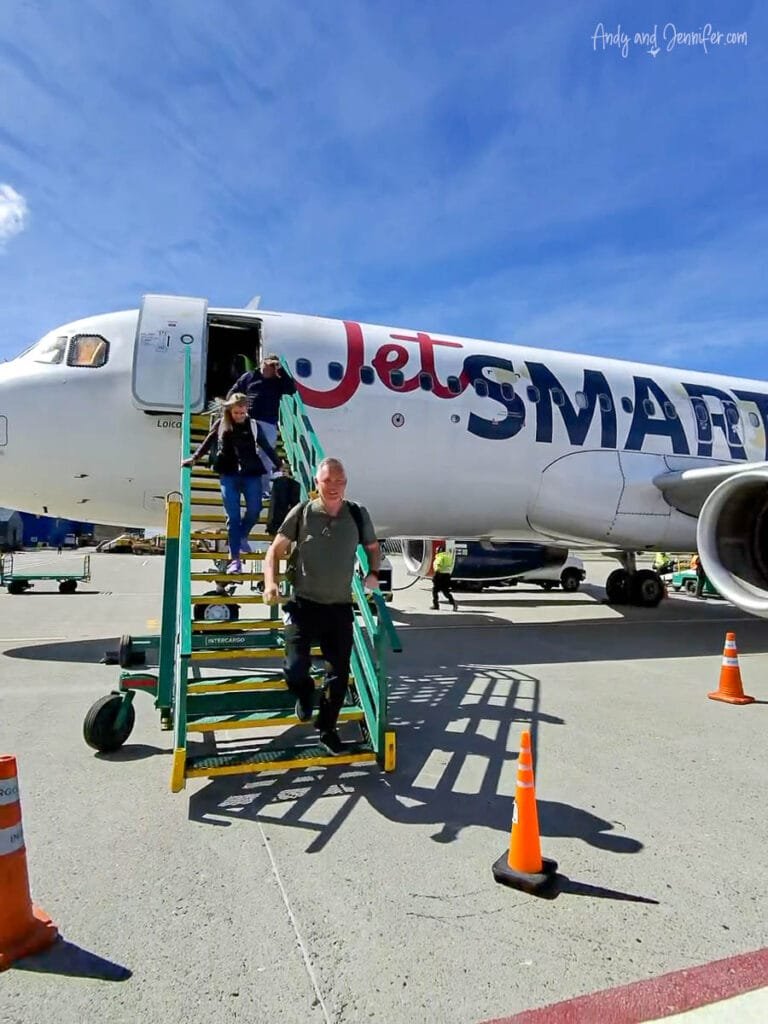
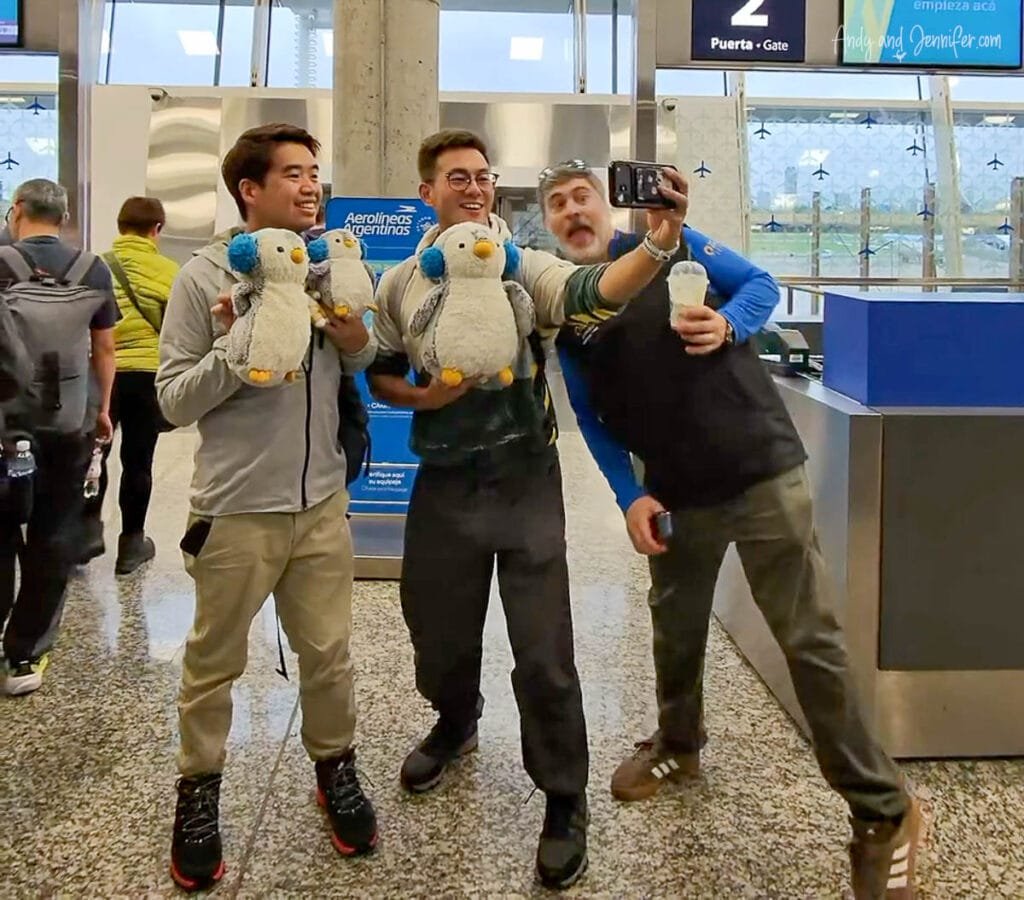
Quark had chartered a JetSmart aircraft, and it was only our expedition group onboard, which meant plenty of empty seats for the three-hour flight south. The energy at the departure gate was absolutely electric. There were people wearing all sorts of penguin paraphernalia, people taking selfies in front of the departure board, and just an all-around great vibe.
Once in Ushuaia, the luggage process repeated itself. First you collect your bags at baggage claim, and then you walk them over to the bus. Once the bus is full, it departs for the pier. But you don’t board the ship straight away. Instead, you have free time in town until the afternoon.
Carry-on luggage tip: If you don’t want to schlep your hand luggage around Ushuaia, you can leave it on the bus.
Ushuaia on a Sunday
We had been looking forward to empanadas at Doña Lupita basically since we booked this trip. We walked up the hill from the port and were seriously disappointed to find it closed for the day. After some panic internet searching, we found, Dieguito PIzza. It was packed with expedition guides, which is always a good sign, and the pizza turned out to be pretty good. The only problem, if it can be considered a problem, was the pizza was giant and we barely ate half. We packaged it up and brought it back for the bus driver.
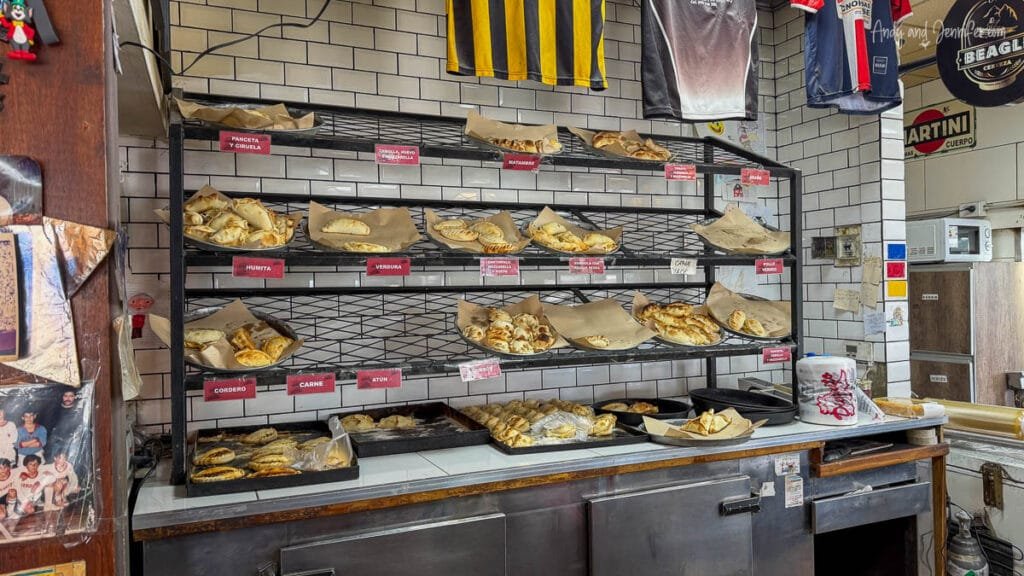

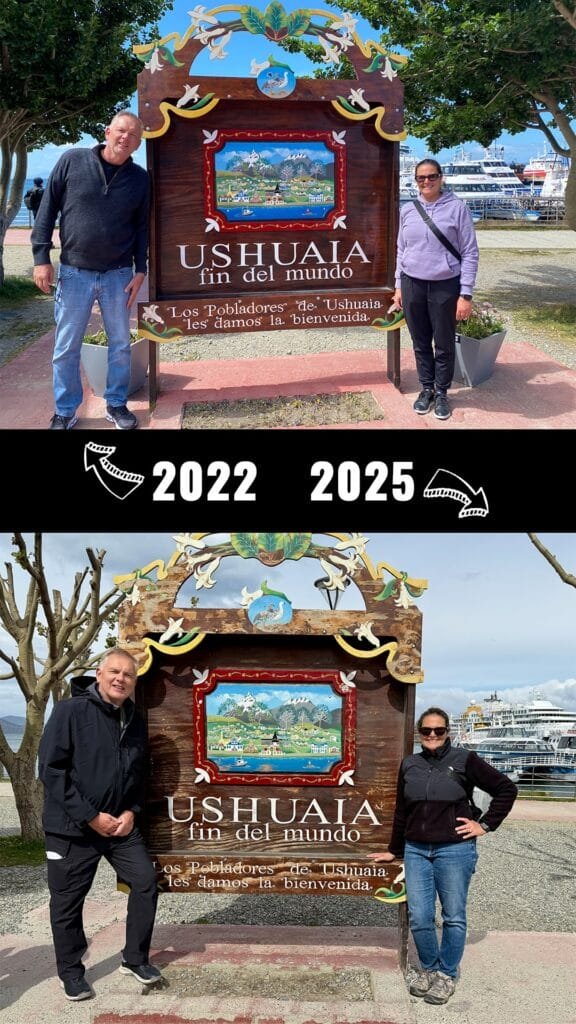
After lunch, we tried our favourite bakery, Dody. Also closed. Gah! The more we walked, the more we realised almost everything was closed because it was Sunday. If we hadn’t been to Ushuaia before, this would have been disappointing. That’s one of the trade-offs with Antarctica embarkation Buenos Aires via charter. It’s efficient, but you lose that extra time to explore. We did manage to make it to the Ushuaia sign to get a “then and now” photo.
Boarding Quark Ultramarine
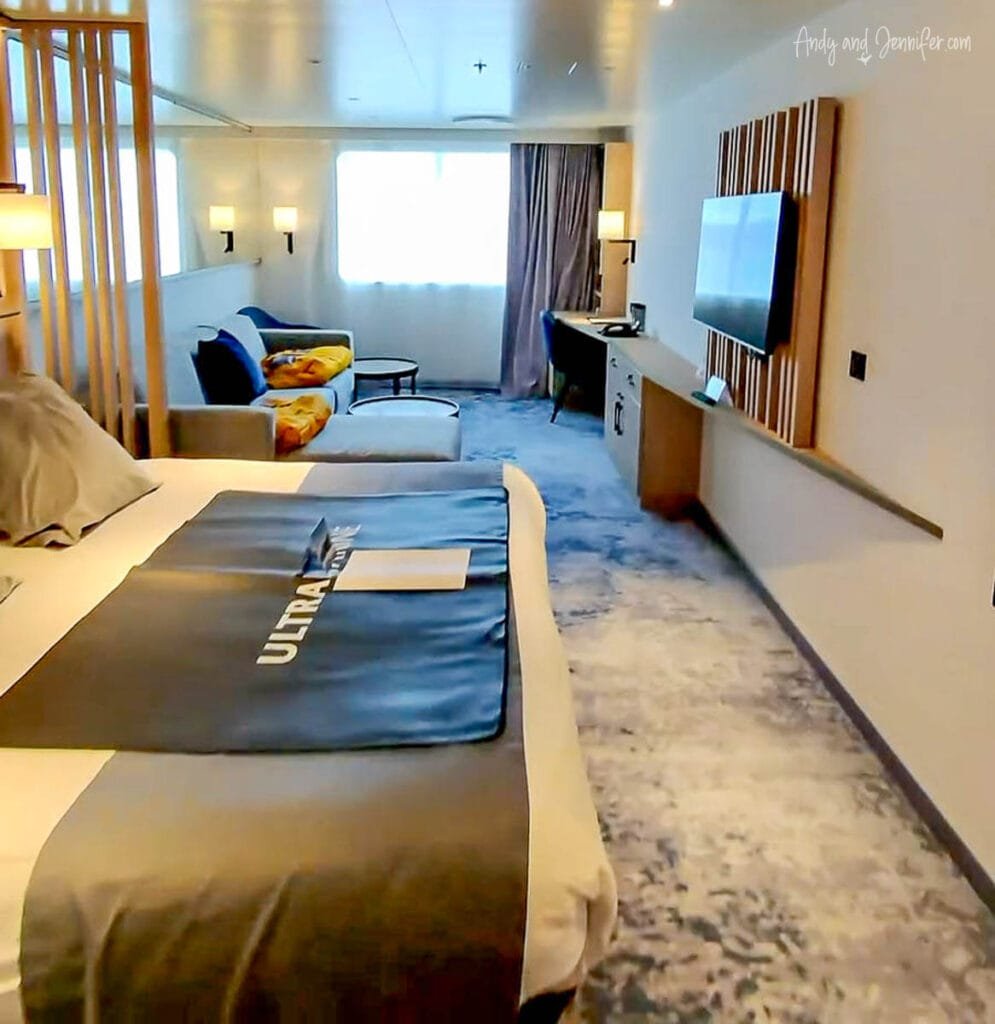
We returned to the busses around 3pm and were driven down the pier to the ship. After boarding, they collected our passports and we were directed straight to our cabin. We were in cabin 310, which was an “Explorer Suite” (basically the least expensive double room). It didn’t have a balcony, but it was plenty spacious. This makes it sound like we were roughing it and I fully realise how ludicrous that it.
Boots, Jackets and Dry Suits
The Expedition Leader announced a slight delay in our departure, postponed the lifeboat drill, and directed us to sort our gear instead.
Our boots were waiting in our mudroom lockers, and the process was simple. If they fit, great. If they don’t, swap them out.
Antarctica muckboot tip: When packing socks, stick with wool, and pack a few different thicknesses so you can double-up if needed to make your boots fit better.
Our expedition jackets were in our cabin. Mine was enormous, so I swapped it for a men’s medium, which worked perfectly. It’s not often that I get excited about a jacket, but allow me to rave about the Quark expedition parkas for a moment.
- They use a modular two-layer system with an insulated puffer that zips into a fully waterproof outer shell.
- The outer shell is windproof and waterproof, with a longer drop in the back to keep you dry when you are sitting in the zodiac.
- The hood is adjustable and removable, and designed to fit over a hat without blocking your vision.
- There are lots of pockets, including fleece-lined hand warmers and internal storage.
- The cuffs are adjustable and the zippers are easy to use while wearing gloves.
- There is also an integrated carry system, with hidden straps that let you wear your jacket like a backpack when you aren’t using it.
- The whole parka packs down into the hood (which will come in handy at the end of the trip, because you get to keep them).
The only downside, for me, is the color. It’s very on-brand and makes you easy to spot in the snow, but it does limit how much you’ll wear it afterward, especially since most wildlife photographers are trying to blend in rather than stand out.
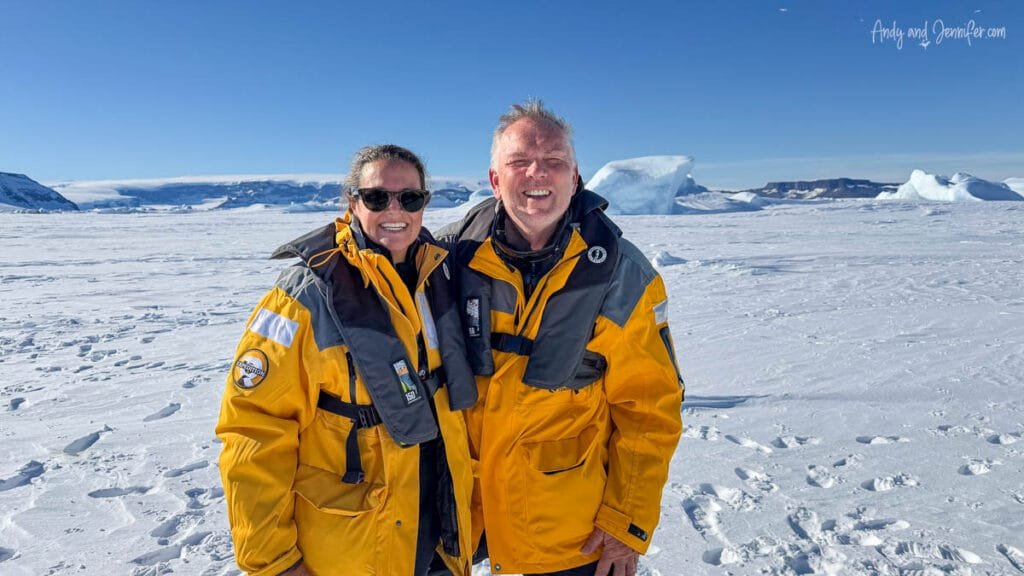
There were also dry suits hanging on hooks in our cabin. The dry suits were more like a giant protective onesie, rather than dry suits used for diving or paddling. You must wear the dry suits for helicopter operations, but they are optional for zodiac landings. Like everything else, if the fit isn’t right, you just exchange it. Mine was a tall, so I had to exchange it given I’m 5’4″. Ironically, Andy got a short, so he exchanged his as well.
Departure Delay and Lifeboat Drill
Back in our cabin, we noticed the medical team escorted someone off the ship. It’s never a good situation, it was reassuring to understand the delay and to know they handled the issue before departure. Once you’re in Antarctica, options are limited, and as we know from our first expedition, medical evacuations are quite an ordeal.
With the issue resolved, we left the dock and completed the lifeboat drill. It was quick and efficient, with our muster station in the dining room and lifeboats just outside. It was cold, but not uncomfortably so.
Departure Briefing
Before dinner, we gathered in the lecture theater for our departure briefing. The Expedition Leader confirmed we would not be getting a “Drake Lake.” In other words, expect movement. The ship’s doctor was handing out seasickness medication at reception like it was Halloween. The forecast on Windy did not look great. For context, the scale (from least amount of wind to most) is blue, green, orange, pink, purple.
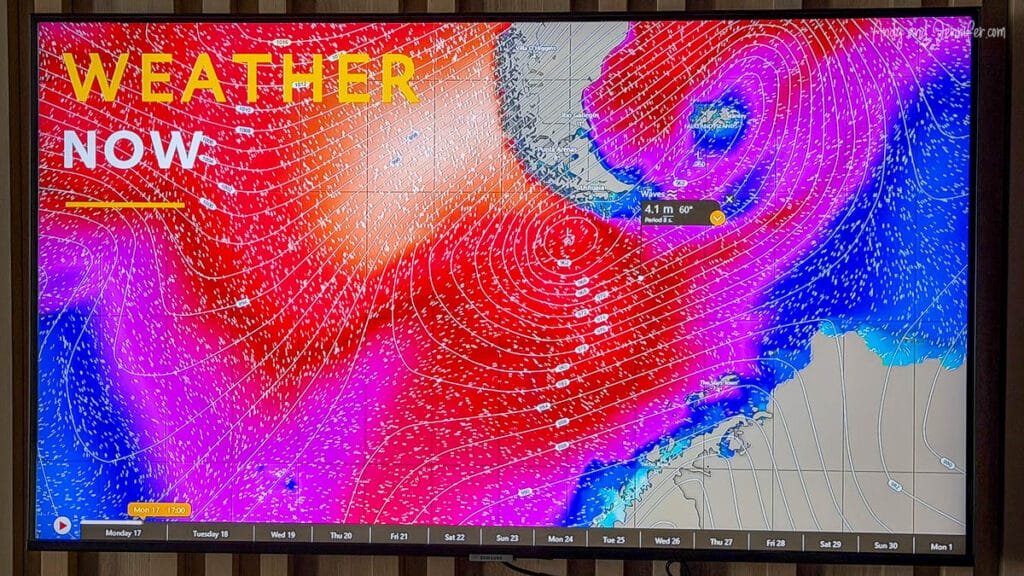
We also learned that the ship shifts time zones forward by one hour each day to maximise daylight in Antarctica. So for example, instead of having us up for activities at 5am, it would be more like 7am. We hadn’t encountered this on previous expeditions, but it made a heap of sense.
And we were also assigned to an excursion group, which is how they determine disembarkation order. We were assigned to the “seal” group, which was the third of four groups.
Down the Beagle Channel
This had been a long day. You’d think we would be exhausted, but adrenaline is an amazing thing.
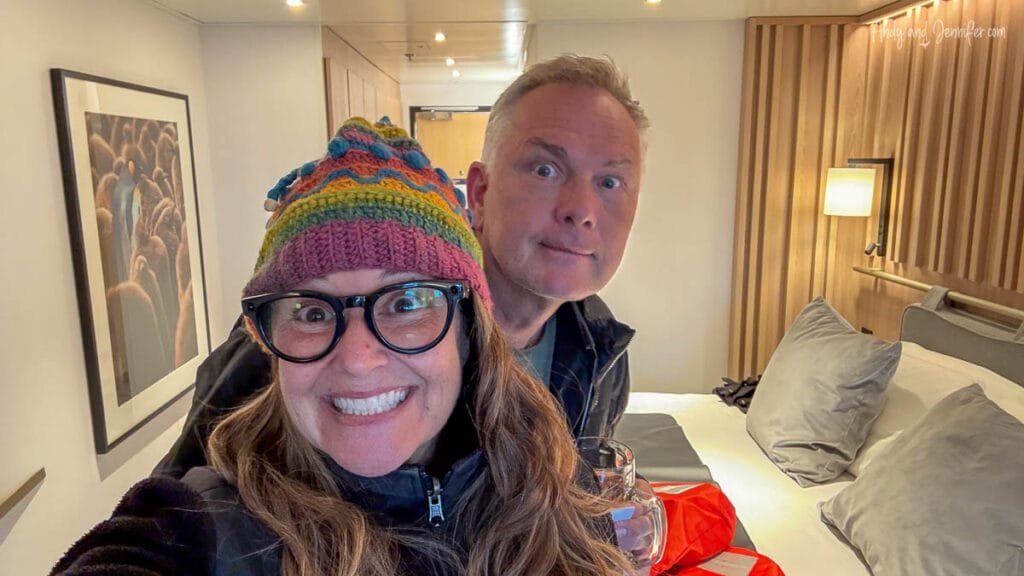
Given the conditions, we put on our motion sickness bands. Some people say they don’t do anything, but they have no side effects and we think they help. With rough seas expected, we also took meclizine after dinner, which promptly knocked us out until 11am the next day.
Boots fitted. Jackets sorted. Dry suits ready. Everything had been building toward Snow Hill. We had done everything right. Planned carefully, built in buffer days, managed expectations. Now it was out of our hands. But first, we had to cross the Drake Passage.
We’re Andy and Jennifer—two former corporate executives who chose long ago to prioritise experiences over stuff while pursuing our passions for travel and photography. From the Arctic to Antarctica, and most places in between, we’ve captured the world through our lenses and love sharing those stories. Our careers gave us the means, but our purpose is inspiring others to explore and helping people create images they’re proud of.
Related Posts
 From Buenos Aires to Canopy Tower Panama and Pipeline Road
 Drake Passage Sea Days: What to Expect on an Antarctica Expedition
 Crossing the Drake Passage Back to Ushuaia on the Ultramarine
 Emperor Penguins at Snow Hill: The Day It Finally Happened
 Cruising the Lemaire Channel and Flightseeing in Antarctica
 A Bucket List Trip to See the Brown Bears at Brooks Lodge