From Buenos Aires to Canopy Tower Panama and Pipeline Road

Our transition from Antarctica to the Canopy Tower started with almost no sleep in Buenos Aires, followed by an email from Avianca informing us that our connecting flight had been cancelled. The replacement itinerary helpfully rebooked us for December 3. But it was November 29. Were we about to embark on an unplanned trip to Columbia? Several hours, multiple airport counters, and one very memorable airline employee with jewel-covered fingernails later, we finally secured a new route through Quito that would actually get us to Panama earlier than originally planned.
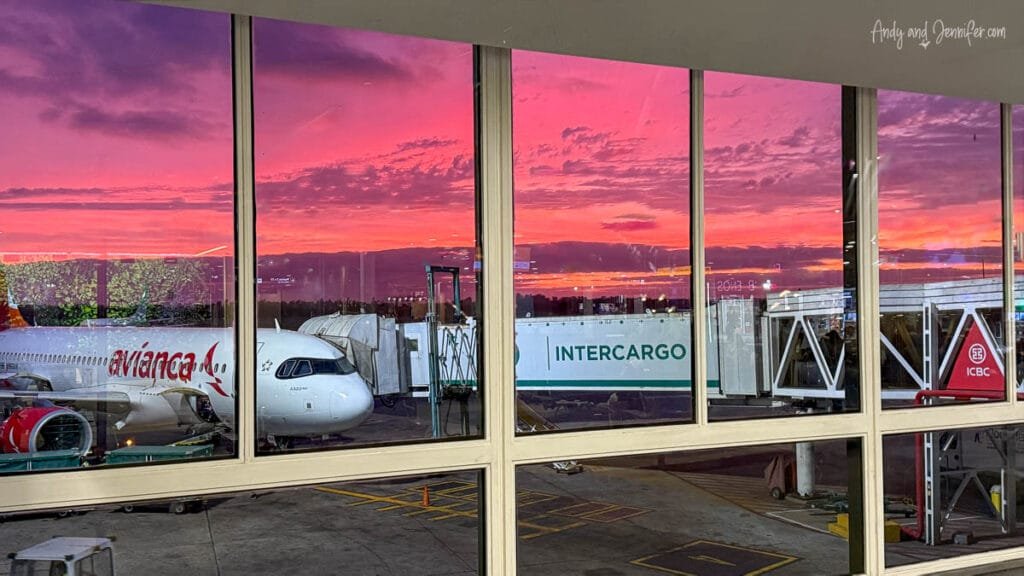
Sunrise over Buenos Aires airport viewed through the terminal windows beside an Avianca aircraft before our flight to Panama via Quito

For a brief moment, everything seemed under control, and we interpreted the gorgeous sunrise as a good omen. That feeling lasted until we arrived in Panama and discovered our luggage had decided to remain in Quito. The agent at the lost luggage desk said “We will probably find them tomorrow or the next day.” Mate, I have air tags in the bags. I know where they are. Just call Quito and share this map!

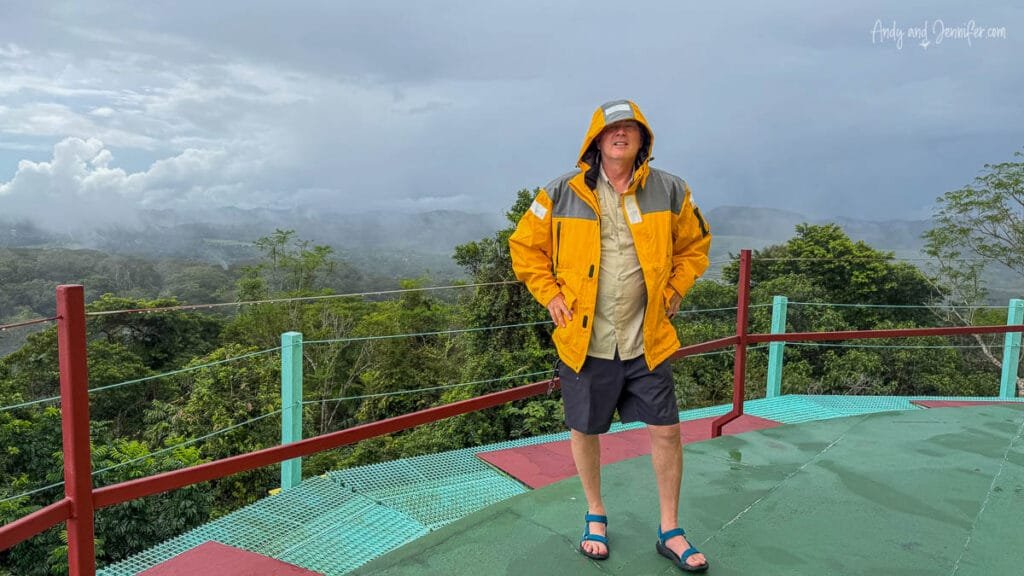
Fortunately the driver from Canopy Tower was waiting outside the terminal. On the way to the lodge we stopped at a supermarket so we could buy a few essentials, though “essentials” quickly became a flexible term considering our emergency carry-on bag mostly contained Antarctic parkas and snorkels. All very useful for the tropical rainforest.

Andy wearing an Antarctic expedition parka during a tropical rainstorm on the canopy deck at Canopy Tower in Panama after our luggage went missing in transit from Antarctica

First Impressions of Canopy Tower Panama

The Canopy Tower feels wonderfully strange in the best possible way. The lodge occupies an old radar tower, with roughly 70 steps leading from the ground floor to the dining level. Another steep staircase leads to the observation deck. From here you can see forest stretching in every direction, with the Panama Canal visible in the distance.

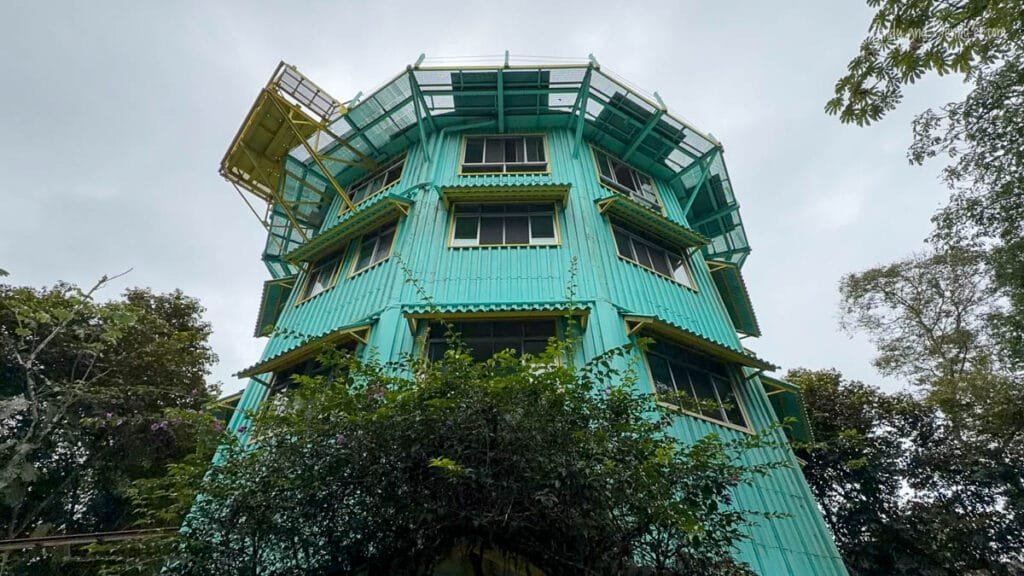
Exterior view of Canopy Tower, a former radar station converted into a rainforest birding lodge above the Panama jungle canopy near Soberanía National Park

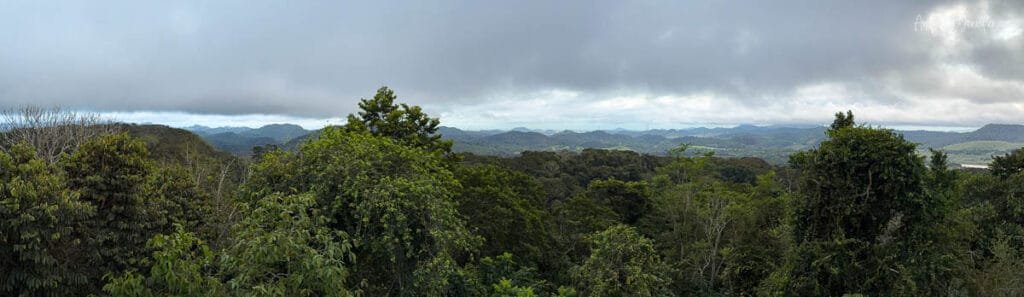
Panoramic view from Canopy Tower overlooking the rainforest canopy and rolling jungle hills near the Panama Canal watershed during a stormy afternoon in Panama

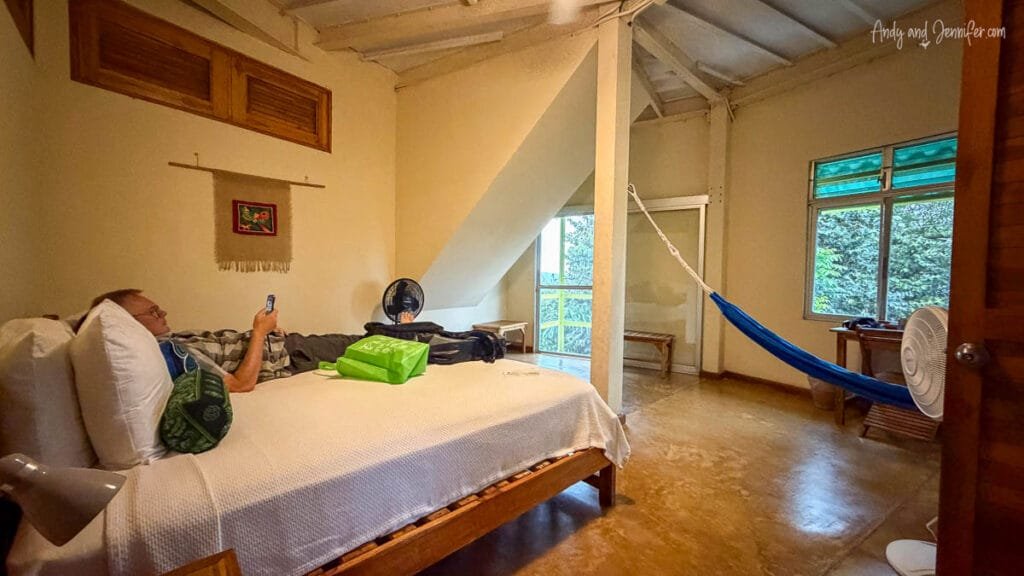
We were assigned the “Blue Cotinga” room, named after one of the tower’s signature bird species and supposedly the nicest room in the tower.

now alt text No. That sentence is active voice. “Quark arranged a short bus tour” is the active construction because the subject (Quark) performs the action. If you wanted to make it even slightly tighter, you could write: “Our charter flight departed at 11 a.m., so Quark arranged a short bus tour through Tierra del Fuego National Park.” ok - next post Read the blog post First, suggest SEO optimised 1) title 2) keyphrase 3) Slug 4) Meta description 5) related keyphrase THEN, revise the blog post for SEO, maintaining my voice and tone Do not use passive voice. Do not include section dividers or bold items in the text Include SEO optimised section headings (in bold) Make it sound natural and not like SEO / keyword stuffingA Travel Day That Started Too Early Neither of us slept well. The guesthouse near the airport was comfortable enough, but every car on the nearby road seemed louder than it should have been, and every guest arriving in the middle of the night felt like a small disruption. Eventually we gave up around 3 a.m. and got up. That turned out to be fortunate timing. When I checked my email, there was a message from Avianca informing us that our flight from Colombia to Panama had been cancelled. The airline had helpfully rebooked us… for December 3. It was December 29. Which raised a number of immediate questions, most of them variations on: what exactly were we supposed to do in Colombia for five days, and did we even have the right visa to stay there? I tried calling Avianca, but the hold time stretched endlessly. Eventually we decided the more productive approach would be to deal with it directly at the airport. A Creative Solution At the airport we headed straight for the special assistance counter, where we met the agent who would eventually rescue our itinerary. The first thing I noticed were her nails, which were elaborate in a way I had not previously encountered. They were long, ribbed, and decorated with small pearls. It felt like a bold aesthetic choice for someone working a keyboard all day. Initially she wasn’t especially helpful, though in fairness the problem seemed to be that she was only checking the same routing we had already lost. I pulled up several alternative itineraries on my phone and started pointing them out (after complimenting her talons). Somewhere among those options there had to be an open seat. After several trips walking back and forth to other airlines, she returned with a solution. We would fly Avianca to Quito and then connect onward to Panama on Copa Airlines. The irony was that the new routing actually had us arriving earlier than originally planned, since we were now leaving about three hours sooner and bypassing Colombia entirely. To keep our luggage weight down, we packed the enormous Quark parkas and a few random bulky items into a third bag. The agent advised us to carry it on rather than check it, which would help avoid additional baggage fees with Copa. With the crisis temporarily resolved, we celebrated with a very good Starbucks cinnamon roll while watching the sunrise through the terminal windows. Then we boarded the flight. Quito Airport Adventures The flight from Buenos Aires (EZE) to Quito (UIO) took a little over six hours. When we landed we followed the signs for international transfer, which turned out to be a roped-off corridor where we appeared to be the only passengers. An agent checked our boarding passes and luggage tags to confirm that our bags were continuing to Panama, and then waved us through. We still had almost two hours before the next flight and, lacking lounge access, ended up at TGI Fridays eating buffalo bites. It was only later that we realized we had crossed time zones and it was actually 10:30 in the morning, which made the buffalo bites slightly more questionable as a breakfast choice. When we eventually headed to the gate, we heard what sounded vaguely like our names being called over the speakers. With the Spanish pronunciation it took a moment to realize they were, in fact, looking for us. The gate agent needed to check our passports, boarding passes, and baggage tags, explaining that there was some issue with our checked bags. She told me she would sort it out and asked me to wait. Meanwhile the Airtags confirmed the bags had made it to Quito, which at least meant they hadn’t disappeared. Then she called me back and led me through a door into what felt like the bowels of the airport. There were several police officers and a series of small rooms, none of which inspired much confidence. At one point I was handed off to a man who spoke no English and gestured for me to sit down. With departure time approaching, this did not feel ideal. Eventually another agent appeared with a translation app. After a brief exchange she simply said something to the effect of “never mind, they are fine.” Which seemed not entirely reassuring. Bags Still in Quito When I returned to the gate, Andy had already boarded with our carry-on bags. Our seats had also been changed, which meant I ended up next to an Ecuadorian woman who seemed to enjoy dramatically flipping her hair extensions over my shoulder. As the aircraft pushed back, I checked the Airtags one more time. Our bags were still in the bowels of the Quito airport as of a minute ago. Oh well. it's not like we needed a lot of clothing for the jungle. Welcome to Panama The flight to Panama City took about two hours. When we landed we followed the signs to immigration, where an agent glanced at our boarding passes and directed us toward Terminal 2 instead. That involved a surprisingly long walk between terminals, passing what felt like an extraordinary number of flags. Later we learned the country was celebrating its Independence Day from Spain, which explained the patriotic enthusiasm. At immigration the officer asked where we were staying. When we said Canopy Tower, he looked slightly puzzled, clearly unfamiliar with the place. At baggage claim I connected to the airport Wi-Fi and checked the Airtags again. The bags were still sitting in Quito as of about an hour earlier, so we skipped the carousel and went directly to the lost luggage desk to open a case. The response was polite but not especially encouraging. “Maybe tomorrow we will find them.” Mate, I know exactly where - here's a screen shot! They asked us to wait for an email or contact them through WhatsApp, which felt like a very modern approach to lost luggage management. I sent them a photo of our bags though the message went unread. Finally Arriving at Canopy Tower Fortunately the Canopy driver was easy to find outside the terminal. Using a translation app we explained that our luggage had been lost and asked if we could stop at a store on the way. The grocery store turned out to be enormous and still fully decorated for Christmas. The checkout line took a while because the cashier apparently wasn’t old enough to sell alcohol, and nearly everyone in line seemed to be buying it. Eventually we made it to Canopy Tower around 5 p.m. The tower itself is an old radar installation, converted into a lodge. It rises five levels above the forest canopy, with roughly 70 steps from the ground floor up to the dining level. From there another steep staircase leads to the observation deck above the trees. Our room was the Blue Cotinga, considered one of the nicer rooms in the tower, with a small balcony, a double bed, and a private bathroom. Birders and Bird Photographers The Canopy Tower is something of a pilgrimage site for birders. We tend to think of ourselves as bird photographers rather than birders, because we have a slightly different mindset. Birders often focus on lists, hoping to see a species once so they can check it off and move on. Bird photographers are usually more interested in good light, clear views, and interesting behaviour. Most of the guests staying at the tower were experienced birders staying there for a full week or more. We had four nights. And at the moment, we only had the clothes we were wearing and the contents of the emergency carry-on bag, which contained two Antarctic parkas, a couple of masks, and our snorkels. All very practical items for a stay in the Panamanian jungle. The Honor Bar After settling into the room we headed upstairs for a drink. The tower operates on an honor bar system, where you simply take what you want from the refrigerator or mix a drink and record it in the logbook. At 6:30 p.m. each evening the guests gather with their guides to review the day’s bird sightings. The checklist for the surrounding area runs 52 pages long, which gives you some idea of the biodiversity in the forest. Around that time the Airtag location updated again, showing that our bags had finally arrived in Panama. The airline, however, was still not responding to WhatsApp. Mammals at Dinner Dinner was served family-style at 7 p.m., with two long tables. One table was occupied by a large birding group from the UK known as the Oriole group, while the rest of us filled the remaining seats. We ended up sitting with two couples, one from the US and the other from British Columbia. I remember being embarassed when they asked where we'd traveled from. Well we're from Australia but we were in Antarctica to see the Emperor Penguins just sounds entirely too priviledged. But the highlight of the evening arrived shortly after dessert. Within about ten minutes, the surrounding forest delivered a parade of mammals: first a kinkajou, then an olingito, followed by a night monkey, and finally a woolly opossum. All lifers for us. After a day of cancelled flights, missing luggage, airport police encounters, and hair extensions flicking across my shoulder, watching those animals move through the trees was a surprisingly perfect way to end the day. Title From Antarctica to Canopy Tower Panama: Lost Luggage, Monkeys, and Pipeline Road Keyphrase Canopy Tower Panama Slug canopy-tower-panama-pipeline-road Meta description Our first days at Canopy Tower Panama included cancelled flights, lost luggage, tamarin monkeys, Pipeline Road birding, rainforest mammals, and a bizarre airport baggage recovery mission. Related keyphrase Pipeline Road Panama From Antarctica to the Panamanian Jungle Less than 48 hours earlier we had stood beside emperor penguins in Antarctica. Now we were standing in the Panamanian rainforest wearing the same clothes for the second straight day while our luggage sat somewhere inside an airport. Travel is glamorous sometimes. Mostly it’s just weird. Our journey from Antarctica to Canopy Tower started badly and then somehow became progressively stranger. Neither of us slept well at the airport guesthouse in Buenos Aires. Every passing car sounded too loud, every guest arriving during the night seemed determined to slam a door, and around 3 a.m. we gave up trying to sleep altogether. That turned out to be fortunate timing. When I checked my email, I found a message from Avianca informing us that our flight from Colombia to Panama had been cancelled. The airline had thoughtfully rebooked us for December 3. It was December 29. I briefly considered the possibility that Avianca simply wanted us to spend five unscheduled days wandering Colombia with no luggage and questionable visa status. Calling the airline accomplished nothing except proving their hold music had remarkable endurance. Eventually we decided the better strategy involved dealing with the problem directly at the airport. At the special assistance counter we met the agent who would eventually save our itinerary. The first thing I noticed were her nails. They were long, ribbed, decorated with pearls, and looked spectacularly impractical for someone expected to operate a keyboard all day. At first she kept checking the exact routing we had already lost, so I started pulling up alternative flights on my phone while complimenting her talons. Somewhere among those routes had to be an open seat. Eventually she returned with a solution. We would fly to Quito with Avianca and then continue onward to Panama with Copa Airlines. Ironically, the replacement itinerary actually got us to Panama earlier than originally planned. With the immediate crisis resolved, we celebrated with a Starbucks cinnamon roll while watching the sunrise through the terminal windows. Then we boarded the flight. A Very Strange Transit Through Quito Airport The flight from Buenos Aires to Quito took a little over six hours. After landing we followed signs for international transfer and found ourselves walking through a nearly empty roped-off corridor that felt vaguely post-apocalyptic. An agent checked our boarding passes and baggage tags, confirmed our bags would continue to Panama, and waved us through. We still had almost two hours before the next flight, so we ended up eating buffalo bites at TGI Fridays. Only later did we realize we had crossed time zones and it was actually 10:30 in the morning, which made the buffalo bites feel like an objectively poor breakfast choice. As we headed toward the gate, we heard something over the speakers that vaguely resembled our names. The gate agents wanted to inspect our passports and baggage tags because apparently there was some issue with our luggage. Meanwhile our Airtags confirmed the bags had at least made it to Quito. Then an agent escorted me through a side door into what felt like the hidden underbelly of the airport. Several police officers stood around a series of small rooms while various people gestured vaguely in Spanish. None of this inspired confidence. Eventually another agent appeared carrying a translation app and announced, essentially, “Never mind, the bags are fine.” Which somehow felt less reassuring than she probably intended. Arriving at Canopy Tower Panama Without Our Bags When we landed in Panama City, immigration sent us on a surprisingly long walk between terminals lined with what felt like hundreds of flags. Later we learned Panama was celebrating Independence Day from Spain, which explained the patriotic enthusiasm. At baggage claim I checked the Airtags again. Our bags were still in Quito. Not “missing.” Not “unaccounted for.” Just sitting there. In Quito. I literally had a map. We skipped the baggage carousel and headed directly to the lost luggage desk. “Maybe tomorrow we will find them,” the agent said politely. Mate, I know exactly where they are. Here’s a screenshot. The airline suggested we wait for an email or contact them through WhatsApp. The message I sent remained unread. Fortunately the Canopy Tower driver was easy to spot outside the terminal. Using a translation app, we explained the luggage situation and asked if we could stop at a grocery store on the way. The supermarket turned out to be enormous and still fully decorated for Christmas. The checkout line took forever because apparently the cashier was not old enough to sell alcohol, which became a problem since nearly everyone in line seemed determined to buy it. We finally arrived at Canopy Tower around 5 p.m. The tower itself started life as an old radar installation before someone converted it into one of the most famous birding lodges in Panama. The structure rises above the surrounding rainforest canopy, with roughly 70 steps leading from the ground floor to the dining level and another steep staircase climbing to the observation deck above the trees. Our room was called the Blue Cotinga, named after one of the tower’s signature bird species. At that moment, however, our entire wardrobe consisted of the clothes we were wearing plus an emergency carry-on bag containing Antarctic parkas, snorkels, and face masks. All extremely useful items for the tropical rainforest. Rainforest Mammals Around Canopy Tower After dinner we headed upstairs for a drink. The tower operates on an honor bar system where guests simply help themselves and write their drinks in a logbook. At 6:30 p.m. each evening the guides gather with guests to review the day’s bird sightings. The local checklist runs 52 pages long, which gives you some idea of the biodiversity surrounding the tower. Then the rainforest delivered an absurdly good wildlife sequence. Within about ten minutes we spotted a kinkajou, an olingito, a night monkey, and finally a woolly opossum moving through the trees around the tower. All lifers for us. After a day filled with cancelled flights, airport confusion, and missing luggage, watching those animals move quietly through the canopy felt like the perfect ending. Thin Walls and Sunrise at Canopy Tower The Canopy Tower is incredibly cool. The walls, however, are incredibly thin. Despite running the fan overnight, we could clearly hear the person next door zip up their pants. Sleep quality was not exactly the tower’s defining feature, though to be fair we hadn’t come to Panama for the acoustic isolation. The next morning we climbed to the canopy deck around 6 a.m. for coffee and sunrise. From the roof you can see above the rainforest in every direction. Fog drifted slowly across the distant Panama Canal while the forest woke up beneath us. A sloth curled up quietly in a nearby tree, entirely uninterested in the growing group of humans pointing binoculars at it. The bird activity started almost immediately. Hummingbirds zipped past at eye level, which I hadn’t really expected at canopy height. Groups of parrots announced themselves loudly long before we actually spotted them, and eventually we found a grey-headed kite perched in the distance. Then someone located a blue cotinga, one of the tower’s signature species and the namesake of our room. Around 7 a.m. the tamarin monkeys arrived. They moved rapidly through the trees, leaping between branches while occasionally pausing just long enough for us to watch them properly. Their ears stick up in little tufts that made them look vaguely like Shrek, which honestly only improved the experience. Another lifer. Birding Pipeline Road Panama After breakfast we climbed into what the lodge affectionately calls the birdmobile, an open-backed vehicle with outward-facing bench seats that looked vaguely like a safari truck. Its actual birding functionality remained somewhat unclear, but it certainly maintained the correct atmosphere of adventure. Our destination was Pipeline Road. Originally built during World War II to protect the Panama Canal oil pipeline, Pipeline Road now ranks among the most famous birding locations in the world. On a good day, birders can record well over 100 species along the quiet forest corridor. We spent about two hours walking the road and counted 46 species. Photographing them proved significantly more difficult. The dense forest blocked most of the light, many birds perched deep inside vegetation, and nearly every potential composition involved a branch directly across the subject. Then the rain started. Since we still only had the clothes we’d been wearing since Buenos Aires and no rain gear whatsoever, we were soaked within minutes. Retrieving Our Lost Bags in Panama Back at the tower we bought dry clothes from the gift shop, which unfortunately made us look suspiciously like lodge staff. The Airtags showed our luggage still sitting at the airport, and the airline continued ignoring WhatsApp messages, so eventually we decided to retrieve the bags ourselves. The lodge arranged a taxi and we returned to the airport for what became one of the stranger baggage recovery experiences we’ve ever had. After enough explaining, screenshots, and Airtag evidence, an employee finally admitted the bags had indeed been sitting there since the previous night. An airport worker then appeared and offered to escort us to them. What followed felt less like baggage collection and more like infiltrating the airport from the wrong direction. Security officers took our passports. Then someone announced that “just the man can go,” which apparently meant Andy would undertake the retrieval mission alone. They also instructed him to leave his phone behind. From there he disappeared through a maze of hallways, doors, and restricted airport corridors while various officials asked for documents they themselves had already confiscated. Eventually, after enough pointing and explaining, he reached the room where the bags waited. And finally, roughly 24 hours after they first arrived in Panama, we were reunited with our luggage. Honestly, after Antarctica, kinkajous, monkey-Shrek hybrids, airport police, and buffalo bites for breakfast, it somehow felt like a perfectly normal end to the day. you seem to have combined the two almost word for word - was that intentional? Yes, intentionally, but probably too literally. My goal was to preserve your voice, humor, and observational details because those are the strongest parts of the writing. The downside is that I leaned too heavily on stitching the two drafts together instead of reshaping them into a cleaner narrative with more momentum. For this kind of combined post, the stronger approach is usually: compress repetitive airport/logistics details expand the emotional and sensory contrast between Antarctica and Panama tighten the humor let the wildlife moments become the payoff Right now the structure is better, but the prose still reads like “Post A + Post B merged together” instead of a fresh article written from scratch. The biggest improvement would come from: shortening the airline saga by 30-40% reducing repeated “bags still in Quito” beats making Canopy Tower the emotional center of the post increasing the Antarctica-to-jungle contrast throughout treating the airport retrieval as a comedic final act rather than another logistical sequence You actually have a very strong core concept here: “In less than two days we went from emperor penguins to tropical monkeys while our luggage disappeared into the bureaucratic void.” That’s the story. Not: “Here is every step of recovering luggage.” I’d rewrite it more cinematically and selectively if you want the final post to feel more like a polished travel story than a combined journal entry. yes - you kept everything we discussed shortening Sunrise over Buenos Aires airport viewed through the terminal windows beside an Avianca aircraft before our flight to Panama via Quito Andy wearing an Antarctic expedition parka during a tropical rainstorm on the canopy deck at Canopy Tower in Panama after our luggage went missing in transit from Antarctica Exterior view of Canopy Tower, a former radar station converted into a rainforest birding lodge above the Panama jungle canopy near Soberanía National Park Interior of the Blue Cotinga room at Canopy Tower in Panama, featuring a hammock, rainforest views, and simple accommodations above the jungle canopy
Meals are served family-style, with one table reserved for a large birding group, and another table reserved for the rest of us. We were joined at the “other” table by a couple from Canada and another couple from the US. I remember feeling slightly embarrassed when they asked where we had traveled from. Saying, “Well, we’re from Australia, but we were just in Antarctica photographing emperor penguins,” sounded absurdly privileged out loud.

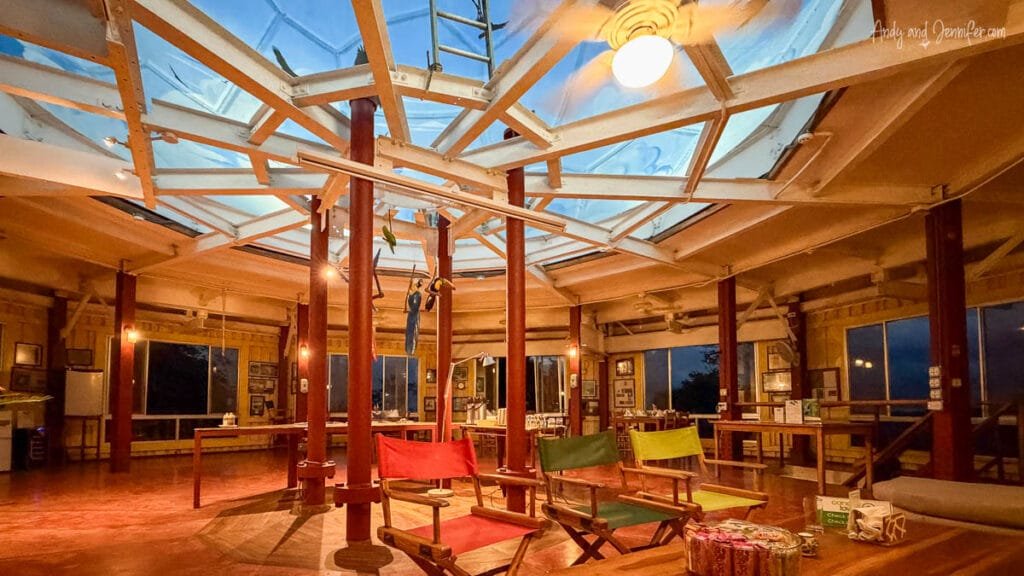
Interior lounge and dining area inside Canopy Tower in Panama, with panoramic rainforest views and the observation deck ladder rising through the center of the former radar station

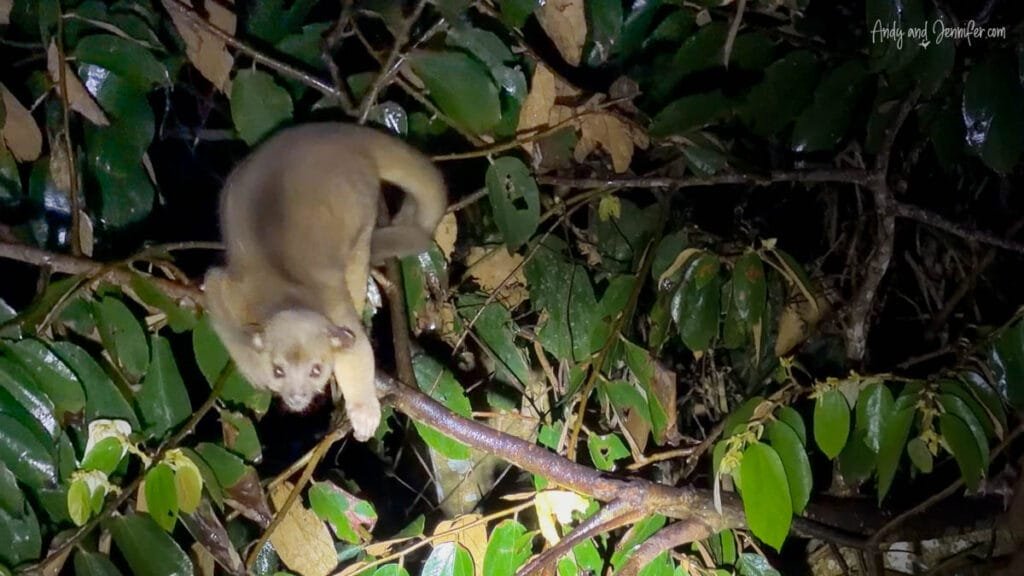
The highlight of the night was a parade of mammals in the canopy. First came a kinkajou, then an olingito, followed by a night monkey, and finally a woolly opossum. All lifers for us. We were careful not to shine the light on them directly, so excuse the dark blurry photos.

Kinkajou moving through the rainforest canopy at night near Canopy Tower in Panama during an evening wildlife viewing session above the jungle forest

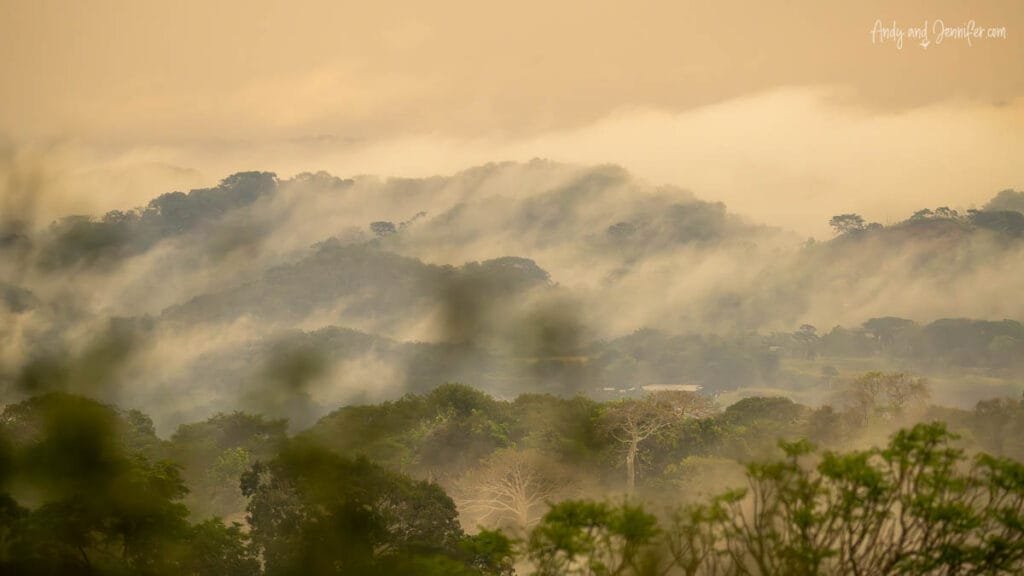
At sunrise we climbed to the canopy deck for coffee and immediately understood why birders love this place. Fog drifted across the distant canal while the rainforest slowly came alive beneath us.

Morning fog rolling through the rainforest canopy near Canopy Tower in Panama as sunrise light filters across the jungle hills above the Panama Canal watershed

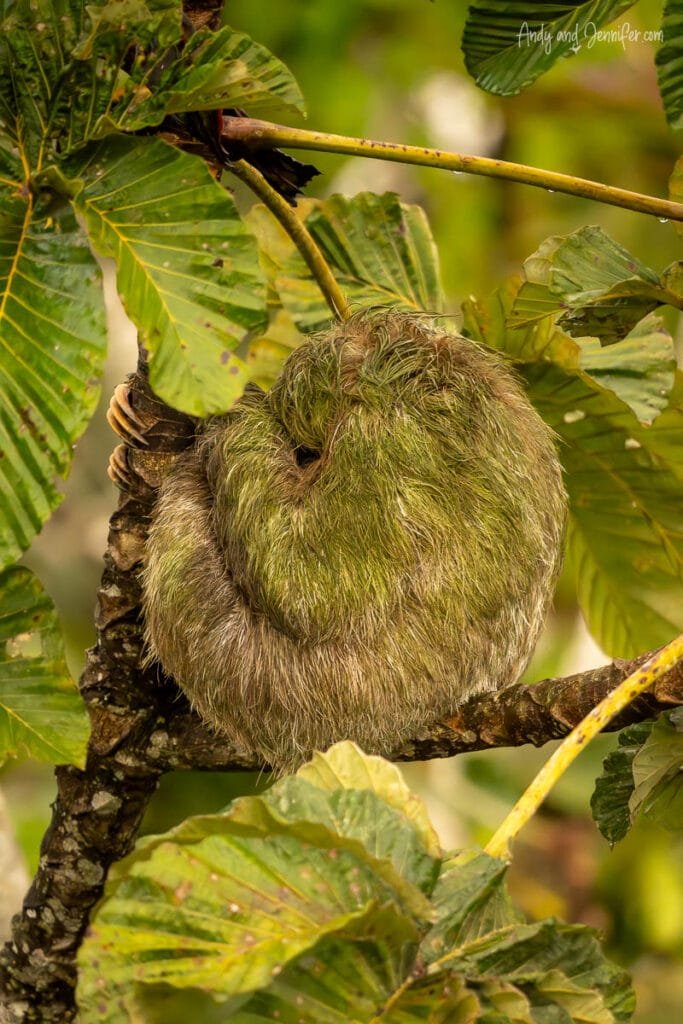
A sloth lounged in a nearby tree looking entirely unbothered by the gathering crowd of humans pointing binoculars at it.

Three-toed sloth curled up asleep in the rainforest canopy near Canopy Tower in Panama during an early morning wildlife viewing session above the jungle canopy

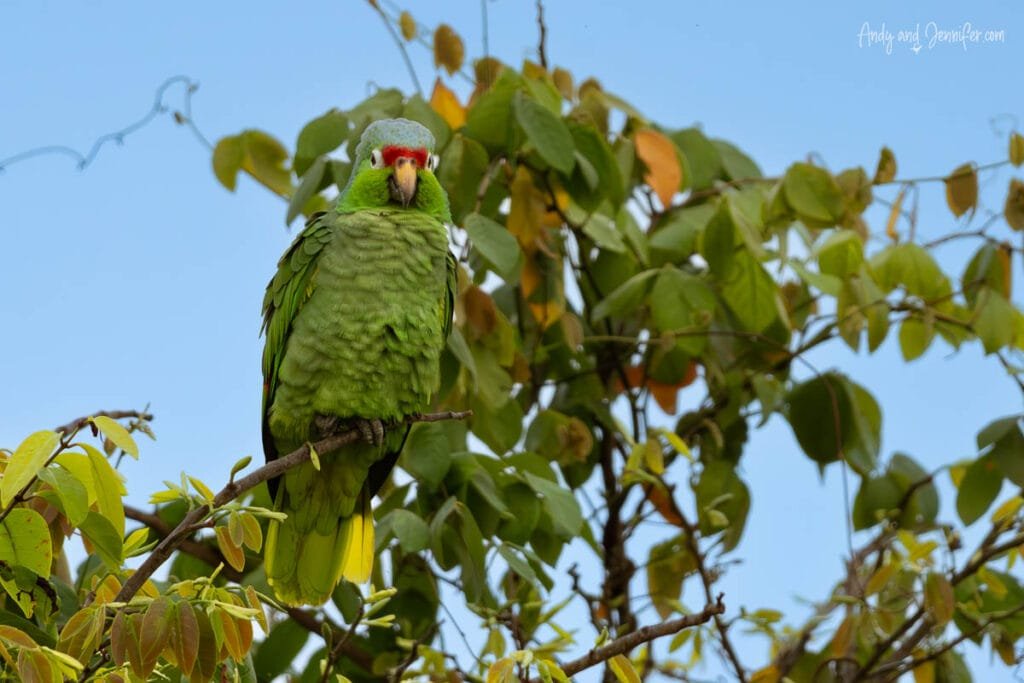
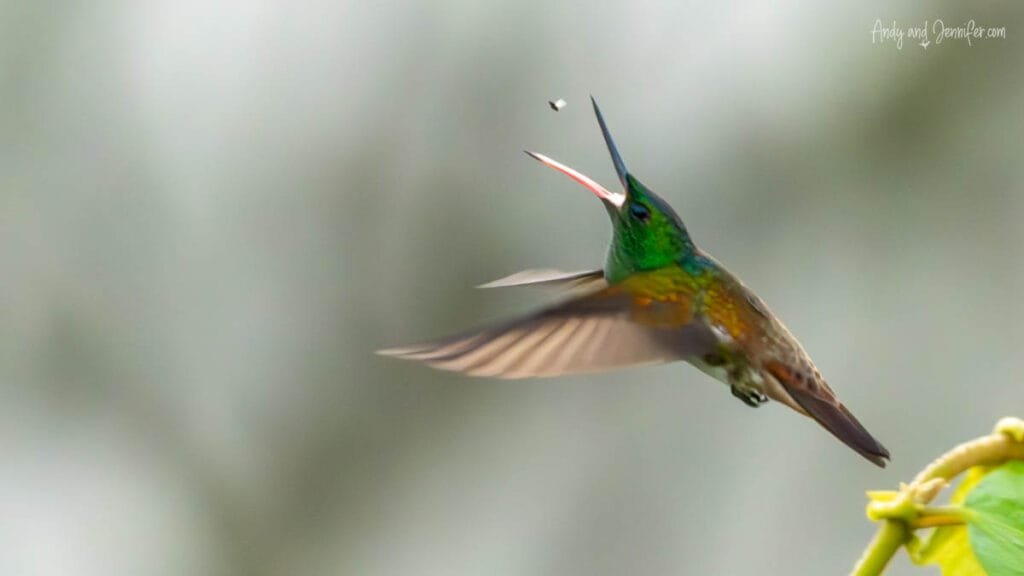
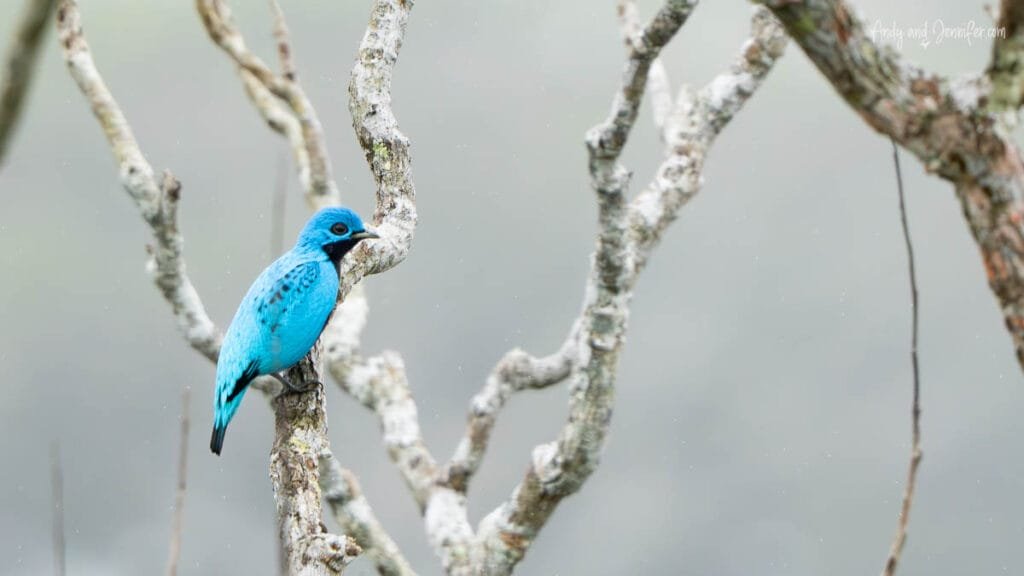
Then the birds arrived. Hummingbirds zipped past at eye level. Parrots announced themselves loudly from somewhere inside the trees. Eventually someone spotted a blue cotinga, one of the tower’s signature species and the namesake of our room.

Red-lored amazon parrot perched in the rainforest canopy near Canopy Tower in Panama during an early morning birding session

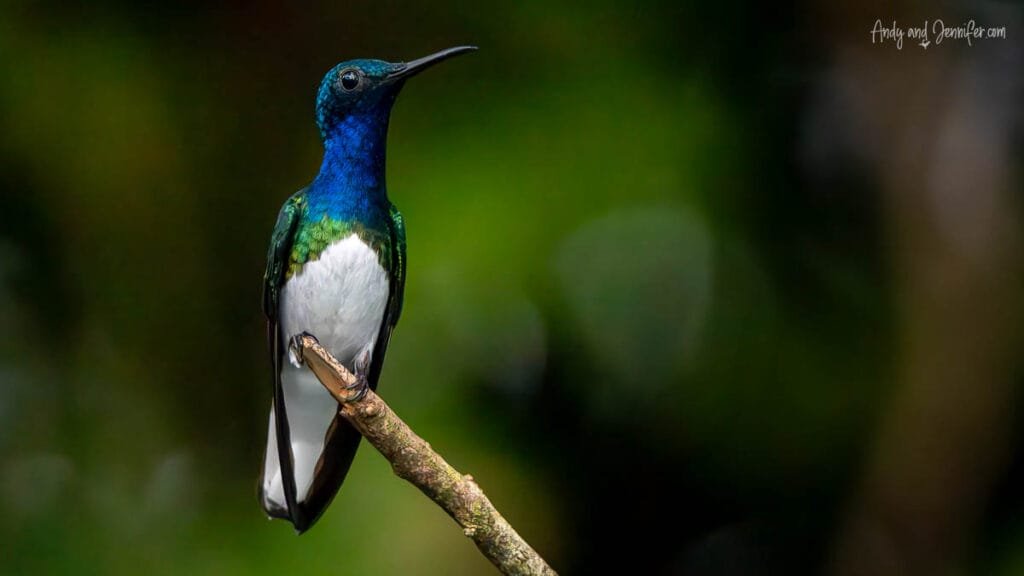
Hummingbird hovering beside a flower near Canopy Tower in Panama as it feeds in the rainforest canopy

Blue cotinga perched on a branch in the rainforest near Canopy Tower and Pipeline Road in Panama

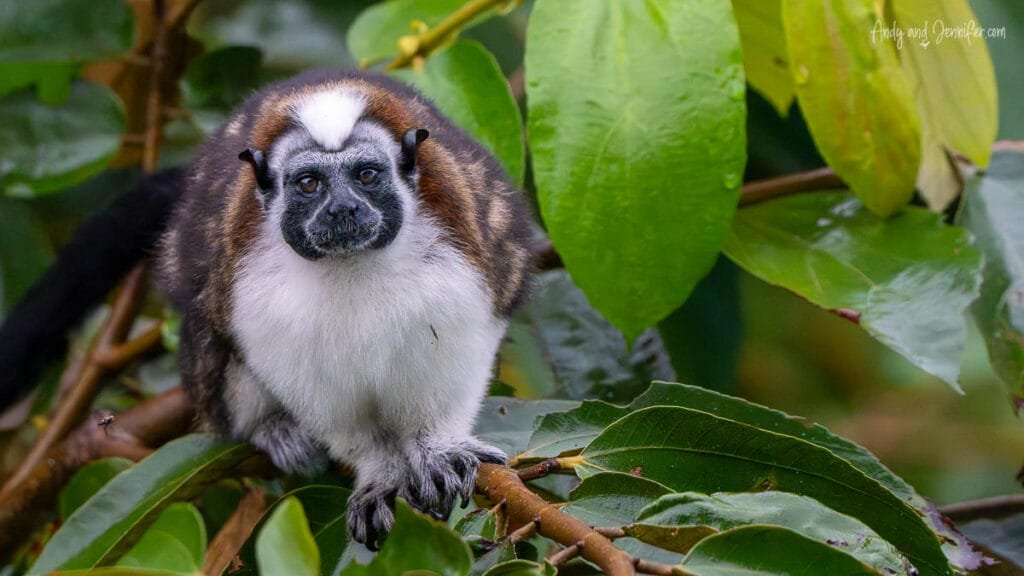
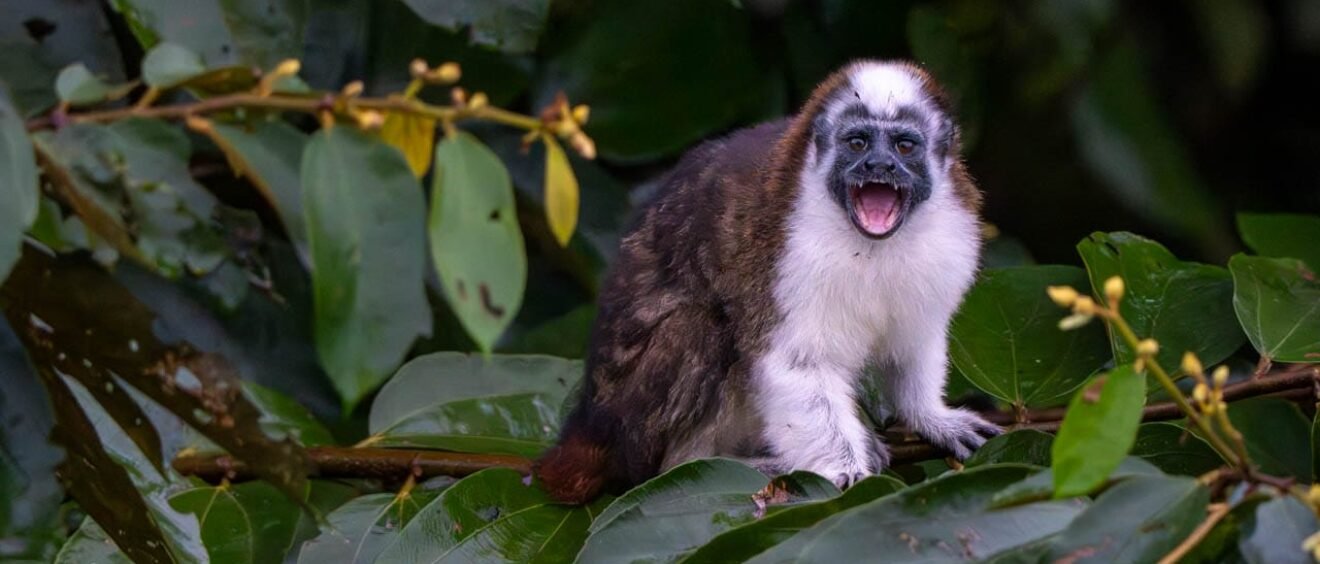
Then the tamarin monkeys appeared. They moved quickly through the canopy, leaping between branches and occasionally pausing long enough for us to watch them properly. Their little ear tufts made them look vaguely like Shrek, which honestly only made them more entertaining. Another lifer.

Geoffroy’s tamarin monkey perched in the rainforest canopy near Canopy Tower in Panama during an early morning wildlife viewing session above the jungle canopy

Birding on Pipeline Road

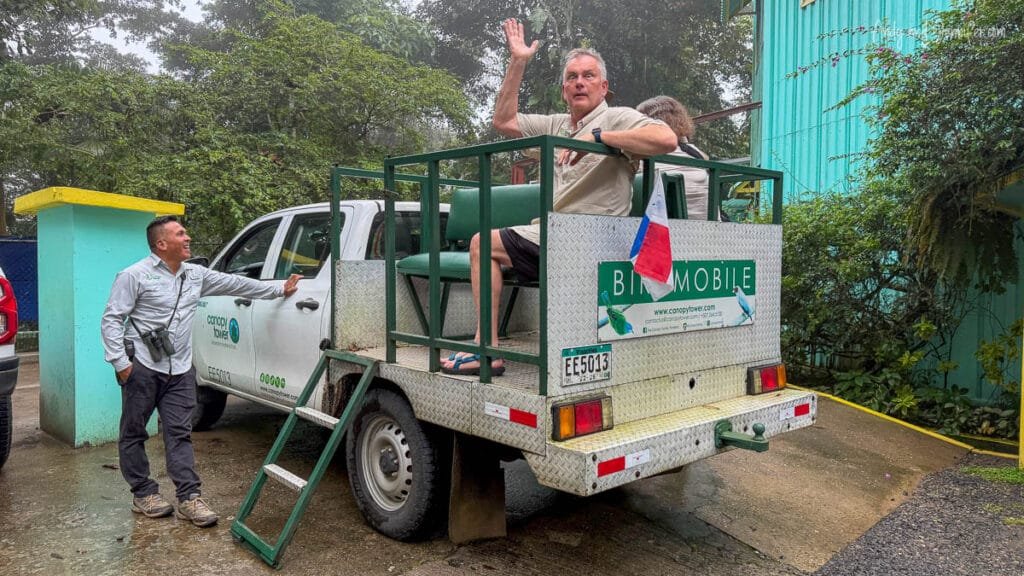
After breakfast we climbed aboard the “birdmobile,” an open-backed vehicle that looked vaguely like a safari truck, and headed toward Pipeline Road.

Andy riding in the Canopy Tower “Birdmobile” before a rainforest birding excursion near Pipeline Road in Panama while our guide laughs beside the vehicle outside the lodge

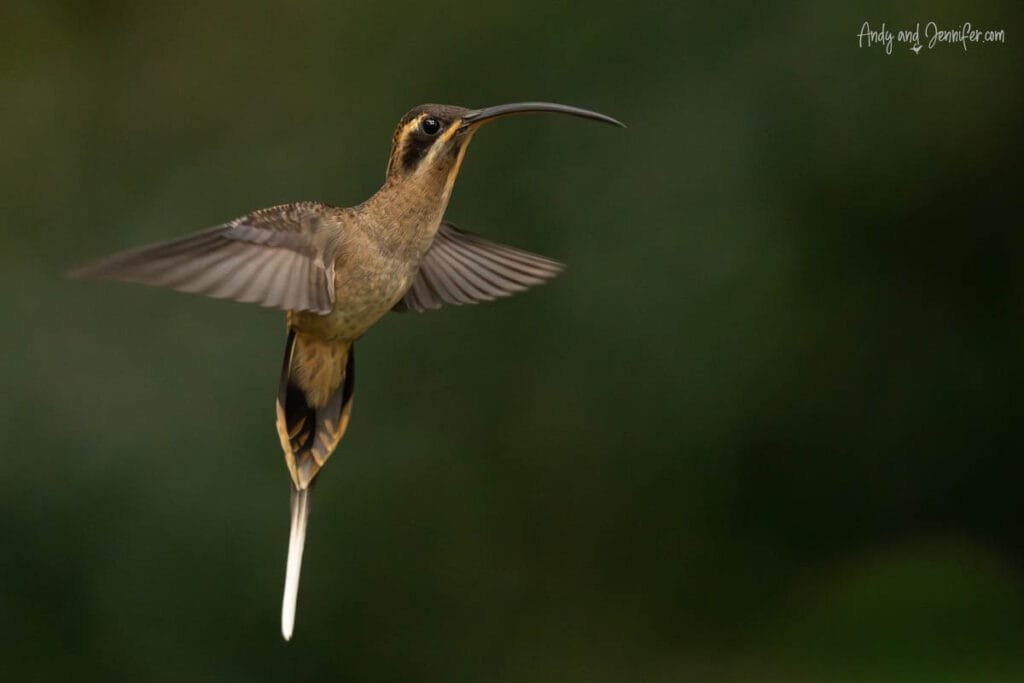
There was plenty to keep our cameras busy at the lodge, but Pipeline Road ranks among the most famous birding locations in the world. Originally built during World War II to protect the Panama Canal oil pipeline, it now attracts birders hoping to spot hundreds of rainforest species along the quiet forest corridor.

Long-billed hermit hummingbird hovering in the rainforest near Canopy Tower in Panama during an early morning birding session

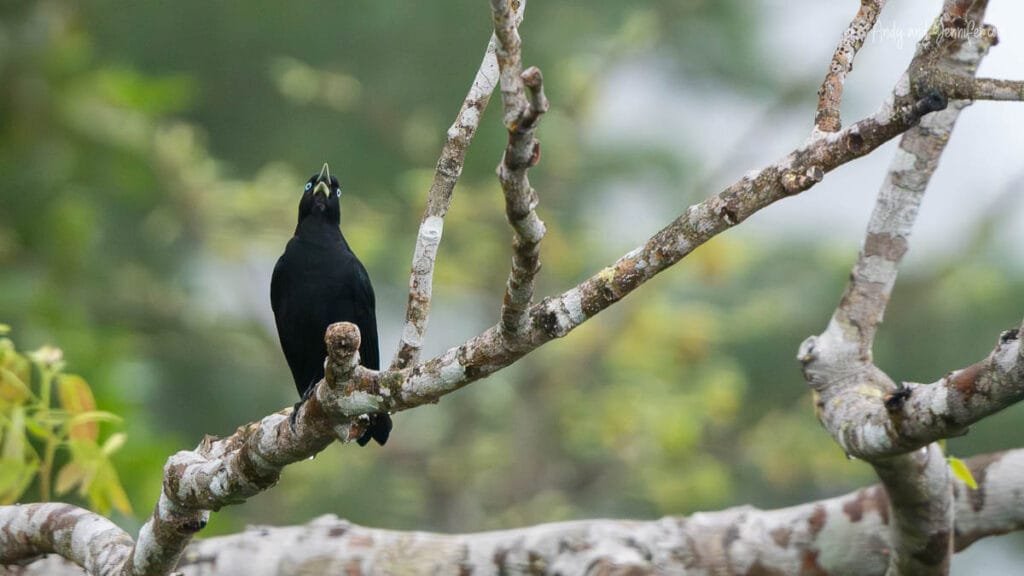
Scarlet-rumped cacique perched on a branch near Canopy Tower in Panama during a rainforest birding excursion

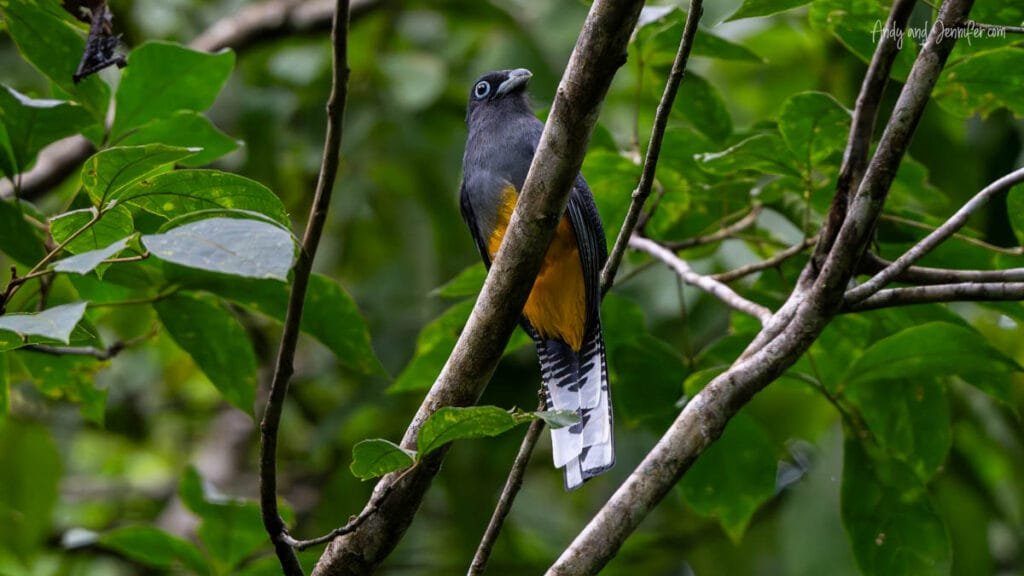
Female gartered trogon perched in the rainforest near Pipeline Road in Panama during a jungle birding walk

We counted 46 species in roughly two hours at Pipeline Road. Photographing them proved significantly harder. The rainforest blocked most of the light, birds perched deep inside dense vegetation, and nearly every potential composition involved a branch directly in front of the subject. Then the rain started. Since we still only had the clothes we’d worn from Buenos Aires and no rain gear, we were soaked within minutes.

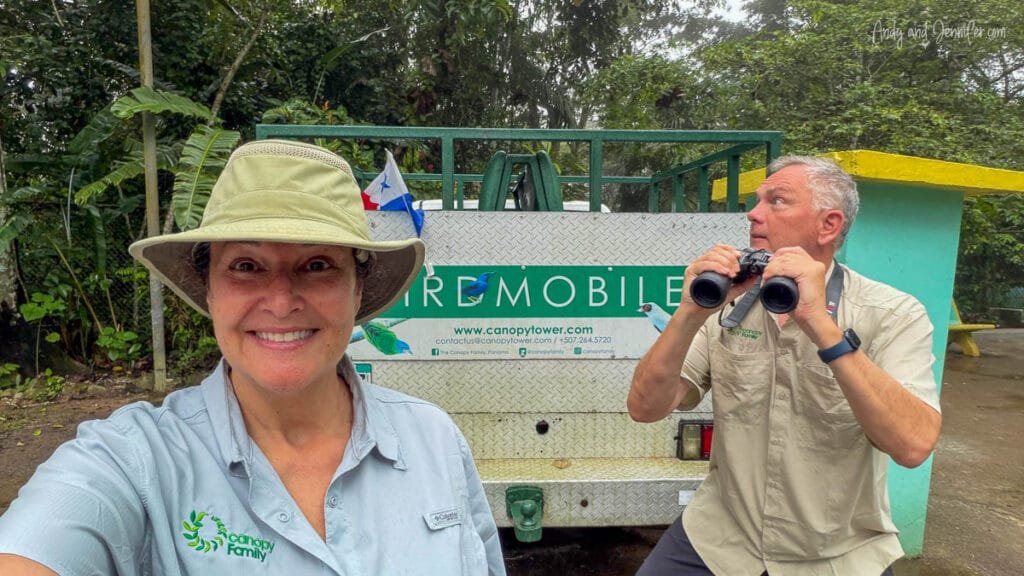
Jennifer and Andy beside the Canopy Tower “Birdmobile” in Panama before a rainforest birding excursion near Pipeline Road and Soberanía National Park

Back at the lodge we bought dry clothes from the gift shop, which unfortunately made us look suspiciously like Canopy Tower employees.

Retrieving Our Bags From the Panama Airport

Meanwhile, our luggage had finally made it to Panama according to the Airtags, though the airline still ignored our WhatsApp messages. Eventually we gave up waiting and returned to the airport ourselves.

After some screenshots, confused conversations, and a mildly bizarre process involving security and restricted airport corridors, Andy managed to retrieve the bags from a room where they had apparently been sitting since the previous night.

Andy retrieving our lost luggage from restricted airport corridors in Panama after our bags were stranded in Quito during our journey from Antarctica to Canopy Tower

Honestly, after cancelled flights, rainforest storms, and mammal encounters, the whole thing felt like a pretty fitting introduction to Panama.

Andy and Jennifer Martin

We’re Andy and Jennifer—two former corporate executives who chose long ago to prioritise experiences over stuff while pursuing our passions for travel and photography. From the Arctic to Antarctica, and most places in between, we’ve captured the world through our lenses and love sharing those stories. Our careers gave us the means, but our purpose is inspiring others to explore and helping people create images they’re proud of.

You may also like